
 English
 日本語
日本語 عربى
عربى Español
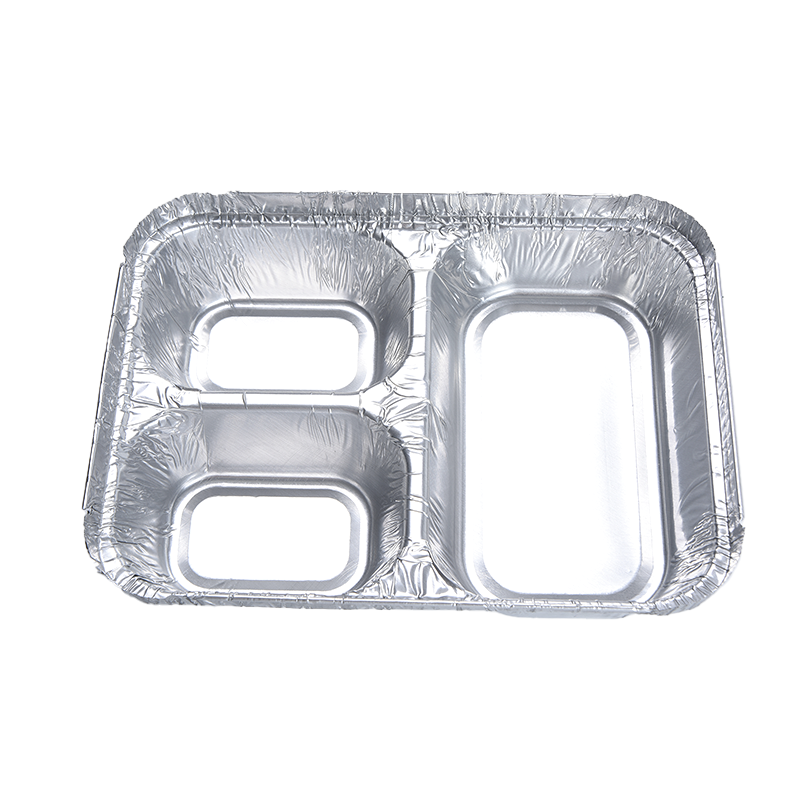
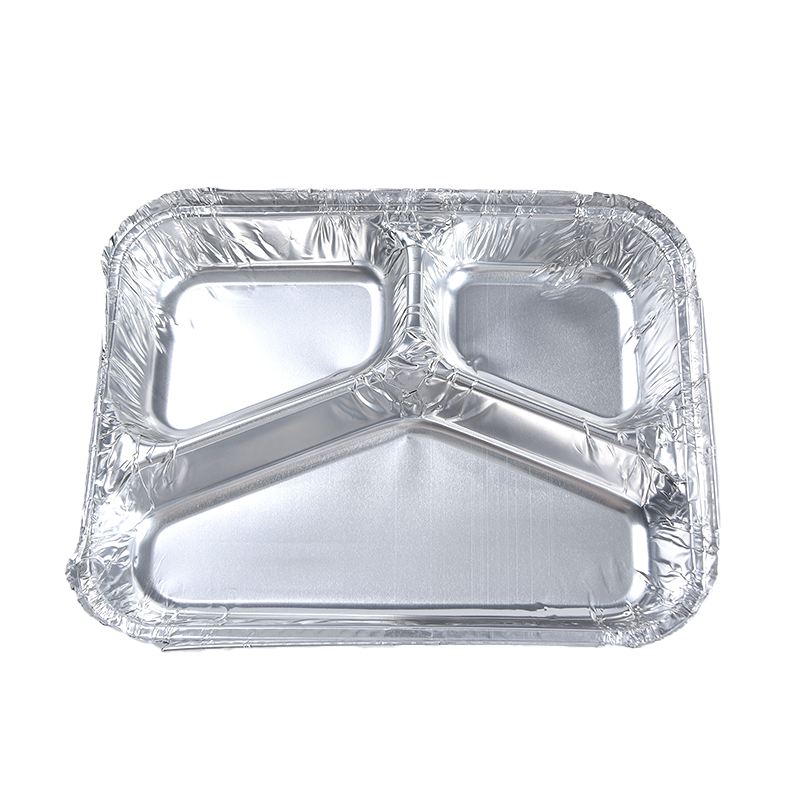
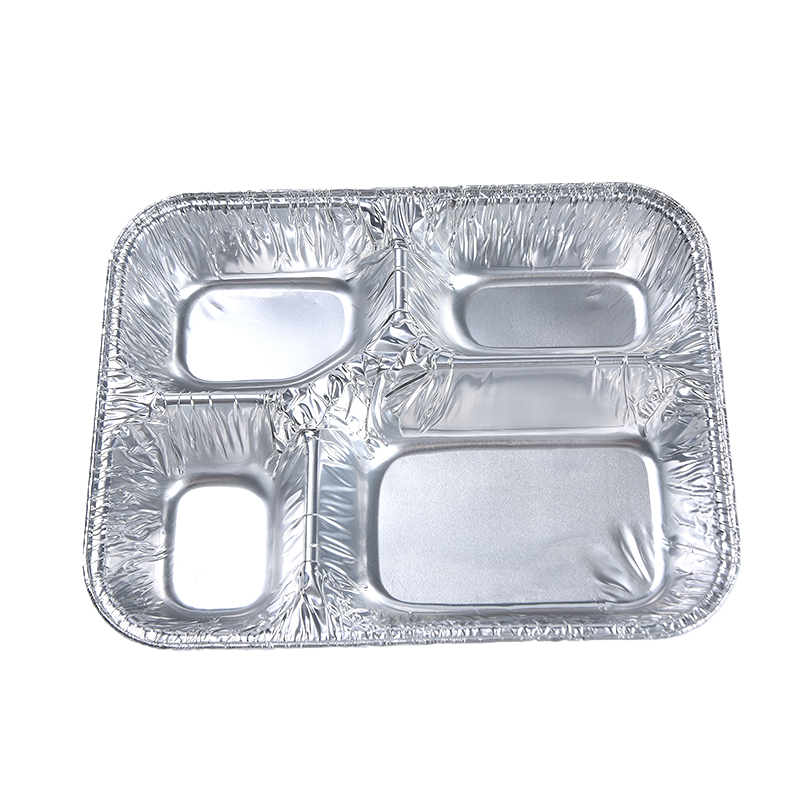


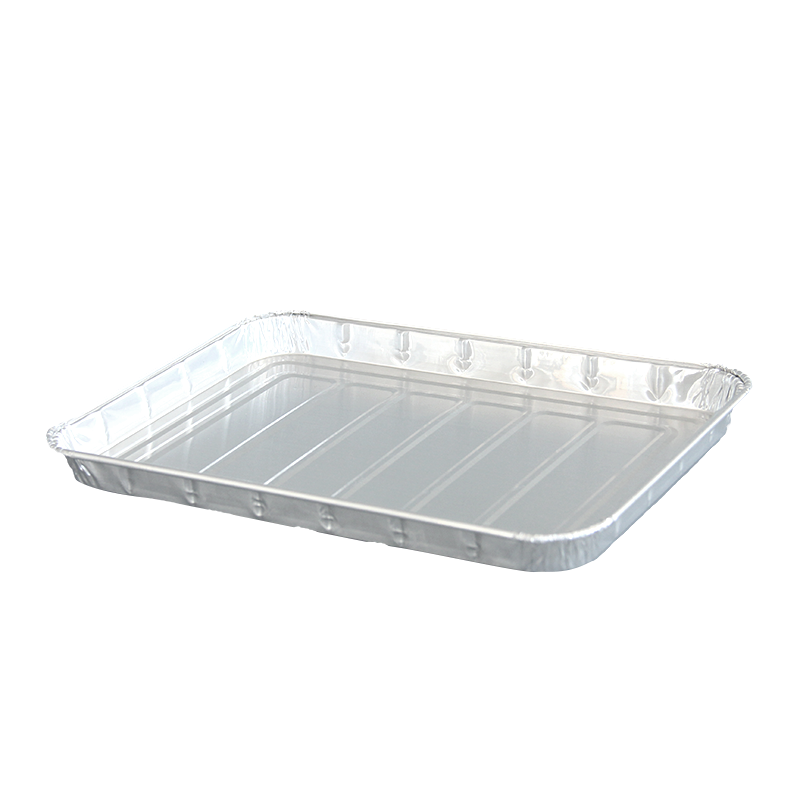
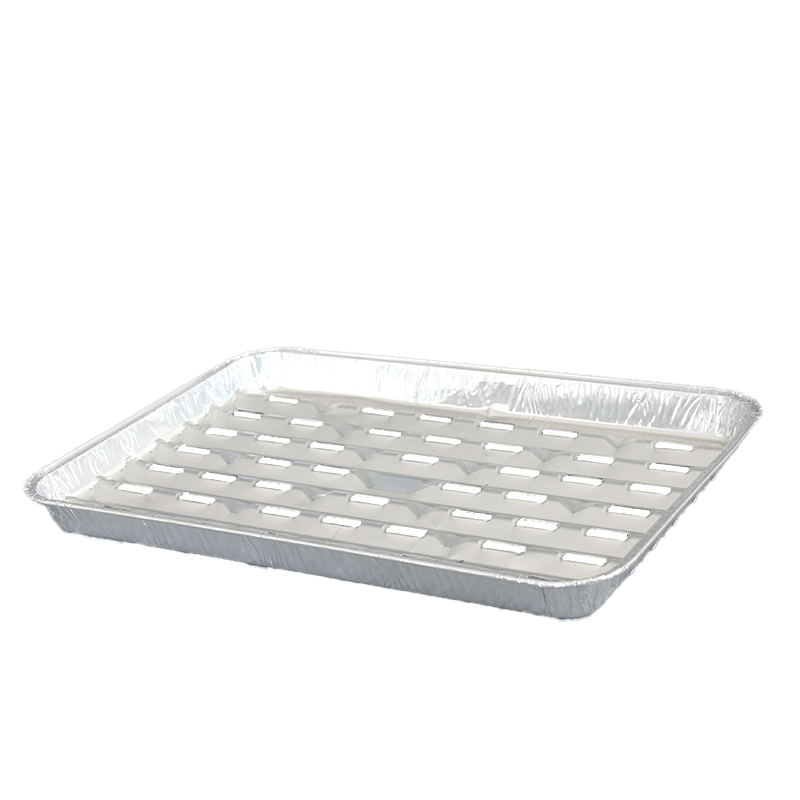
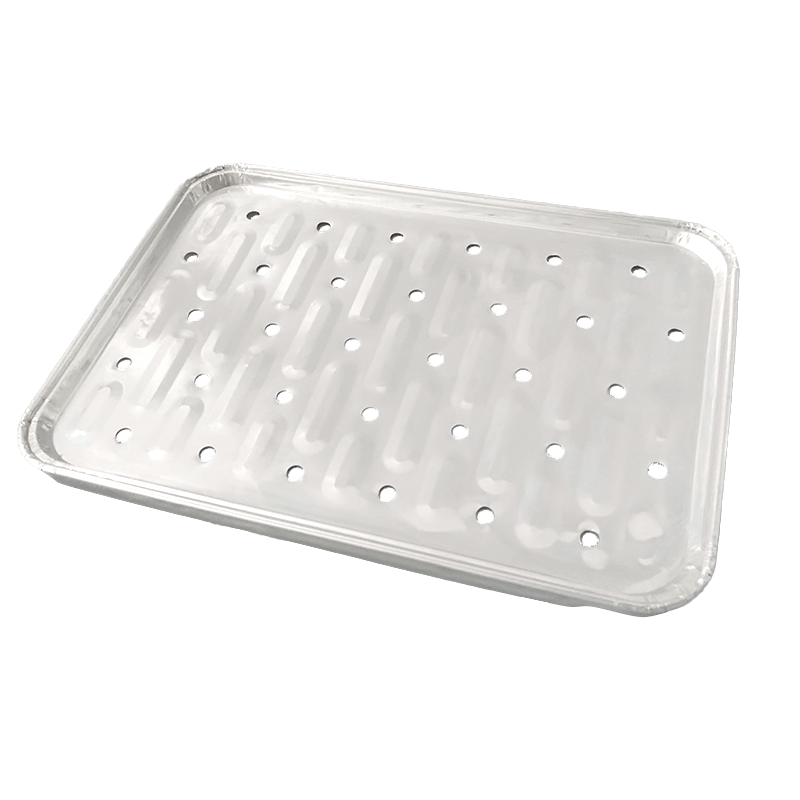
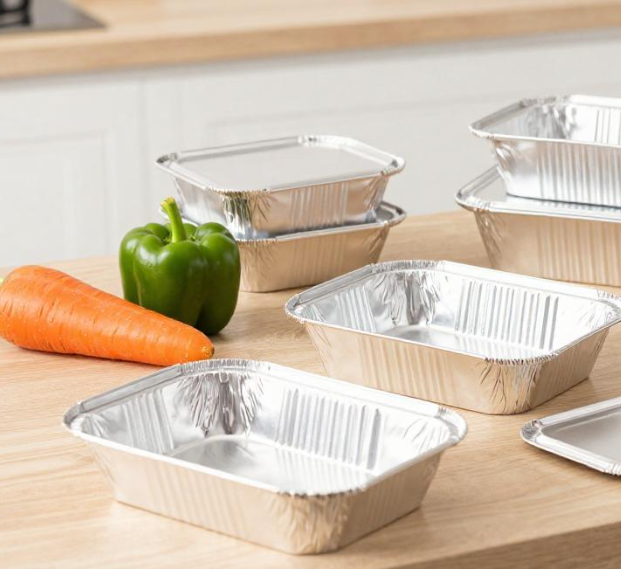

1. What Are Compartment Aluminum Foil Trays?
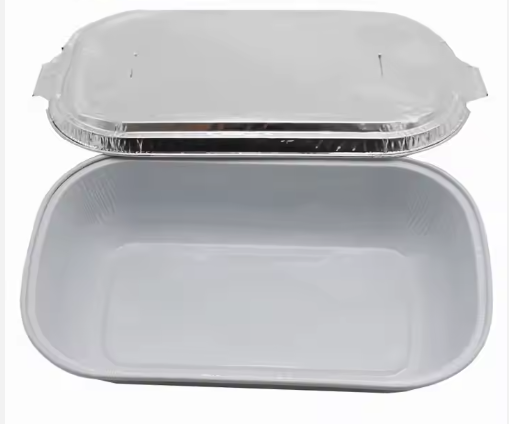
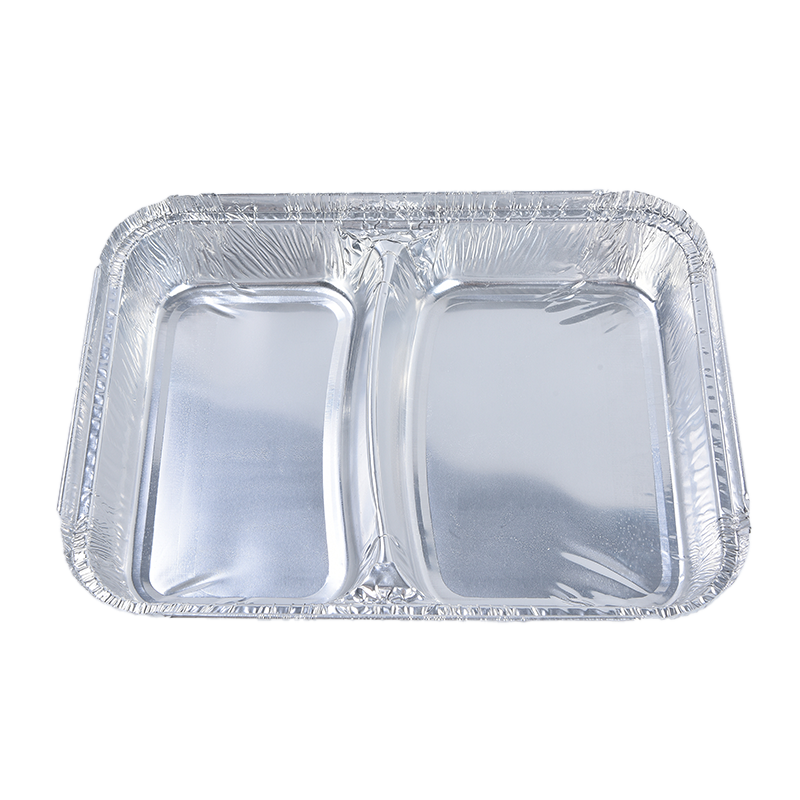
Compartment aluminum foil trays are food packaging containers designed with two or more separate sections in one tray. The divided structure allows main dishes, side dishes, sauces, vegetables, rice, desserts, and other foods to be packed together while keeping them physically separated. This makes compartment trays particularly valuable for ready meals, takeaway food, airline catering, institutional catering, school meals, hospital food, meal preparation, and large-scale foodservice operations.
Manufactured from food-grade aluminum foil, these trays combine low weight with useful rigidity and efficient heat transfer. Depending on the specific specification and intended use, aluminum foil trays can support conventional oven cooking or reheating, chilled storage, and frozen food applications. For B2B buyers, the key purchasing factors include compartment configuration, dimensions, capacity, foil thickness, rim design, lid compatibility, carton packing, and logistics efficiency.
The main commercial advantage is portion separation: one tray can package a complete meal while reducing contact between different foods during storage and transportation.
2. Why Choose Compartment Aluminum Foil Trays for Commercial Food Packaging?
(1) Better Separation of Different Foods
A divided tray is useful when a meal contains foods with different textures or moisture levels. For example, rice can remain separated from vegetables, meat can be kept apart from sauces, and desserts can be placed in a dedicated section. This can improve product presentation and reduce unwanted mixing before consumption.
(2) Efficient Heating and Reheating
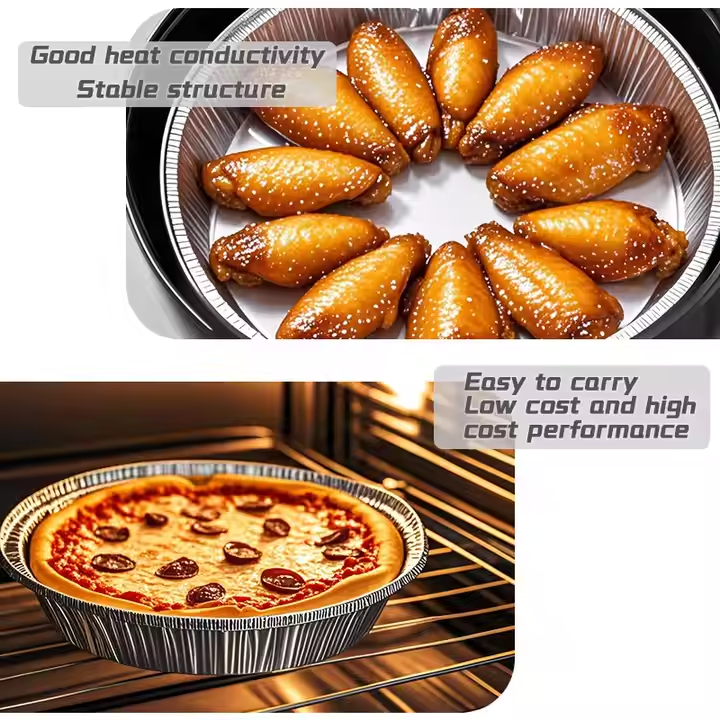
Aluminum has high thermal conductivity, allowing heat to transfer efficiently through the container. This characteristic makes suitable aluminum trays practical for commercial kitchens and prepared-meal manufacturers where food may need to be cooked or reheated in its final package. The exact temperature limits should always be confirmed against the manufacturer's specifications.
(3) Suitable for Chilled and Frozen Meals
Compartment aluminum trays can be used for many chilled and frozen meal applications. This is particularly useful for food manufacturers producing standardized meals in high volumes. A single tray can move through filling, storage, distribution, reheating, and serving processes, provided the complete packaging system is designed for those conditions.
(4) Simplified Portion Management
For institutional foodservice, portion consistency is an important operational requirement. A three-compartment tray, for example, can separate a main course, vegetable serving, and side dish. Standardized cavity dimensions help food operators establish repeatable filling procedures and maintain consistent presentation across thousands of meals.
3. Common Compartment Configurations and Applications
The ideal compartment configuration depends on the food combination, serving size, production process, and target market. Two-compartment trays are often suitable for a main dish and side dish, while three- and four-compartment designs can accommodate complete meal combinations.
| Configuration | Typical Application | B2B Advantage |
|---|---|---|
| 2 Compartments | Main dish + side dish | Simple portion control |
| 3 Compartments | Main course + vegetable + side | Suitable for complete meals |
| 4 Compartments | Multi-item prepared meals | Greater food separation |
| Custom Layout | Specialized meal programs | Designed around specific recipes |
For example, an institutional meal supplier serving 10,000 meals per day could use a standardized three-compartment tray to divide protein, vegetables, and carbohydrates. A consistent cavity layout can simplify filling instructions and reduce the need for multiple individual containers.
4. Major Commercial Applications of Compartment Foil Trays
(1) Ready Meal Manufacturers
Prepared-meal manufacturers can use divided aluminum trays to package complete meals in a standardized format. Different compartments can accommodate meat, rice, pasta, vegetables, sauces, or desserts. This supports consistent portioning and convenient consumer reheating when the selected packaging specification permits it.
(2) Airline Catering
Airline catering requires packaging that supports large-scale meal preparation, transportation, storage, and controlled serving. Compartment trays can separate different food components and help catering teams maintain an organized meal presentation. Buyers should evaluate tray dimensions against catering equipment, carts, storage systems, and airline-specific requirements.
(3) School and Institutional Meals
Schools, hospitals, nursing facilities, military catering operations, and other institutions often need standardized meal portions. Multi-compartment trays can reduce the number of separate packages required for one meal and help maintain clear food separation.
(4) Food Delivery and Takeaway
Delivery operators can use divided trays when a meal includes multiple components that should not mix during transportation. Matching lids provide an additional layer of protection and can improve handling during delivery. Buyers should test the complete tray-and-lid combination under realistic transportation conditions.
5. Important Specifications for Wholesale Buyers
For B2B procurement, selecting a compartment aluminum foil tray should begin with the finished food product rather than the container alone. Buyers should define the required portion volume, compartment ratio, food weight, storage temperature, heating method, lid type, stacking requirements, and distribution environment.
(1) Foil Thickness and Rigidity
Foil thickness influences the rigidity and handling characteristics of a tray. A thicker specification may be appropriate for heavier meals or applications requiring greater mechanical strength, while optimized thinner material may reduce packaging weight. The correct choice should be based on actual performance testing rather than thickness alone.
(2) Capacity and Compartment Ratio
A tray's total capacity does not tell the entire story. Two trays with similar external dimensions can have significantly different usable volumes because their internal compartment proportions differ. Buyers should specify the approximate grams or milliliters required for each food section.
(3) Lid Compatibility
Aluminum foil lids, plastic lids, and paperboard lid solutions can be used depending on the application. For automated sealing operations, the tray rim and lid material must be compatible with the sealing process. A production trial is recommended before committing to high-volume orders.
(4) Carton and Pallet Efficiency
Packaging efficiency affects the total landed cost. If a tray is nested efficiently and packed in optimized cartons, more units can potentially be transported per pallet or container. For international buyers, carton dimensions and loading plans should be reviewed alongside the unit quotation.
6. Food Safety and Regulatory Requirements in 2026
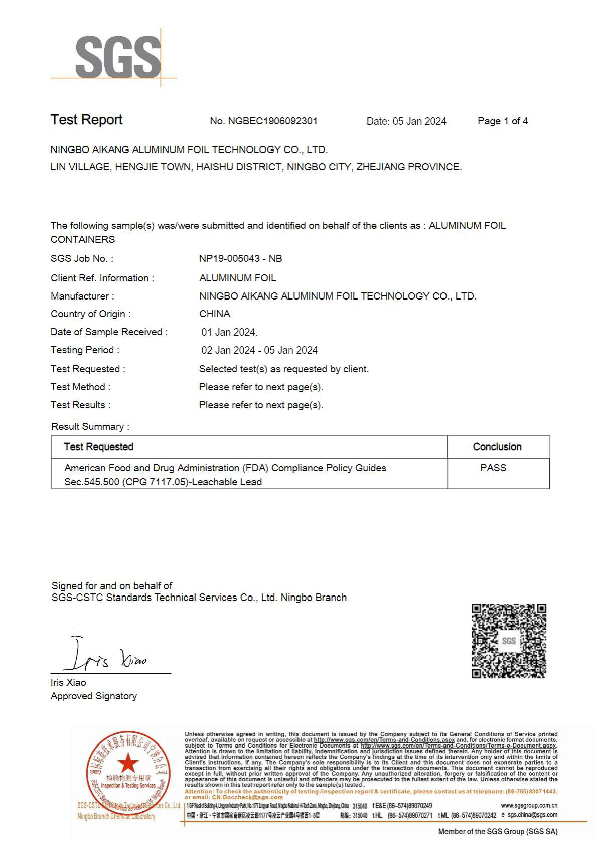
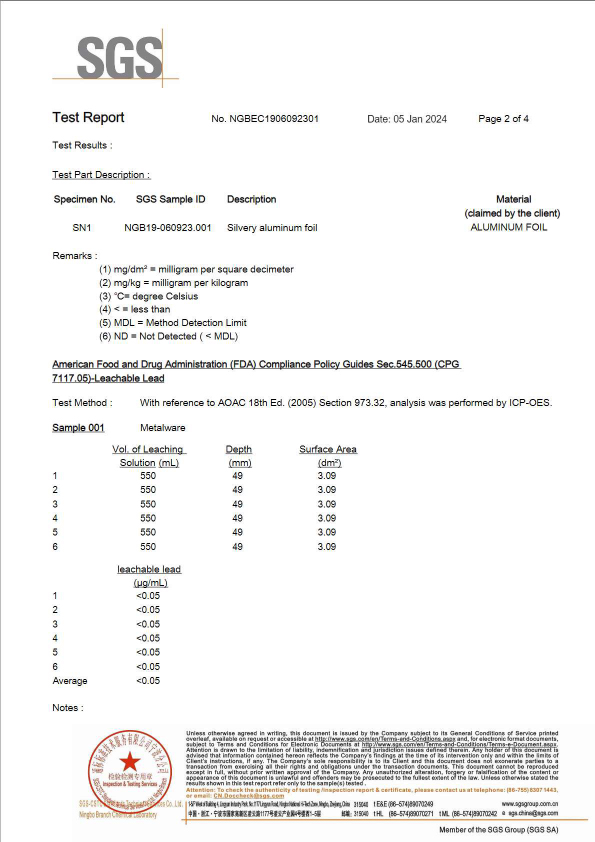
Food-contact compliance is a key requirement when importing aluminum foil trays. In the United States, food-contact substances are regulated according to applicable FDA requirements, including relevant provisions of 21 CFR and conditions of use. FDA guidance recognizes that food type and conditions such as refrigerated storage, frozen storage, heating, and cooking can affect the applicable requirements.
For the European market, food-contact materials are subject to Regulation (EC) No 1935/2004 and applicable Good Manufacturing Practice requirements. The European Commission requires food-contact materials to be sufficiently inert so that they do not endanger human health or cause unacceptable changes to food composition, taste, or odor.
As of August 2026, European packaging buyers should also pay close attention to the EU Packaging and Packaging Waste Regulation (PPWR), whose general application starts on August 12, 2026. The regulation introduces broader requirements covering packaging sustainability, recyclability, waste prevention, and the packaging life cycle.
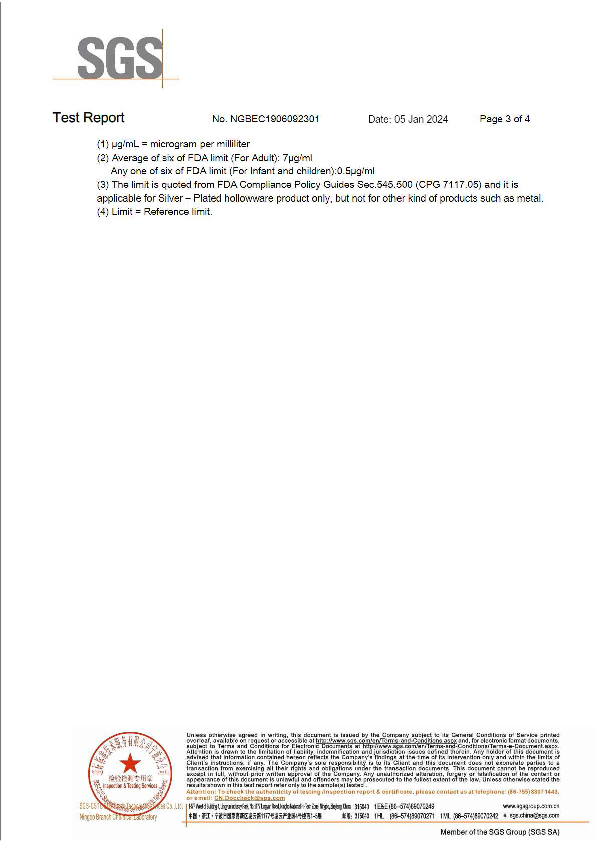
For international B2B orders, buyers should request the documentation applicable to the destination market, intended food type, temperature conditions, and packaging construction. A general “food grade” statement should not replace market-specific compliance documentation.
7. Sustainability Advantages of Aluminum Food Trays
Aluminum is widely used in food packaging because it combines low weight, durability, heat conductivity, and recycling potential. For B2B customers, sustainability should be evaluated across the complete packaging system rather than through material claims alone. Product weight, manufacturing efficiency, transport distance, recycling infrastructure, contamination, and local regulations can all influence environmental performance.
The European PPWR is increasing the importance of packaging recyclability and resource efficiency. Companies supplying packaging to Europe should monitor applicable requirements and ensure that product specifications and supporting documentation are kept current as implementation requirements develop.
For commercial procurement, optimized material use combined with reliable tray performance can provide a practical balance between packaging efficiency, product protection, and sustainability objectives.
8. Why Choose Ningbo Aikang Aluminum Foil Technology Co., Ltd.?
Ningbo Aikang Aluminum Foil Technology Co., Ltd. is a China Compartment Aluminum Foil Trays Supplier and Compartment Aluminum Foil Trays Factory, located in Haishu District, Ningbo, one of China's important port cities. The company focuses on the design, development, and production of disposable aluminum foil products and practical packaging solutions for changing international market requirements.
Aikang offers compartment aluminum foil trays in different configurations, including two-compartment, three-compartment, four-compartment, and customized designs. Different capacities, foil thicknesses, and matching lids can be supplied for takeaway, retail, institutional catering, food manufacturing, and other commercial applications.
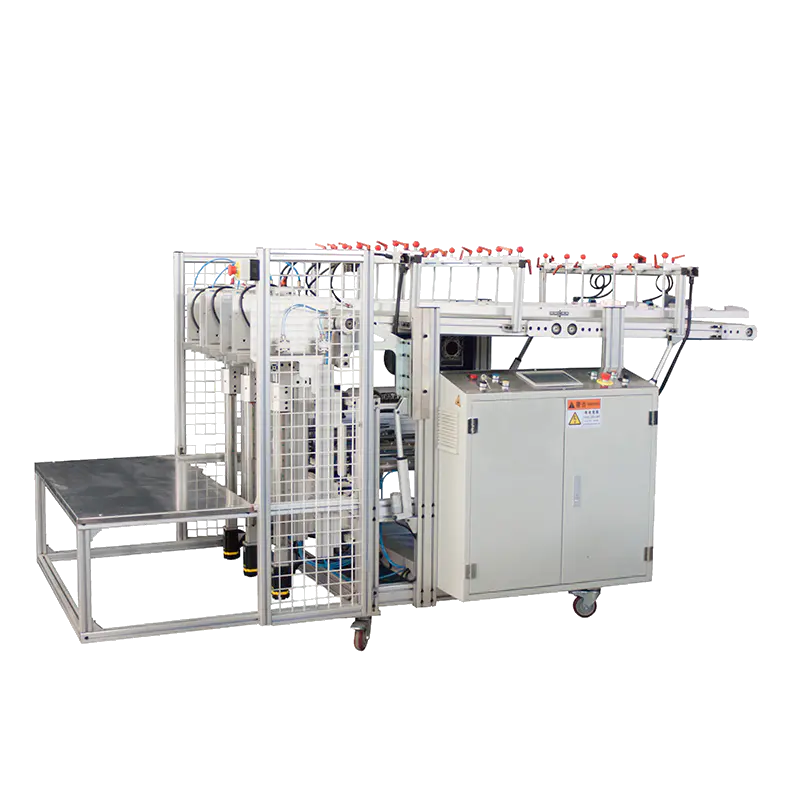
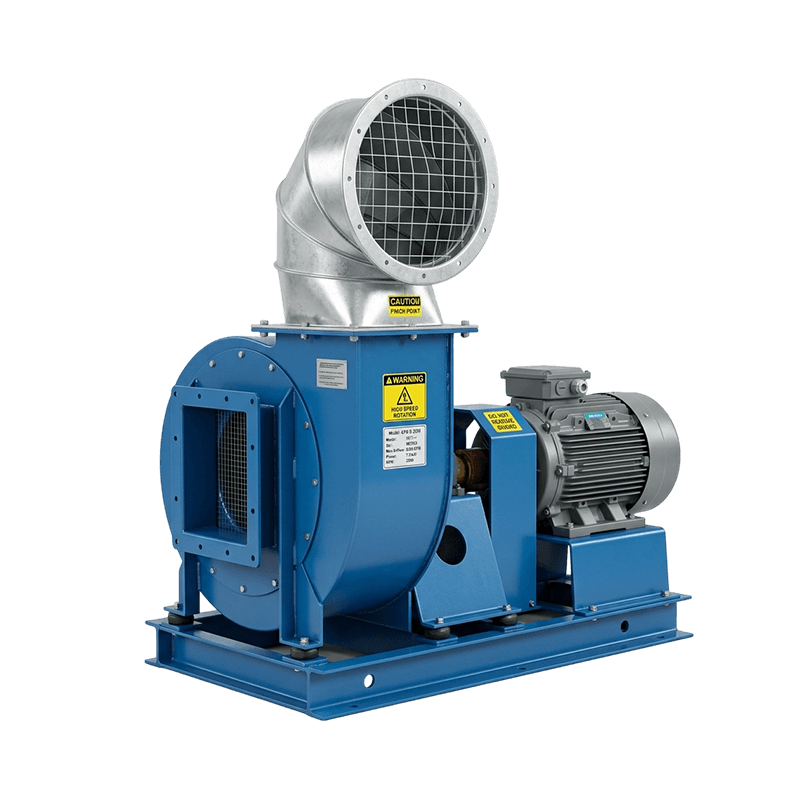
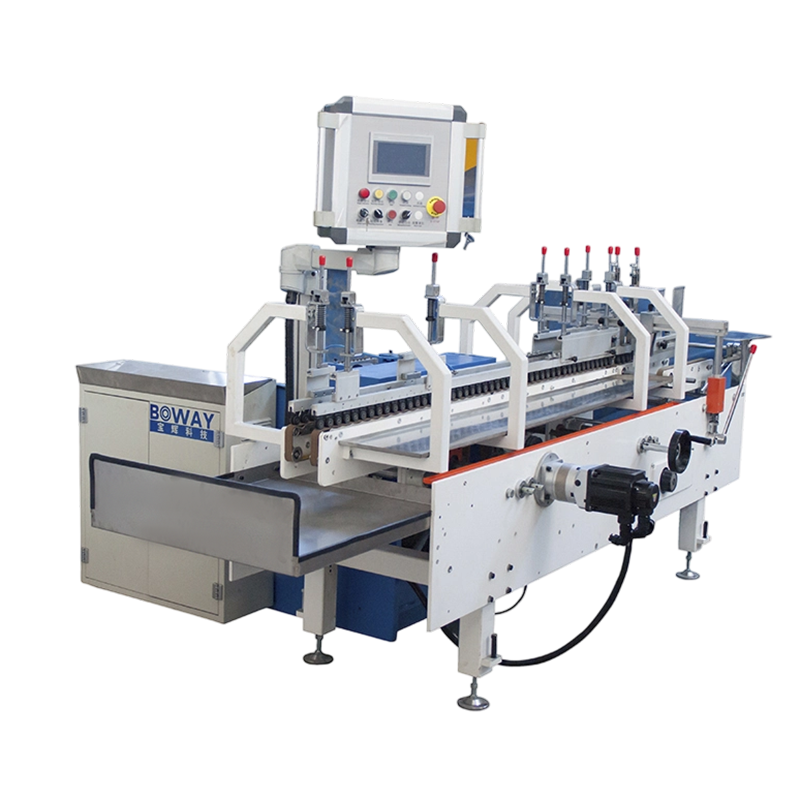
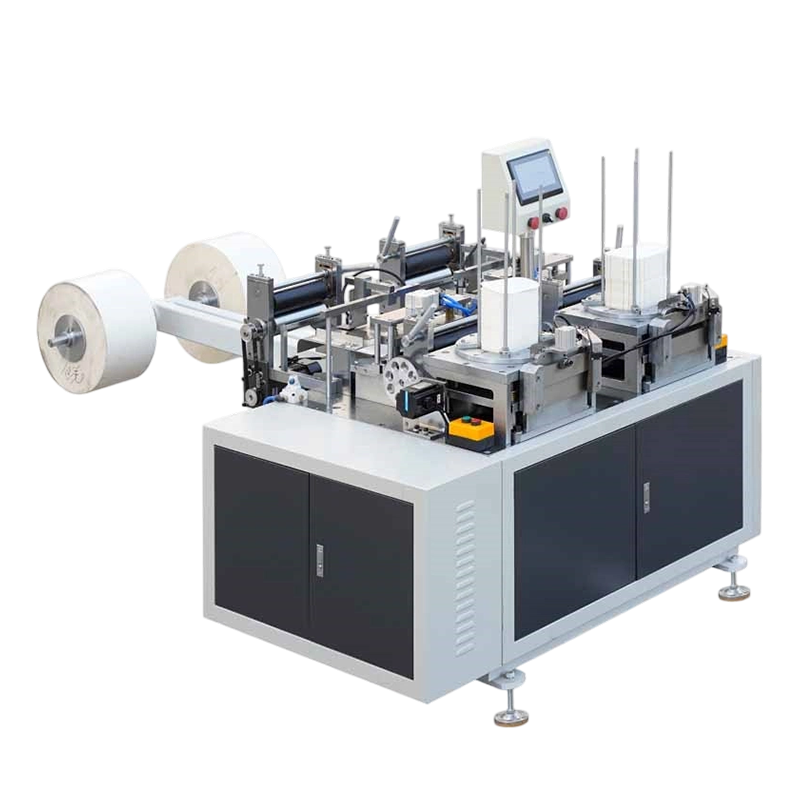
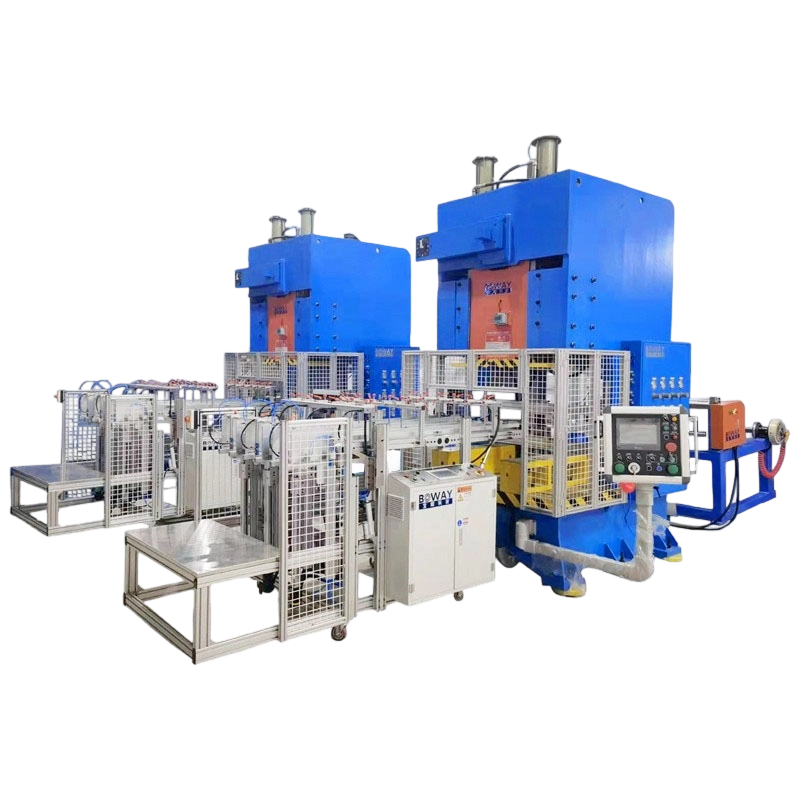
The company's main product range also includes aviation aluminum foil containers, barbecue pans, Turkey pans, aluminum loaf pans, and other aluminum foil containers. Several automatic production lines and molds support product diversity and high-volume manufacturing requirements.
With professional design capabilities, manufacturing facilities, dedicated molds, quality-focused production, and sales and service support, Aikang provides customized solutions including embossed logos, printed lids, private-label packaging, and specialized tray configurations.
9. How to Select a Reliable Compartment Aluminum Foil Tray Factory
Choosing a supplier based only on the lowest unit price can create problems in high-volume food packaging projects. A professional B2B evaluation should consider product quality, manufacturing consistency, compliance documentation, customization capability, production capacity, packaging efficiency, and delivery reliability.
- Confirm the aluminum material and applicable food-contact compliance documents.
- Check tray dimensions, compartment volume, foil thickness, and rim specifications.
- Test the tray with the actual food product and filling weight.
- Confirm compatibility with ovens, freezers, sealing equipment, and storage systems.
- Evaluate matching lid performance and leakage resistance.
- Review MOQ, carton quantity, pallet configuration, and shipping dimensions.
- Confirm tooling, logo embossing, printing, and private-label capabilities.
- Request samples before approving mass production.
For example, if a food manufacturer consumes 500,000 trays per month, a seemingly small difference in unit weight, packaging density, or rejection rate can become a significant annual cost. Supplier consistency therefore has a direct impact on total procurement cost, production efficiency, and customer satisfaction.
10. Frequently Asked Questions About Compartment Aluminum Foil Trays
Q1. Are compartment aluminum foil trays safe for food packaging?
Food-contact safety depends on the material specification, manufacturing process, intended food, and conditions of use. Commercial buyers should source trays specifically manufactured for food-contact applications and request documentation appropriate for the destination market. In the United States, applicable FDA requirements depend on the food-contact substance and conditions of use.
Q2. Can compartment aluminum foil trays go in the oven?
Many aluminum foil trays are suitable for conventional oven applications because aluminum provides efficient heat transfer. However, the exact temperature range and use conditions depend on the individual tray specification. B2B buyers should follow the manufacturer's technical instructions and test the complete tray, food, and lid system before commercial deployment.
Q3. Can compartment aluminum foil trays be used for frozen meals?
Suitable aluminum trays can be used for frozen food applications and are widely considered for frozen prepared meals. Buyers should confirm the container's suitability for the actual freezing temperature, storage duration, food formulation, stacking pressure, and subsequent reheating process. The entire packaging system should be validated for the intended supply chain.
Q4. What is the difference between 2-compartment and 3-compartment foil trays?
A two-compartment tray normally separates two food components, such as a main course and side dish. A three-compartment tray provides an additional section and is useful for meals containing a protein, carbohydrate, and vegetable. The best configuration depends on the recipe, serving size, food moisture, and desired presentation.
Q5. Can compartment aluminum foil trays be customized?
Yes. Depending on the manufacturer's capabilities, customization can include two-, three-, or four-compartment layouts, special dimensions, different capacities, foil thicknesses, embossed logos, printed lids, and private-label packaging. For customized projects, buyers should provide product dimensions, food weight, compartment ratios, artwork, expected order quantity, and target market requirements.
Q6. What sizes are available for wholesale compartment foil trays?
There is no single universal size range because commercial suppliers manufacture trays for different meal portions and applications. Buyers should specify external dimensions, depth, total capacity, and individual compartment capacity. A custom design may be more appropriate when a food manufacturer has fixed filling weights or specialized production equipment.
Q7. What lid is best for compartment aluminum foil trays?
The best lid depends on the distribution method and sealing process. Aluminum foil lids can provide a strong packaging solution for certain food applications, while plastic or paperboard lids may be preferred for visibility, branding, or specific retail requirements. For delivery, buyers should test the tray and lid together for leakage, stacking, handling, and transportation performance.
Q8. Are aluminum foil trays recyclable?
Aluminum is a recyclable material, but actual recycling depends on local collection systems, sorting infrastructure, contamination, and applicable regulations. Businesses selling packaging into Europe should monitor the EU PPWR because its requirements place increasing emphasis on packaging recyclability and resource efficiency.
Q9. How do I buy compartment aluminum foil trays in bulk?
Start by defining the required compartment configuration, dimensions, capacity, foil thickness, food application, lid type, order quantity, and destination market. Request technical specifications and samples from qualified factories, then evaluate tray performance using the actual food product and production conditions. Before signing a long-term supply agreement, confirm MOQ, lead time, quality standards, packaging details, compliance documents, and customization terms.
Q10. How can I find a reliable compartment aluminum foil tray manufacturer in China?
Look for a factory with established aluminum foil container production capabilities, relevant molds and automated production equipment, consistent quality control, customization services, export experience, and appropriate food-contact documentation. Request samples and verify production specifications before placing a large order. For long-term B2B purchasing, manufacturing stability and technical support should be evaluated alongside price.