
 English
 日本語
 عربى
 Español

-
 01
Disposable Aluminum Food Packaging: Practical Applications, Selection, Performance
Industry News-At a caterer packing 1,200 hot meals, a fraction of a millimeter in tray wall thickness can decide whether a delivery arrives clean or with buckled corners and leaked sauce. That is why disposable aluminum food packaging should be bought as a specified component, not as a generic commodity. The right choice depends on the food, holding time, lid system, warming method, stack height, and case pack.
The practical answer is not to use the heaviest foil everywhere. It is to match the container to the load, then confirm the rim, coating, and food-contact documentation. Aluminum gives a strong starting point because it is rigid, heat-conductive, grease-resistant, and recyclable. But a 7-inch round takeout container, a four-compartment tray, and a 4,500 ml roasting pan do different jobs. This guide shows how to compare them before you place an order.
Content
- 1 What disposable aluminum food packaging is actually buying you
- 2 Choose the format around the menu, not the catalog
- 3 The specifications that decide whether a tray performs
- 4 Food safety, oven use, and the microwave question
- 5 Sustainability claims need a disposal route
- 6 Sourcing checklist for distributors and foodservice buyers
- 7 Frequently asked questions
What disposable aluminum food packaging is actually buying you
A formed foil tray is more than a sheet of metal. It is a package with a base, wall, rim, and often a matched lid. Each part controls a different risk:
- Heat transfer: aluminum moves heat quickly, which helps with baking, reheating, and hot holding, but it also means the tray must be supported correctly.
- Barrier: foil blocks light, grease, and oxygen better than many open paper or plastic formats, provided the coating and seal are suitable for the food.
- Rigidity: the wall profile and gauge determine whether a tray survives stacking, transport, and service without denting.
- End of life: aluminum is recyclable, but food residue and local collection rules affect whether a tray is actually accepted.
Failures are predictable. They usually start at the corner radius, the cut edge of the rim, or the lid interface. A tray that looks acceptable on a sample table can still fail after 40 minutes in a warming cabinet or 20 minutes on a scooter. Buyers should test the finished package with the actual menu, not just the empty container.
Start with what the food does. A dry pastry needs a different tray from a saucy curry. A roast turkey needs a different pan from a single serving of rice. For takeout, a 7-inch round container is often the default for rice, noodles, and small entrées because it gives a familiar plate shape and stacks neatly. For multi-item meals, a compartment tray keeps components apart and speeds up portioning. For catering and roasting, a 4,500 ml oblong pan carries a turkey, a tray of lasagna, or a large batch of vegetables. The disposable aluminum foil containers range shows how widely these jobs differ.
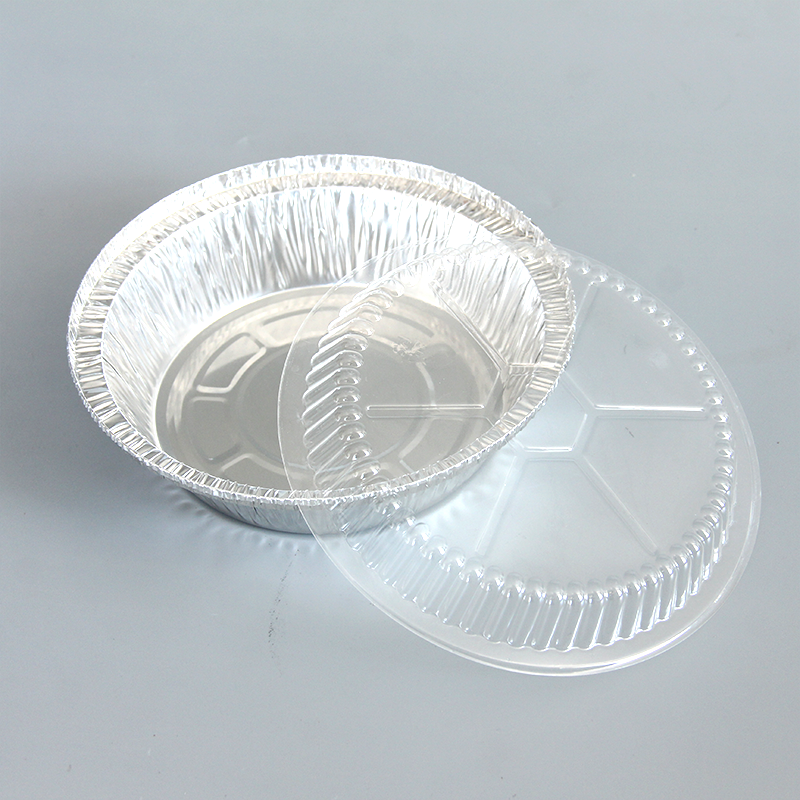 7-Inch Round Aluminum Foil Take-Out Container IK182A 700 ml round foil container for rice, noodles, and small entrées; its 185 mm diameter and stackable shape suit takeout and reheating.View Product →
 Custom 2-, 3-, and 4-Compartment Foil TrayA food-grade foil tray with two, three, or four compartments to separate meal components; reinforced edges and oil-proof construction suit bento and takeaway.View Product →
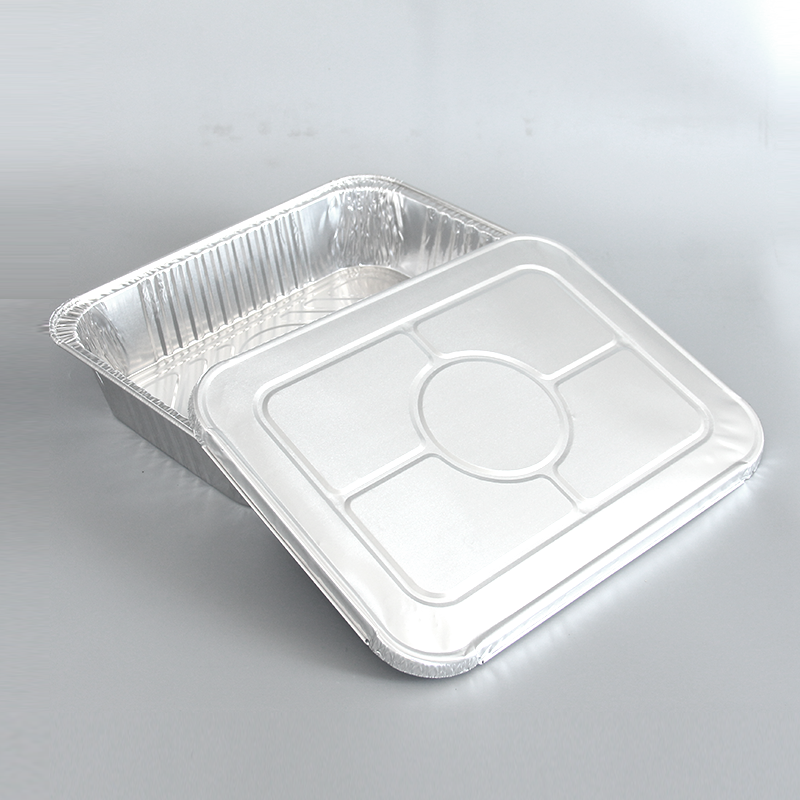 4500 ml Oblong Aluminum Foil Pan IK365A 4,500 ml oblong foil pan for roasting, lasagna, and catering batches; its 360 by 271 mm outer size supports oven-to-table food service.View Product →
Use the table as a shortlist, then ask for a dimension drawing and a formed sample. Capacity alone is a weak specification because a tall narrow tray and a shallow wide tray can hold the same volume but behave differently in transport.
| Format | Typical capacity range | Best for | Buyer check |
|---|---|---|---|
| Oblong container | 150 to 2,200 ml | Entrées, rice, pasta, meal prep, delivery | Lid fit, corner radius, stack stability |
| Round takeout container | 7 to 9 inch | Noodles, salads, plates, pastries | Rim flatness, lid match, denesting |
| Compartment tray | 2, 3, or 4 compartments | Bento, cafeteria meals, airline catering | Divider seal, mixed-food leaks, portion fit |
| Bowl or cup | 150 to 850 ml | Sides, sauces, desserts, soups with approved lid | Diameter, depth, lid seal, coating |
| Roasting or steam pan | 2,200 to 5,000 ml | Turkey, catering batches, baking, steam tables | Gauge, pan depth, support, oven rating |
For a distributor, the trap is carrying too many similar sizes. A tight range that covers small, medium, large, and compartment service is easier to sell, stock, and reorder than a catalog with five near-duplicate trays.
The specifications that decide whether a tray performs
Once the format is set, lock the drawing. The following points should appear on the purchase specification:
- Gauge and temper: specify the foil thickness with a tolerance, not just a nominal value. Thin foil can save material but may dent under stacked meals.
- Dimensions: record top-out, base, depth, and capacity. The top-out dimension controls lids and case packing; the base controls food volume.
- Rim design: a flat, consistent rim supports lidding, crimping, and sealing. A wavy rim is a direct leak risk.
- Coating or treatment: confirm whether the tray is plain foil or coated, and whether that surface suits acidic, high-fat, or high-moisture foods.
- Lid compatibility: a tray and lid are a system. Test the pair after filling, chilling, and reheating.
- Temperature rating: ask for the supplier's maximum use temperature and any restrictions for oven, warming cabinet, or microwave use.
Temperature is a common source of confusion. Aluminum withstands normal baking heat well, but the food, coating, lid, and support determine the practical limit. The chart below shows approximate application zones used in foodservice discussions; it is not a substitute for a supplier rating.
Illustrative zones only. Confirm the filled-package performance with your own oven and delivery test.
A formed tray also needs a visual check, not just a data sheet. The structure below shows where buyers should inspect samples before approving a production run.
A 30-second inspection of a formed sample often reveals more than a specification sheet.
Food safety, oven use, and the microwave question
Aluminum foil packaging is widely used for baking, roasting, and hot holding. In a conventional oven, the metal tolerates normal baking temperatures, but the practical limit still depends on the tray, coating, lid, and food load. Do not assume that because a tray is aluminum, every accessory in the pack is oven-safe.
Microwave use needs more caution. Metal can arc, especially when the tray is empty, dented, twisted, or close to the cavity wall. USDA food safety guidance generally warns against metal in microwaves, so treat foil as microwave-safe only when both the container supplier and the microwave manufacturer specifically approve the combination.
- Ask for a food-contact declaration for the intended market.
- Check whether the coating suits acidic tomato, vinegar, or high-fat foods.
- Confirm the maximum use temperature and whether it applies to the tray, lid, or both.
- Test the package with the real holding time and delivery route, not a 5-minute bench sample.
For takeout, leakage is usually a bigger commercial risk than oven performance. A rim that is not flat, a lid that does not match, or a wall that deforms under load will create complaints long before a temperature limit becomes relevant.
Sustainability claims need a disposal route
Aluminum is recyclable without losing its quality, which makes it an attractive material for food packaging. The operational question is whether the used tray reaches a recycling stream. A tray covered in cheese, sauce, or oil may be rejected by a local program, and collection rules vary by city and country.
Buyers should separate material efficiency from end-of-life claims. A lighter gauge can reduce material use, but it may also increase dents and leakers. A recycled-content or recyclability claim needs documentation and clear on-pack wording. The strongest position is a package that uses material efficiently, performs reliably, and gives customers a realistic disposal instruction for their area.
Sourcing checklist for distributors and foodservice buyers
Before a full container load, run a pilot with the actual food and handling conditions. A practical approval checklist looks like this:
- Request a dimension drawing, capacity, gauge with tolerance, alloy or temper, and coating details.
- Test with the real menu: 45-minute hot hold, chilled storage, stacking, and a simulated delivery route.
- Inspect rim flatness, lid fit, corner cracks, coating adhesion, odor, and denesting force.
- Confirm food-contact documentation, lot traceability, and the maximum use temperature.
- Check case pack, pallet pattern, and whether the tray nests efficiently without jamming.
For food-contact projects, the food-grade aluminum foil trays range is a practical reference point, but the final specification still needs to match your menu, market, and lid system.
Ningbo Aikang Aluminum Foil Technology Co., Ltd is located in Haishu District, Ningbo, one of the most important port cities in China. The company is committed to the design, development, and production of environmentally disposable aluminum foil products and providing practical and advanced packaging solutions to meet the dynamic change of the market.
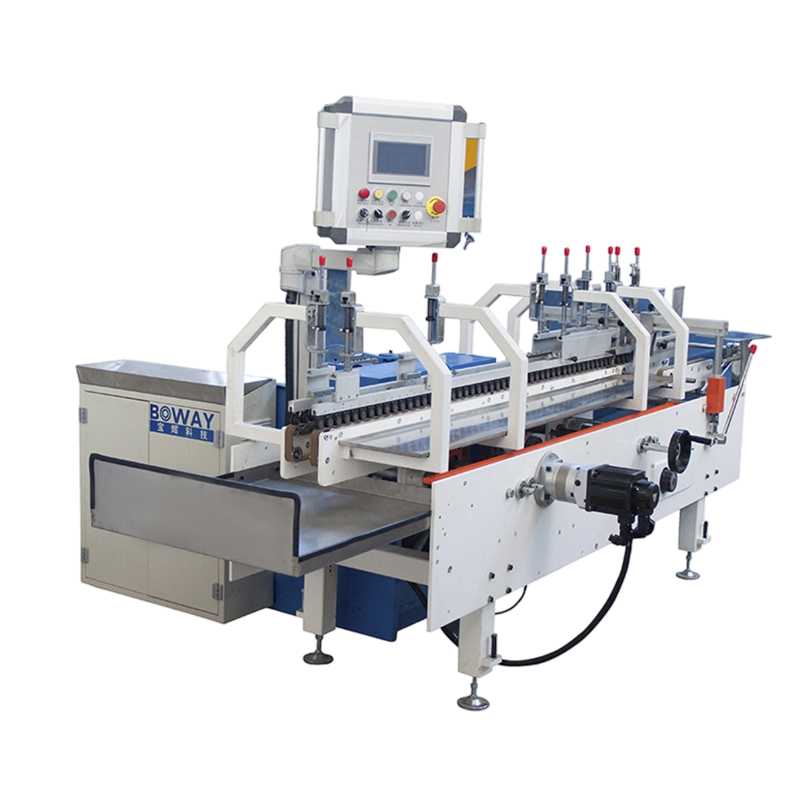
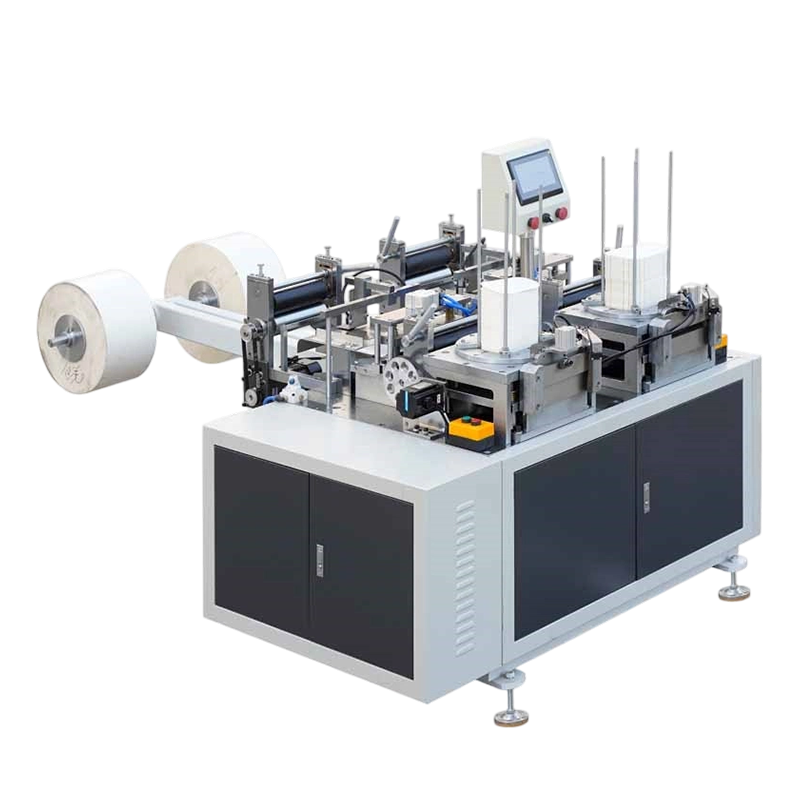
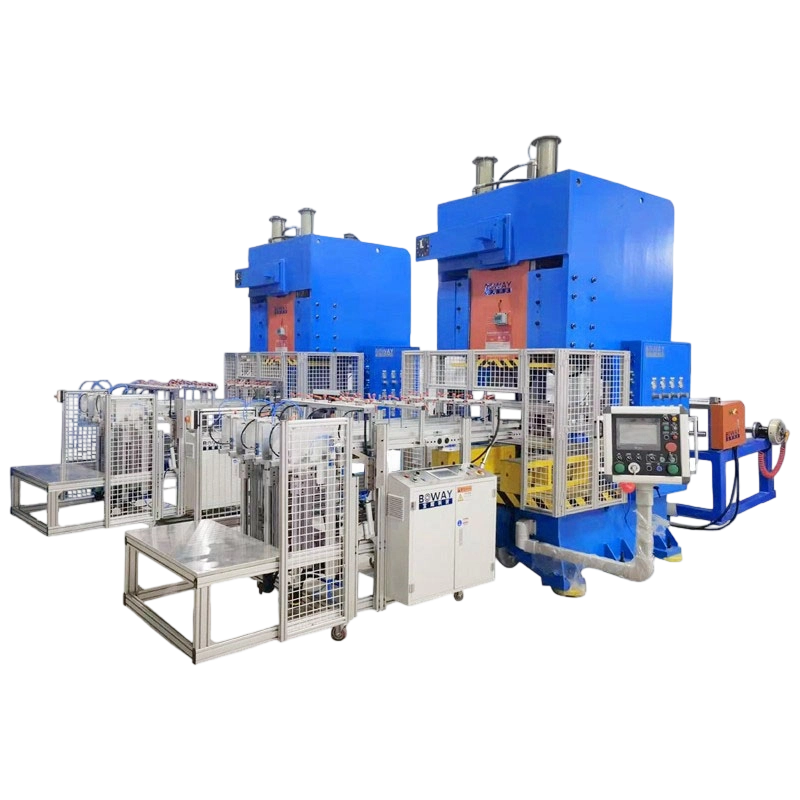
The main products consist of aviation aluminum foil containers, barbecue pans, Turkey pans, aluminum loaf pans, and other varied aluminum foil containers. Moreover, the company has developed several automatic production lines and molds to fully ensure the quality and diversity of the products. Equipped with professional design, advanced manufacturing facilities, and molds, qualified products, and a dedicated sales and service team, Aikang has ranked itself the top-notch enterprise in China.
The company has and will always hold the principle of " sincerity and integrity" to provide the best products and service to the customers at home and abroad and finally create a double-win situation. Looking forward to your visit and the cooperation with your esteemed company!
Frequently asked questions
Q1. Are disposable aluminum foil containers oven-safe?
For baking and reheating, yes, when the tray is undamaged and supported. Check the supplier's maximum temperature and whether the coating or lid is oven-safe.
Q2. Can they go in the microwave?
Usually no. Metal can arc. Use foil in a microwave only if both the container supplier and the microwave manufacturer approve it.
Q3. Are they leak-proof for takeout?
Not by default. Leak resistance depends on a flat rim, a matched lid, and a sealed edge. Test with the actual sauce and delivery time.
Q4. What gauge should a caterer buy?
Match gauge to load and stacking. Thin trays suit light single-layer service; heavier gauges suit roasting, steam pans, and multi-layer transport.
Q5. Are they recyclable?
Aluminum is recyclable, but food residue and local collection rules matter. Clean trays have a better chance of being accepted.
Q6. Can I freeze food in them?
Yes, aluminum performs well at freezer temperatures. Leave headspace for expansion and choose a lid that seals at low temperature.
Choose AiKang for Top-Quality
Aluminum Foil Products
Explore Our
Featured Products

Ningbo Aikang Aluminum Foil Technology Co., Ltd, based in Ningbo, produces eco-friendly disposable aluminum foil products. They prioritize quality and customer satisfaction, serving the global market with innovative packaging solutions.


Quick Links
Contact
-
 No. 5 Yongxing East Road, Fengshan Street, Yuyao City, Zhejiang Province, China
-
 Tel: +86-15867468784
-
 E-mail: [email protected]
Send Us A Message
