
 English
 日本語
日本語 عربى
عربى Español
Product Categories
Recent Posts
Aikang excels in eco-friendly aluminum foil products, delivering innovative packaging solutions and upholding quality and customer satisfaction globally.
contact usAluminum Foil Container Production Lines Supplier
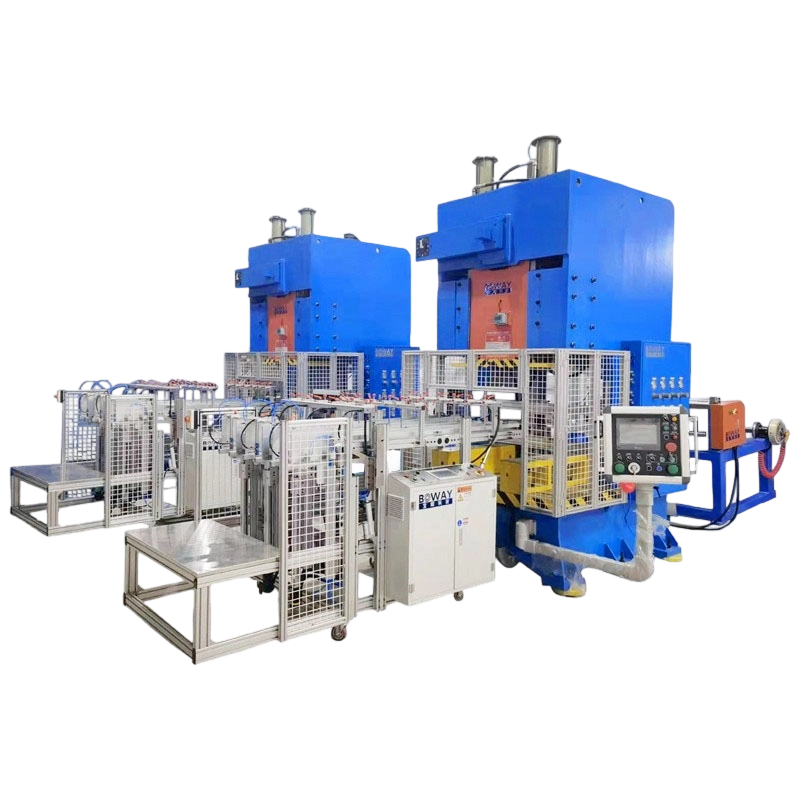
Aluminum foil container production lines are engineered for the high-efficiency manufacturing of disposable aluminum foil containers used in food packaging, catering, aviation, retail, and takeaway industries. A complete production line typically integrates automatic foil feeding, precision punching, container forming, scrap collection, stacking, and optional counting or packaging systems, enabling stable, continuous production with reduced labor requirements.
Designed for high-speed operation and consistent forming accuracy, these production lines support the production of a wide range of container types, including rectangular containers, round containers, compartment trays, roasting pans, and customized foil packaging. Quick mold change capability allows manufacturers to switch between different container sizes and shapes with minimal downtime, improving production flexibility and equipment utilization.
The production line is compatible with various aluminum foil thicknesses and alloy grades, delivering reliable performance across different product specifications. Servo control systems, PLC automation, and touchscreen interfaces simplify operation while improving production efficiency, dimensional accuracy, and material utilization. Integrated scrap rewinding systems help reduce material waste and support more economical manufacturing.
Suitable for aluminum foil container manufacturers, food packaging companies, OEM producers, and new production facilities, aluminum foil container production lines can be configured according to required production capacity and factory layout. Customized solutions, including mold design, automatic stacking, online counting, robotic collection, and downstream packaging integration, are available to help customers build efficient, scalable production systems for domestic and international markets.
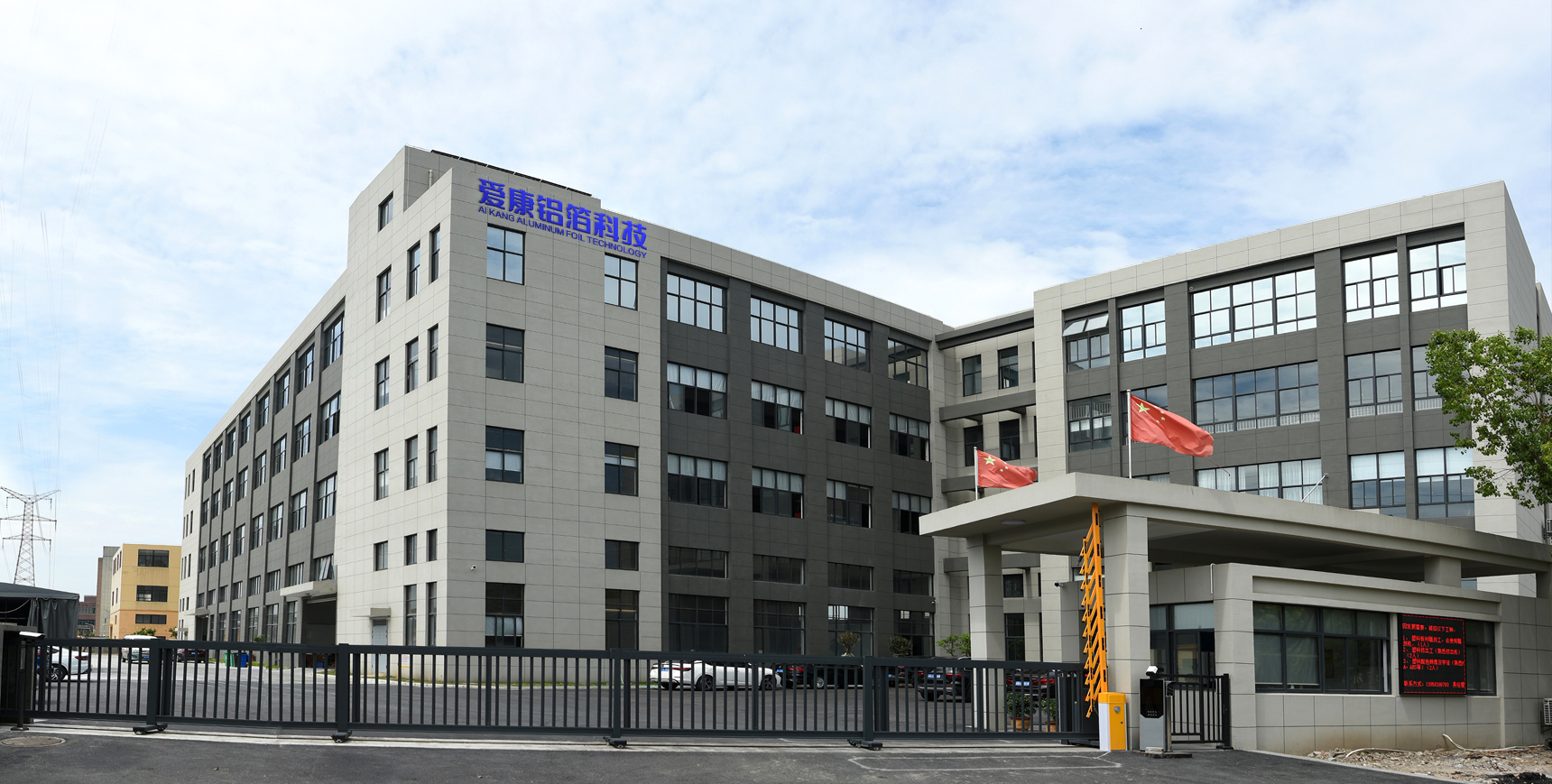

Ningbo Aikang Aluminum Foil Technology Co., Ltd.
Ningbo Aikang Aluminum Foil Technology Co., Ltd. is China Aluminum Foil Container Production Lines Supplierand Aluminum Foil Container Production Lines Factory, located in Haishu District, Ningbo, one of the most important port cities in China. The company is committed to the design, development, and production of environmentally disposable aluminum foil products and providing practical and advanced packaging solutions to meet the dynamic change of the market.
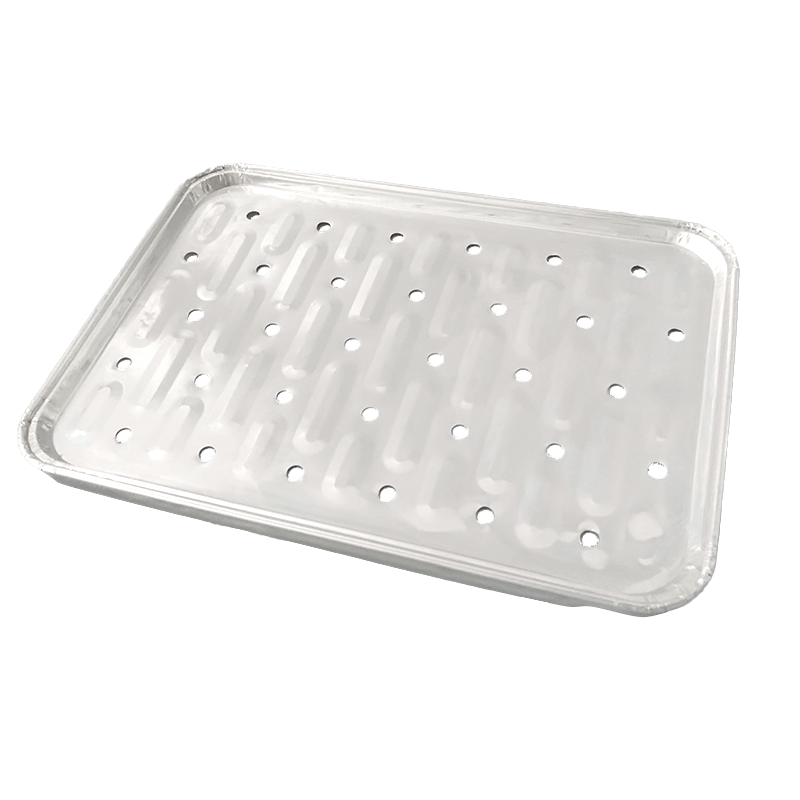
The main products consist of aviation aluminum foil containers, barbecue pans, Turkey pans, aluminum loaf pans, and other varied aluminum foil containers. Moreover, the company has developed several automatic production lines and molds to fully ensure the quality and diversity of the products. Equipped with professional design, advanced manufacturing facilities, and molds, qualified products, and a dedicated sales and service team, Aikang has ranked itself the top-notch enterprise in China.
The company has and will always hold the principle of " sincerity and integrity" to provide the best products and service to the customers at home and abroad and finally create a double-win situation. Looking forward to your visit and the cooperation with your esteemed company!
-
0Years of industry experience
We bring a wealth of knowledge and expertise to every project. Our extensive experience allows us to understand the unique challenges and requirements of the industry, enabling us to deliver tailored solutions that meet the highest standards.
-
0+Manufacturing Facilities
Aikang's extensive manufacturing and distribution network is a key driver of our ability to quickly and efficiently serve our customers.
-
0+Employees
We work hard as a team to continuously earn and sustain the trust of our customers and the consumers they serve.
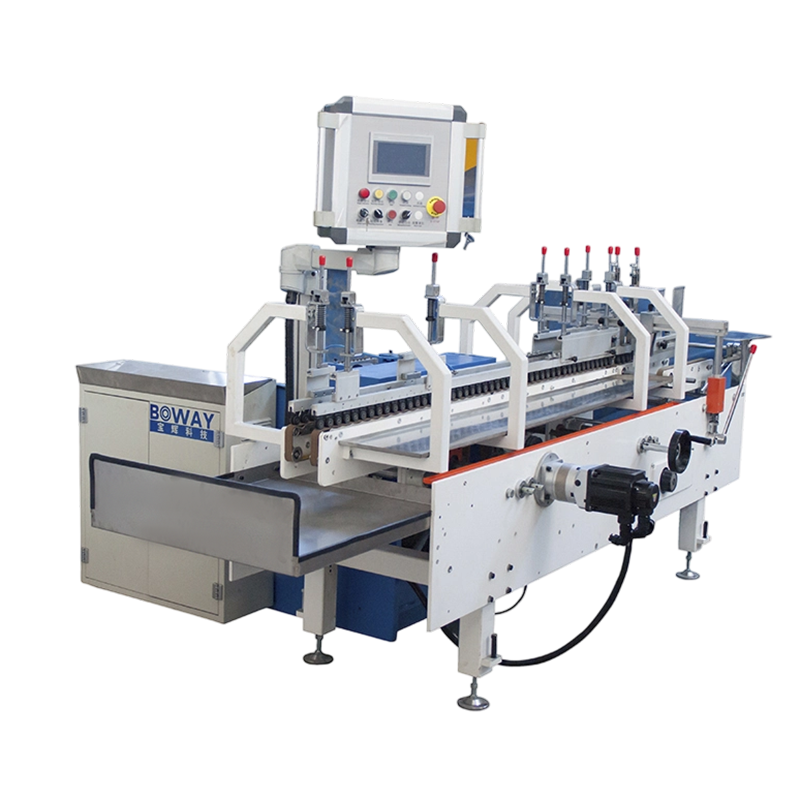
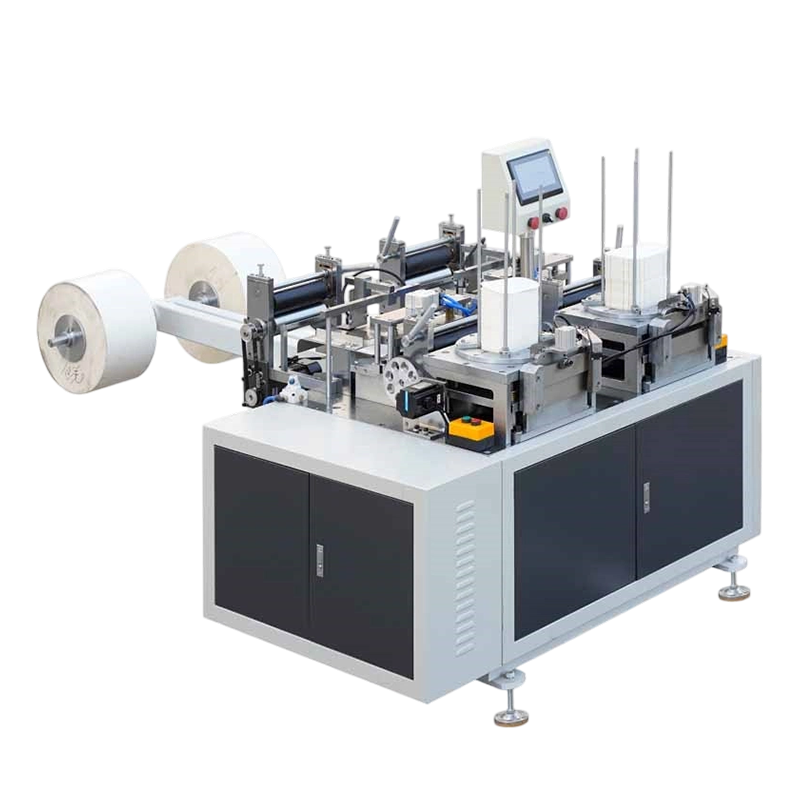
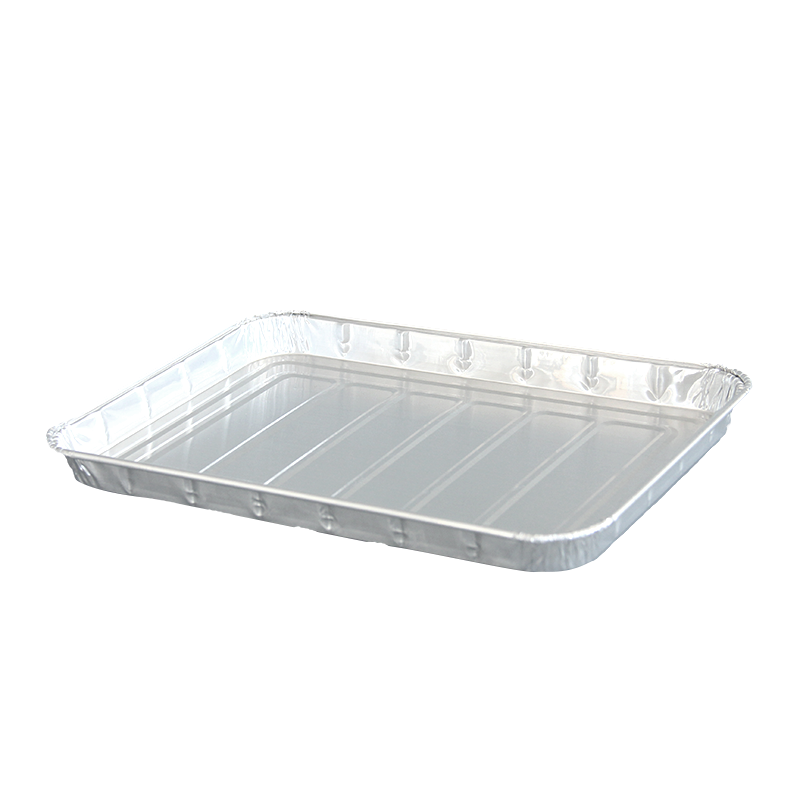
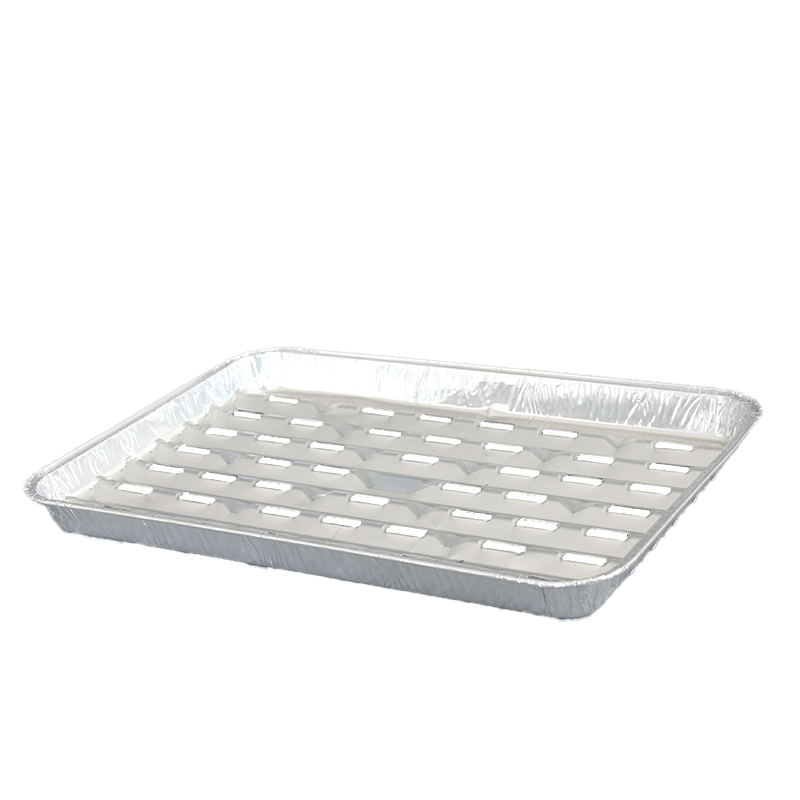
Latest Updates
Pay Attention To Our Latest News And Exhibitions
-
 Automatic Stacking Machine: The Complete Guide to Automated Packaging EfficiencyIn today‘s fast-paced manufacturing environment, the automatic stacking machine has emerged as an in...View More >
 -
 Aluminum Pans with Lids: The Complete SolutionWhile traditional foil baking pans are excellent for cooking, aluminum pans with lids offer an addit...View More >
 -
 The Foil Baking Pans Sizes in AiKang factoryWhen it comes to baking, roasting, meal prep, or food storage, few kitchen tools offer the versatili...View More >
 -
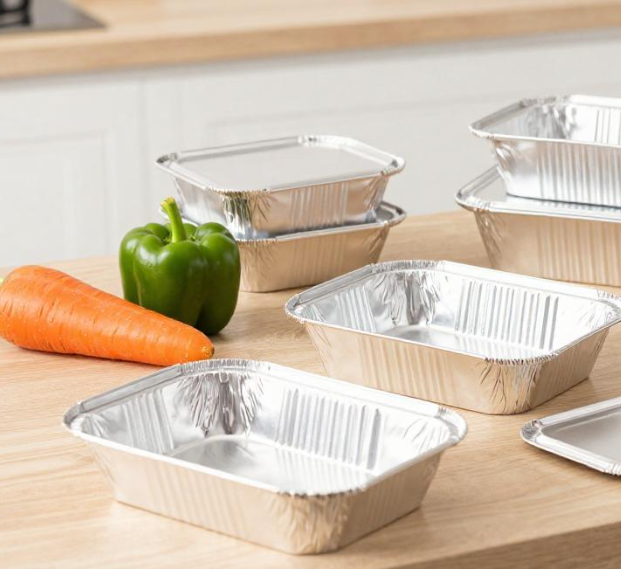 Can You Put Foil in the Grill? Safe Methods and Precautions You Must FollowYou are grilling salmon and zucchini, but the fish is flaking apart and the vegetables are falling...View More >
 -
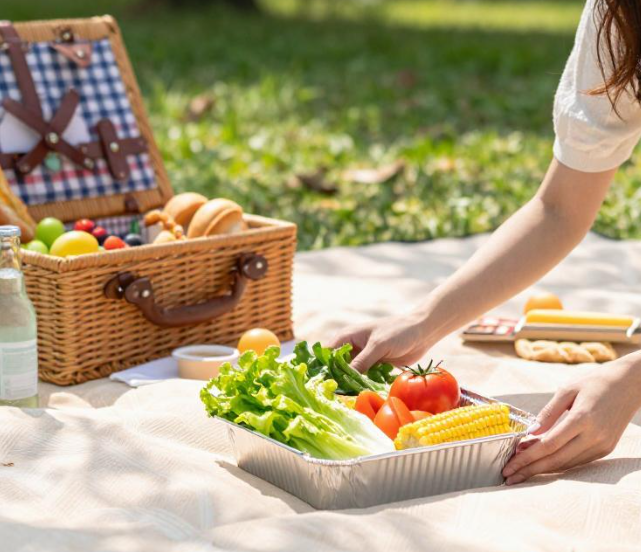 Does Aluminum Conduct Heat? Facts and Practical Insights for Food Packaging BuyersDoes aluminum conduct heat? Yes. Pure aluminum has a thermal conductivity of about 237 W/m·K, which...View More >
 -
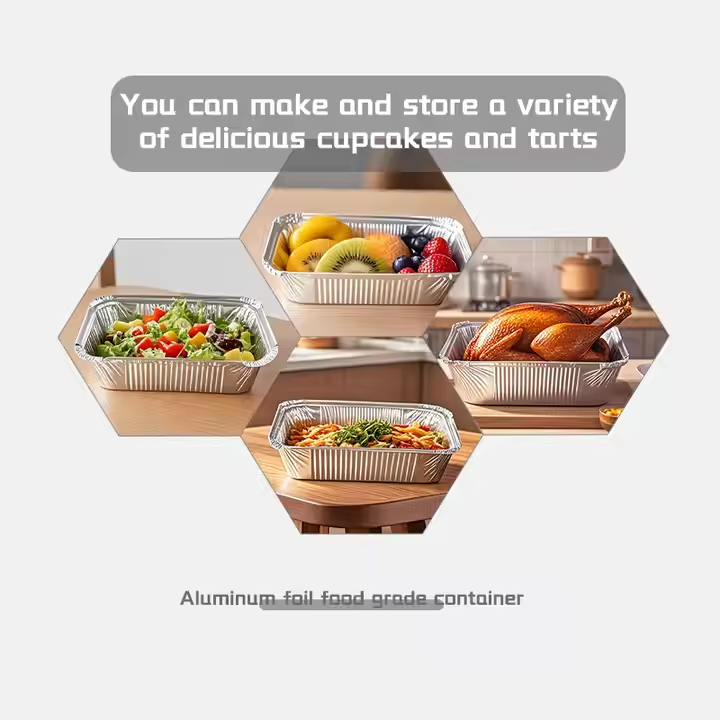 The Ultimate Guide to Aluminum Foil Lunch Boxes: Are They Safe, Reusable, and Worth It? | Ai Kang foil companyPicture this: you're packing lunch for the week, meal-prepping for a busy family, or running a takeo...View More >
Honor //
Honor / Warehouse Display
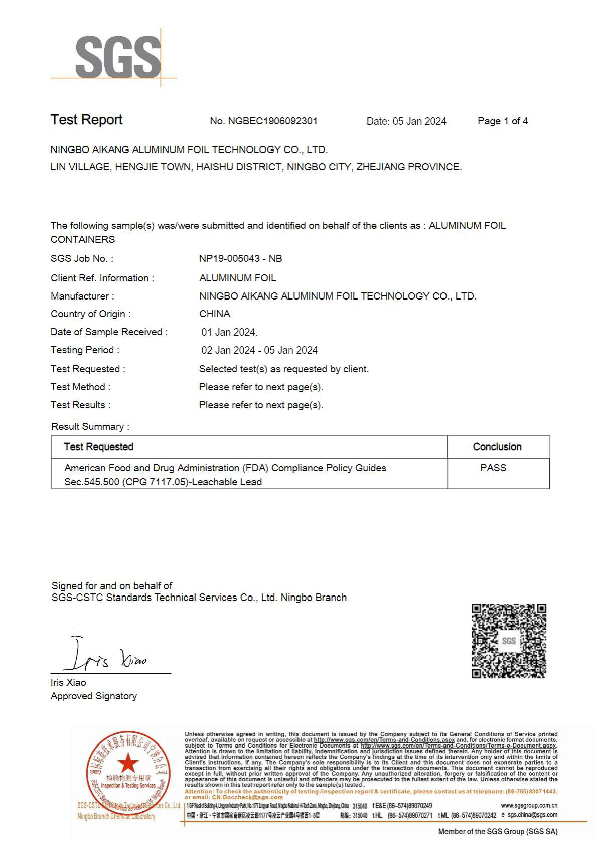
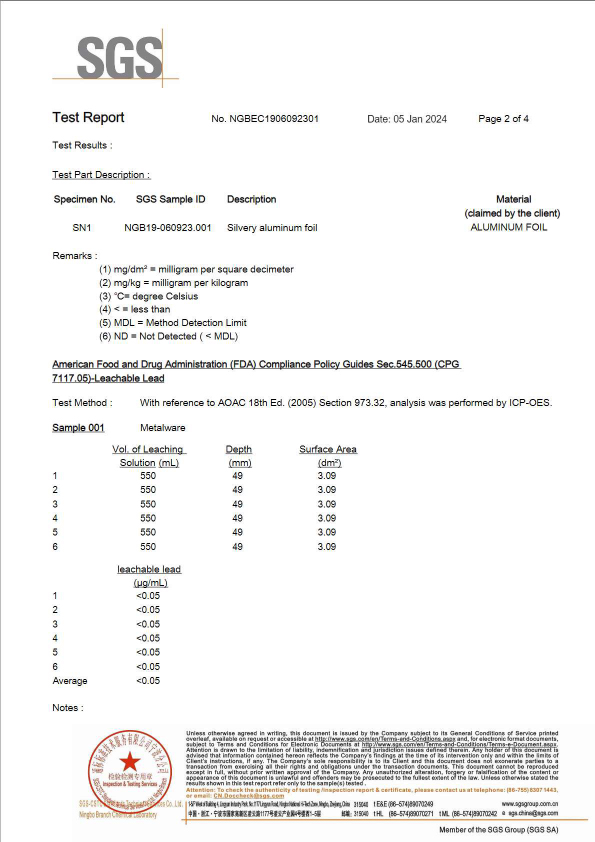
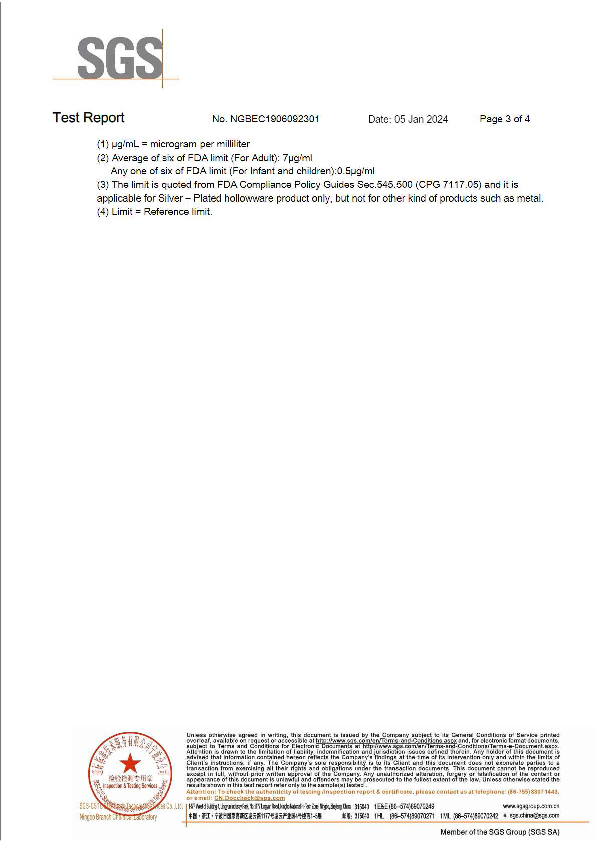
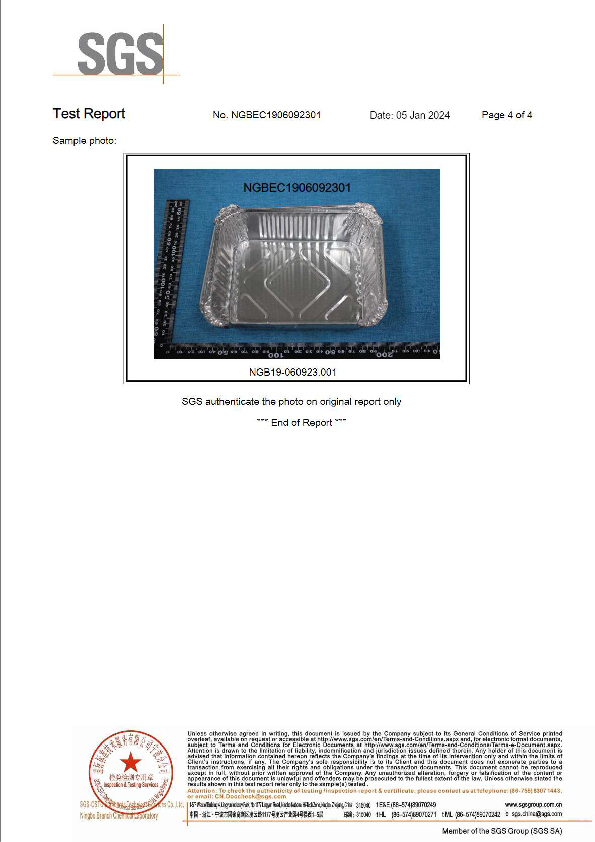
1. What Is an Aluminum Foil Container Production Line?
An aluminum foil container production line is an integrated manufacturing system designed to convert aluminum foil coils into disposable food containers through automated feeding, punching, forming, scrap collection, stacking, counting, and packaging processes. These lines are widely used by aluminum foil container manufacturers, food packaging companies, catering suppliers, OEM producers, and distributors serving the takeaway, foodservice, aviation, retail, and food-processing industries.
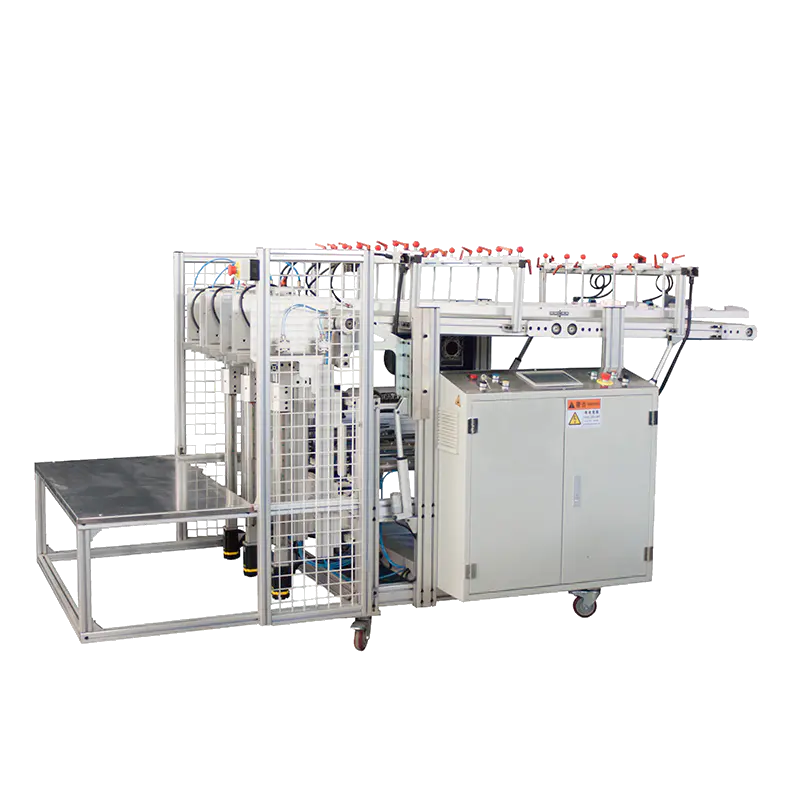
A typical production line combines a foil decoiler or feeder, automatic lubrication system, high-speed punching press, container forming molds, scrap collection equipment, and an automatic stacking or conveying system. Depending on the factory's requirements, manufacturers can also integrate online counting, robotic collection, automatic packing, scrap rewinding, and other downstream systems.
The main B2B advantage is process integration: one production system can transform aluminum foil stock into finished containers with significantly less manual handling and more consistent production quality.
2. How Does an Aluminum Foil Container Production Line Work?
(1) Aluminum Foil Feeding
The process begins with an aluminum foil coil installed on a decoiler. The feeding system controls foil movement into the press while maintaining stable positioning and tension. Automatic lubrication can help improve forming performance and reduce friction during high-volume production.
(2) Punching and Forming
The press applies controlled force to the foil through a production mold. Depending on the tooling design, one press cycle can produce one or multiple containers. The forming process determines the final dimensions, depth, rim structure, corners, and overall appearance of the container.
(3) Scrap Collection
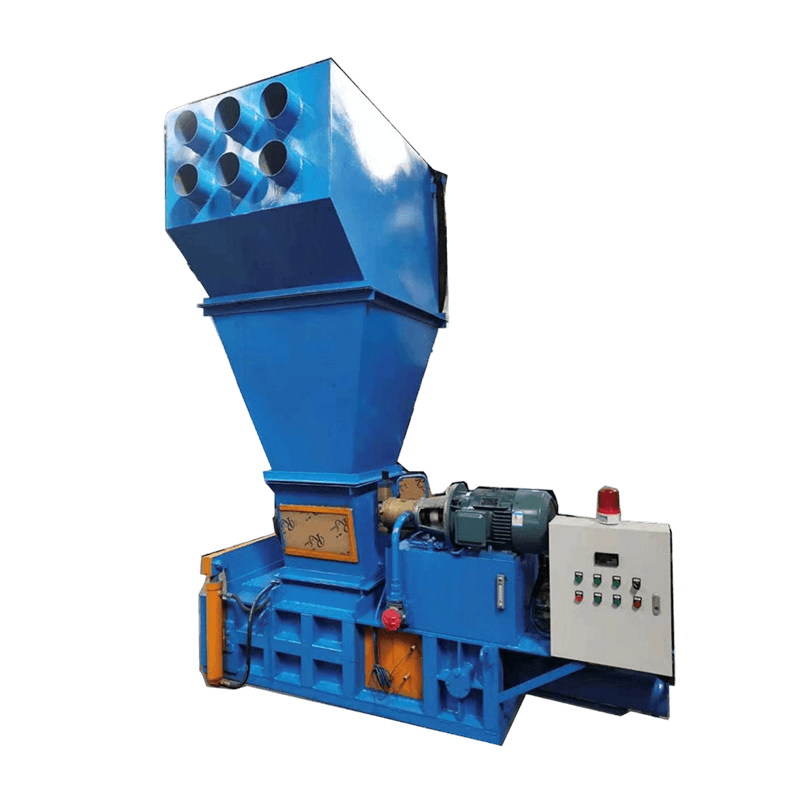
After the container is formed, the surrounding aluminum scrap is separated from the finished product. Integrated scrap aspirators, conveyors, or rewinding systems can collect the remaining foil for recycling or subsequent processing. Efficient scrap management is particularly important because aluminum represents a significant portion of total production cost.
(4) Stacking, Counting and Packaging
Finished containers can be automatically stacked and transferred to downstream packaging. Automatic counting systems can standardize quantities per bundle or carton, reducing manual counting errors and helping factories prepare products for warehouse shipment more efficiently.
3. Main Equipment in an Aluminum Foil Container Production Line
| Equipment | Main Function | B2B Benefit |
|---|---|---|
| Decoiler / Foil Feeder | Feeds aluminum foil into the press | Stable feeding and continuous production |
| Punching Press | Punches and forms containers | High production efficiency and repeatability |
| Mold / Tooling | Defines container size and shape | Supports customized product portfolios |
| Scrap Collection | Collects production scrap | Improves material recovery and workshop cleanliness |
| Auto Stacker | Collects and stacks finished containers | Reduces labor requirements |
| Counting / Packing System | Counts and prepares products for shipment | Improves order accuracy and packaging efficiency |
The exact equipment configuration should be selected according to target container dimensions, foil specifications, required output, labor costs, factory space, and downstream packaging requirements.
4. Production Speed and Capacity Considerations
Production speed is one of the most important purchasing factors for an aluminum foil container factory. However, buyers should distinguish between the press's nominal strokes per minute and actual finished-container output. Container size, depth, mold layout, foil thickness, press configuration, operator skill, material quality, and planned maintenance can all influence real production performance.
For example, one commercially available C-700 aluminum foil container production line lists a working speed of 40–70 strokes per minute, with actual speed depending on container size and complexity. Its published configuration includes automatic foil feeding, a pneumatic punching press, an automatic stacker or conveyor, and foil scrap collection. :contentReference[oaicite:0]{index=0}
As a simplified planning example, a press running at 60 strokes per minute produces 3,600 press cycles per hour before accounting for downtime, mold changes, maintenance, material loading, quality inspection, and other production losses. If a mold produces two containers per cycle, the theoretical output becomes 7,200 containers per hour. Actual output must always be calculated from the complete mold and production specification rather than press speed alone.
5. Automation Features That Matter to B2B Buyers
(1) PLC and Touchscreen Control
PLC-based control systems allow operators to manage machine parameters through a centralized interface. Touchscreen controls can make production settings, alarms, operating status, and troubleshooting information easier to access, particularly when multiple machines are operating simultaneously.
(2) Servo-Controlled Feeding
Servo systems can provide precise control of foil feeding and positioning. Consistent feeding is important because even small positioning deviations can influence container dimensions, material utilization, and mold performance during continuous production.
(3) Automatic Stacking and Counting
Automatic stacking reduces repetitive manual work and can improve production-line consistency. When integrated with counting and packaging equipment, it also allows factories to establish a more continuous path from forming to finished-goods inventory.
(4) Scrap Rewinding and Recovery
Scrap recovery is an important part of production economics. Aluminum has high recycling value, and the Aluminum Association reports that recycled aluminum requires about 95% less energy to produce than primary aluminum. :contentReference[oaicite:1]{index=1}
6. Mold Selection and Quick Product Changeover
Molds are among the most important components of an aluminum foil container production system because they determine the final product geometry. A single manufacturing plant may need molds for rectangular takeaway trays, round containers, compartment trays, loaf pans, roasting pans, barbecue trays, and customized food packaging.
For manufacturers serving multiple customers, quick mold change capability can improve equipment utilization. For example, instead of dedicating one complete production line to a single container size, a factory may use interchangeable tooling to manufacture several product formats according to customer orders.
For B2B manufacturers, tooling flexibility can be as important as maximum machine speed because a flexible line can respond more efficiently to changing order volumes and product specifications.
7. Aluminum Foil Materials and Production Efficiency
Production lines can be configured for different aluminum foil specifications depending on the finished container. Buyers should evaluate alloy grade, foil thickness, temper, coil width, coil diameter, surface quality, and material consistency before purchasing equipment and molds.
Material utilization should also be considered during equipment selection. A mold that uses foil efficiently can reduce the amount of scrap generated per finished container. For a factory producing 1 million containers per month, even a 1% improvement in material utilization can have a meaningful financial impact because the savings are multiplied across every production cycle.
The Aluminum Association describes aluminum foil as a highly formable packaging material and notes that containers and packaging represent around two-thirds of the North American aluminum foil market. :contentReference[oaicite:2]{index=2}
8. Sustainability and Regulatory Considerations in 2026
Sustainability is increasingly influencing equipment and packaging decisions. Aluminum's recyclability gives container manufacturers an opportunity to build more circular material-management systems, provided used packaging can be effectively collected and recycled in the target market.
For companies selling into Europe, regulatory planning is particularly important in 2026. The European Union's Packaging and Packaging Waste Regulation, Regulation (EU) 2025/40, entered into force on February 11, 2025, and is generally applicable from August 12, 2026. The European Commission states that the regulation aims for packaging placed on the EU market to be recyclable in an economically viable way by 2030. :contentReference[oaicite:3]{index=3}
Therefore, manufacturers purchasing production lines should consider not only today's product requirements but also future material efficiency, recyclability, documentation, traceability, and market-specific packaging regulations.
9. Why Choose Ningbo Aikang Aluminum Foil Technology Co., Ltd.?
Aluminum foil container production lines are engineered for the high-efficiency manufacturing of disposable aluminum foil containers used in food packaging, catering, aviation, retail, and takeaway industries. A complete production line typically integrates automatic foil feeding, precision punching, container forming, scrap collection, stacking, and optional counting or packaging systems, enabling stable, continuous production with reduced labor requirements.
Designed for high-speed operation and consistent forming accuracy, these production lines can support rectangular containers, round containers, compartment trays, roasting pans, and customized foil packaging. Quick mold change capability allows manufacturers to switch between different container sizes and shapes with less downtime, improving production flexibility and equipment utilization.
Ningbo Aikang Aluminum Foil Technology Co., Ltd. is a China Aluminum Foil Trays/Roasting Pans Supplier and Aluminum Foil Trays/Roasting Pans Factory, located in Haishu District, Ningbo, one of China's important port cities. The company focuses on the design, development, and production of disposable aluminum foil products and practical packaging solutions for changing market requirements.
Its product portfolio includes aviation aluminum foil containers, barbecue pans, Turkey pans, aluminum loaf pans, and other aluminum foil containers. Aikang has developed multiple automatic production lines and molds to support product diversity and manufacturing efficiency. Its capabilities include professional design, manufacturing equipment, mold development, quality control, and dedicated sales and service support.
For OEM manufacturers, distributors, and new production facilities, combining suitable molds with automated feeding, forming, stacking, counting, and scrap-management systems can provide a scalable foundation for long-term aluminum foil packaging production.
10. How to Choose the Right Aluminum Foil Container Production Line
Before purchasing a production line, B2B buyers should prepare a detailed technical specification instead of comparing machines only by price. The following factors should be evaluated:
- Target container sizes, shapes, depths, and compartment configurations
- Required foil alloy, thickness, width, and coil specifications
- Target hourly and monthly production capacity
- Press stroke rate and actual expected output per mold
- Number of cavities or containers produced per stroke
- Mold changeover time and tooling customization capability
- Automatic stacking, counting, packing, and robotic options
- Scrap collection and material recovery system
- Factory floor space, electrical requirements, compressed-air requirements, and layout
- Installation, commissioning, operator training, spare parts, and after-sales service
A useful purchasing calculation is total cost per finished container rather than machine price alone. For example, a higher-priced line may become more economical if it provides better material utilization, lower labor requirements, fewer rejected containers, faster changeovers, and more stable production over several years.
11. Common Questions About Aluminum Foil Container Production Lines
Q1. How fast can an aluminum foil container production line produce containers?
Production speed depends on the press, mold, container dimensions, foil specification, and automation configuration. Commercial equipment specifications can range around 40–70 strokes per minute for certain models, but the actual number of finished containers per hour depends on how many containers the mold produces in each cycle and the factory's real operating conditions. Buyers should request guaranteed or tested output based on their specific mold rather than relying only on the advertised maximum speed.
Q2. How much does an aluminum foil container production line cost?
There is no universal price because a complete project can include the press, feeder, molds, stacker, scrap system, counting equipment, packaging equipment, installation, spare parts, and automation. A basic line with one mold has a very different investment level from a multi-mold factory with automated packing and robotic handling. B2B buyers should request a complete quotation based on required capacity and product specifications.
Q3. What size aluminum foil can be used in a container production machine?
The acceptable foil width, coil diameter, thickness, alloy, and temper depend on the specific machine and mold. For example, one commercially listed C-700 line specifies a maximum foil width of 550 mm and a maximum foil-roll outer diameter of at least 700 mm, demonstrating why buyers should match raw-material specifications to the selected equipment. :contentReference[oaicite:4]{index=4}
Q4. Can one production line make different aluminum foil container sizes?
Yes, provided the press and tooling system are designed for the required product range. Different container sizes and shapes generally require different molds. A factory can improve flexibility by selecting equipment with suitable mold dimensions, quick-change features, and compatible control systems. Buyers should confirm mold-change procedures and compatibility before purchasing additional tooling.
Q5. How can an aluminum foil container factory reduce production waste?
Waste reduction starts with optimized mold design, accurate foil feeding, stable forming conditions, appropriate material specifications, and efficient scrap collection. Scrap aluminum should be separated and recovered wherever practical. Because recycled aluminum requires approximately 95% less energy than primary aluminum production, effective recycling can provide both environmental and economic value. :contentReference[oaicite:5]{index=5}
Q6. Is automation necessary for an aluminum foil container manufacturing factory?
Automation is not mandatory for every factory, but it becomes increasingly valuable as production volume increases. Automatic feeding, stacking, counting, and scrap collection can reduce repetitive labor and improve consistency. For a manufacturer producing hundreds of thousands or millions of containers per month, automation can also make production planning, quality control, and order fulfillment more predictable.
Q7. What should I consider when buying aluminum foil container molds?
Buyers should consider container dimensions, depth, rim design, cavity quantity, foil thickness, material utilization, production speed, mold life, changeover requirements, and maintenance. The mold should also be designed around the selected press's working table, closed height, stroke, and maximum mold dimensions. Approving a production sample before mass manufacturing is strongly recommended.
Q8. Can aluminum foil container production lines be customized for a new factory?
Yes. Production lines can be configured according to the customer's target products, production capacity, factory layout, automation level, and budget. A customized project may include mold design, automatic stacking, online counting, robotic collection, scrap rewinding, and downstream packaging. New factories should provide floor plans and utility information early so the complete production system can be designed around the available space.
Q9. What after-sales service should I expect from a production line supplier?
A professional equipment supplier should be able to provide installation guidance, commissioning support, operating instructions, spare-parts support, mold maintenance assistance, troubleshooting, and operator training. For overseas buyers, remote technical support and clear documentation are especially important. Long-term spare-parts availability should also be discussed before the purchase contract is finalized.
12. Conclusion: Building a Scalable Aluminum Foil Container Manufacturing System
An aluminum foil container production line is more than a punching machine. For modern B2B manufacturers, it is an integrated production system covering raw-material feeding, forming, scrap recovery, stacking, counting, and packaging. The right combination of press capacity, mold technology, automation, material utilization, and downstream handling can significantly influence manufacturing efficiency and long-term operating costs.
As demand for convenient food packaging continues to evolve and packaging regulations place greater emphasis on material efficiency and recyclability, manufacturers should invest based on both current production requirements and future market needs. The European Commission's current PPWR implementation timeline, for example, makes packaging recyclability an increasingly important consideration for companies selling into the EU. :contentReference[oaicite:6]{index=6}
For B2B buyers, the best aluminum foil container production line is the one that delivers reliable output, efficient material utilization, flexible tooling, manageable labor requirements, stable quality, and scalable production capacity.
Ningbo Aikang Aluminum Foil Technology Co., Ltd, based in Ningbo, produces eco-friendly disposable aluminum foil products. They prioritize quality and customer satisfaction, serving the global market with innovative packaging solutions.


Quick Links
Contact
-
 No. 5 Yongxing East Road, Fengshan Street, Yuyao City, Zhejiang Province, China
-
 Tel: +86-15867468784
-
 E-mail: [email protected]
Send Us A Message
