
 English
 日本語
日本語 عربى
عربى Español
-
 01
01
Aluminum Foil for Turkey: Wrapping Techniques, Pan Sizes, and Roasting Tips
Industry News-A dry turkey is almost never a seasoning problem. It is a heat problem: the breast sits high in the oven with very little fat cover, so it reaches 165°F (74°C) while the thighs are still twenty degrees behind. Aluminum foil for turkey exists to close that gap, but only when the right foil format is used for the right job.
The short answer before the details: use a sheet of foil as a removable heat shield over the breast, use a foil roasting pan sized to the bird for structure and drip control, and treat those as two separate purchases. Most disappointing turkeys trace back to a pan that is too small for the bird, or to foil left on until the skin turns rubbery.
Content
- 1 Sheet Foil, Wrapped Foil and Foil Pans Do Three Different Jobs
- 2 How to Tent, Shield or Wrap a Turkey, Step by Step
- 3 Choosing the Right Foil Pan for a 12 to 24 Pound Turkey
- 4 Timing: How Foil Changes the Clock
- 5 Holding, Transporting and Serving a Roast at Volume
- 6 What to Check Before Ordering Turkey Pans in Bulk
- 7 How Foil Compares with Plastic and Paperboard
- 8 Frequently Asked Questions
- 8.1 Q1. Should I cover my turkey with foil while it roasts?
- 8.2 Q2. What size foil pan fits a 20-pound turkey?
- 8.3 Q3. Is a disposable aluminum pan safe for roasting?
- 8.4 Q4. Can a foil pan go from the freezer straight into the oven?
- 8.5 Q5. Do I need to grease an aluminum foil pan?
- 8.6 Q6. How do I keep the skin crisp under a foil tent?
Sheet Foil, Wrapped Foil and Foil Pans Do Three Different Jobs
On a supermarket shelf, "aluminum foil for turkey" can mean four different products, and they are not interchangeable. Mixing them up is the most common reason a bird comes out dry at the breast or pale and steamed all over.
| Format | What it does | Where it goes wrong |
|---|---|---|
| Loose tent over the breast | Shades the breast from radiant heat so it does not pass 165°F while the thighs catch up | Left on for the whole roast, so trapped steam stops the skin from browning |
| Full wrap in heavy-duty foil | Traps steam and shortens the cook when the oven runs hotter | No browning at all, and the timing has to come from a thermometer rather than a clock |
| Foil roasting pan | Holds the bird, the drippings and the aromatics, then goes out with the recycling | A pan that is too small lets juices run onto the oven floor and burn |
| Deep foil steam table pan | Holding, transport and buffet service once the bird is carved | Wrong depth for the chafing dish lid, or too shallow for gravy |
Two practical notes. First, anything that fully encloses the bird slows heat transfer, which is why the University of Illinois Extension's foil-wrapped method calls for a 450°F oven instead of the usual 325°F; the higher setting is a safety requirement of that method, not a preference. Second, a tent is meant to come off. Leave it on and the surface of the bird sits close to the boiling point of water, which is exactly the condition that produces soft, pale skin.
How to Tent, Shield or Wrap a Turkey, Step by Step
The sequence below works for anything from a 10-pound bird to a 24-pound one. Only the timing changes.
- Pat the turkey dry, inside and out, then season it. Surface moisture has to evaporate before browning can begin, so a wet bird browns late and unevenly.
- Set it breast-up in the foil pan and add one or two cups of stock, wine or water with aromatics. That liquid keeps the dripping fat from scorching during a long roast and gives you a head start on gravy.
- Cut a sheet of heavy-duty foil roughly 30 inches long, fold it into a loose tent, and lay it over the breast only. Do not crimp the sides down. The goal is to shade the breast, not to steam the whole bird.
- Roast at 325°F until the deepest part of the thigh and the thickest part of the breast both read 165°F (74°C). The USDA sets 165°F as the minimum safe internal temperature for poultry, and the same figure applies to any stuffing.
- Pull the tent off for the last 20 to 30 minutes and raise the oven to 425°F if you want crisp skin at the same moment the thighs finish. Watch it closely; the final half hour is when skin goes from golden to burnt.
- Rest the turkey 15 to 20 minutes before carving. Carryover cooking adds a few degrees and the juices redistribute, so carving straight from the oven loses them onto the board.
Choosing the Right Foil Pan for a 12 to 24 Pound Turkey
A 12 to 14 pound bird needs a pan roughly 16 by 12 inches. Anything smaller and the turkey rides the rim, which tilts it and sends juices over the side. Capacity in milliliters is the number worth comparing, because the "serves X" line on a label rarely matches a whole bird plus aromatics and liquid.
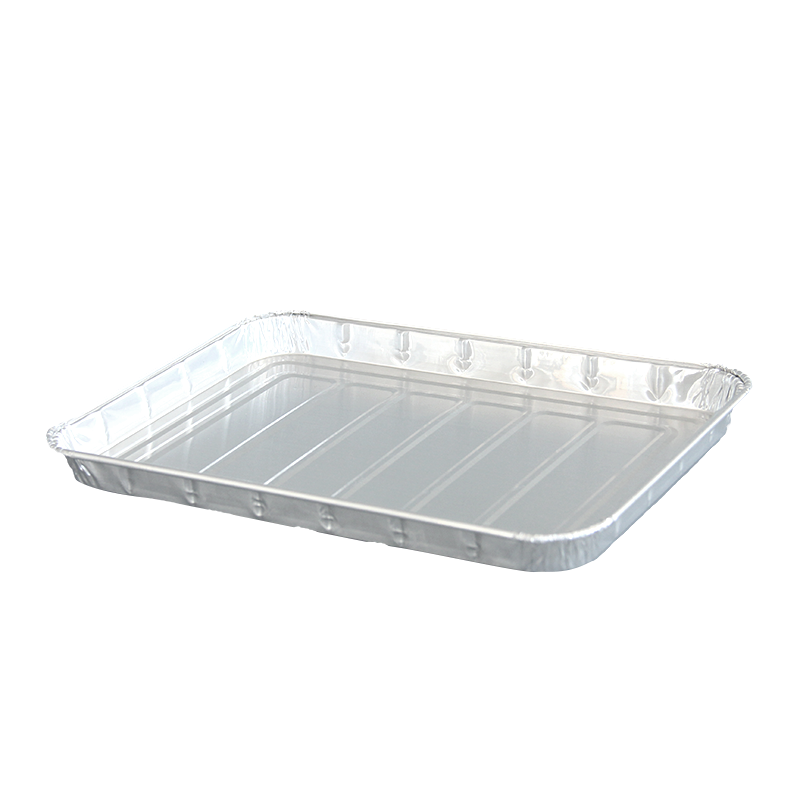
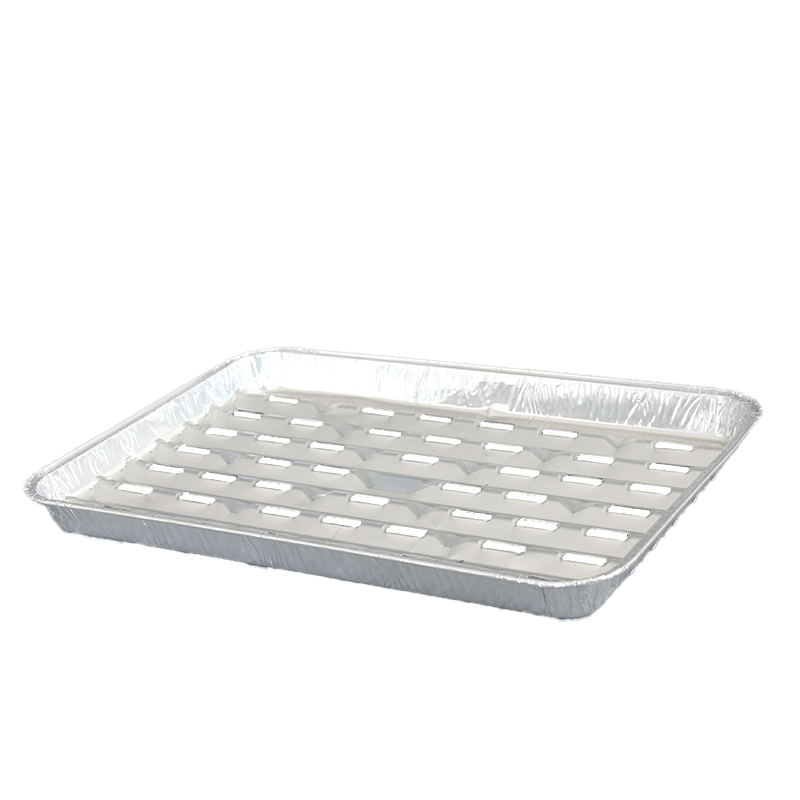
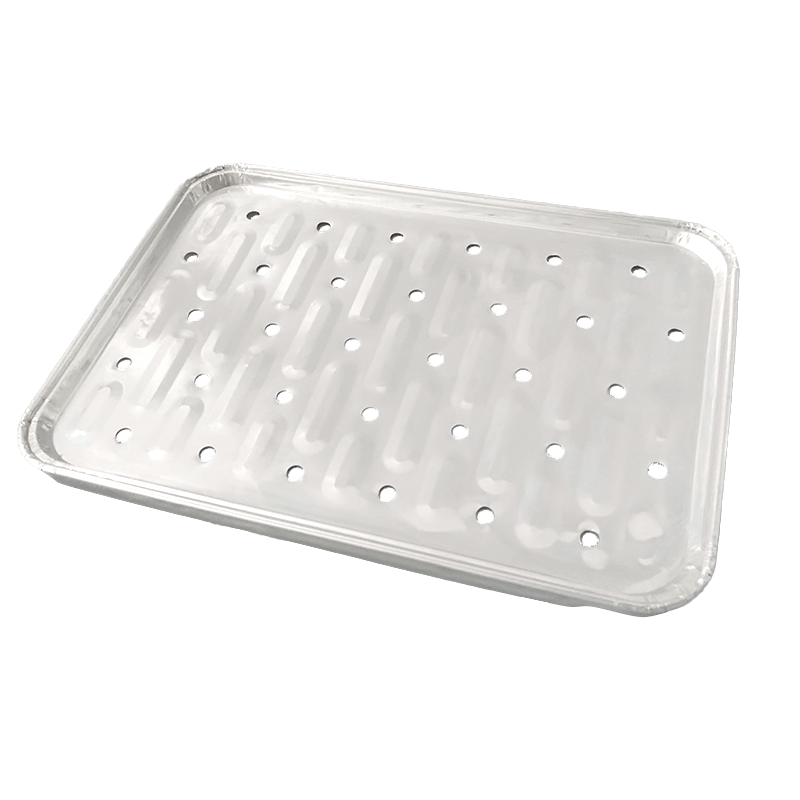
Source: Aikang oblong aluminum foil container range. One product family covers a small weeknight roast and a 24-pound holiday bird.
The same pan line runs from 1400 ml oblong containers through 2200 ml, 4500 ml and 5000 ml roasting sizes, so buyers can standardise on one supplier across a whole menu. The full selection is listed on the turkey roasting pans page.
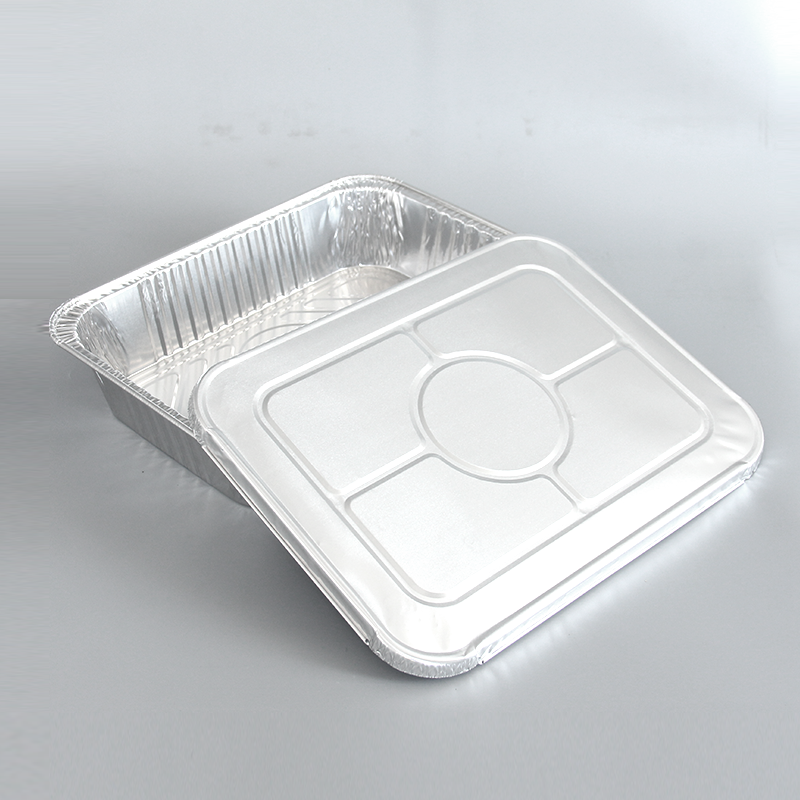 4500ml Oblong Aluminum Foil Pan IK3654500ml Oblong Aluminum Foil Pan IK365 is an ultra-large capacity, fully functional food container suitable for large-scale food processing, storage and catering servic...View Product →
Roasting pan anatomy: a curled rim gives grip, wall depth holds the juices, cavity depth decides whether a whole bird sits flat.
Two structural details decide whether a foil pan survives a heavy bird. The curled rim stiffens the edges and gives you something to grip with oven mitts at the moment the pan is full of hot fat. The wall thickness, usually quoted as a foil gauge in microns, decides how the pan behaves under load: a pan that flexes when you pick up an empty sample will flex far more with four litres of turkey and drippings in it. Bring a filled sample test to any supplier conversation.
Timing: How Foil Changes the Clock
Published USDA roasting times for an unstuffed turkey at 325°F are the standard baseline. The chart below plots the midpoint of each weight range, which is the number most cooks actually plan around.
Foil shifts these figures in two directions: a breast tent evens out doneness without adding much time, while a full wrap slows heat transfer and needs a hotter oven setting.
That is the useful way to think about foil. A tent does not really change the total cooking time; it changes where the heat lands, so the breast and thighs finish closer together. A full wrap changes the physics more directly, because the foil blocks radiant heat from every side, which is why wrapped recipes raise the oven temperature. Either way the thermometer is the authority, not the clock: a bird that reads 165°F in the thigh an hour earlier than the chart suggests is done.
Holding, Transporting and Serving a Roast at Volume
In a catering kitchen the foil pan stops being a roasting vessel and becomes packaging. Carved meat, potatoes and gravy go into a deep foil steam table pan that drops straight into a chafing dish, holds temperature through a buffet line, and can be lidded and moved to a delivery van without a second container. Depth is the specification that matters here, because a shallow pan loses heat quickly once the lid comes off.
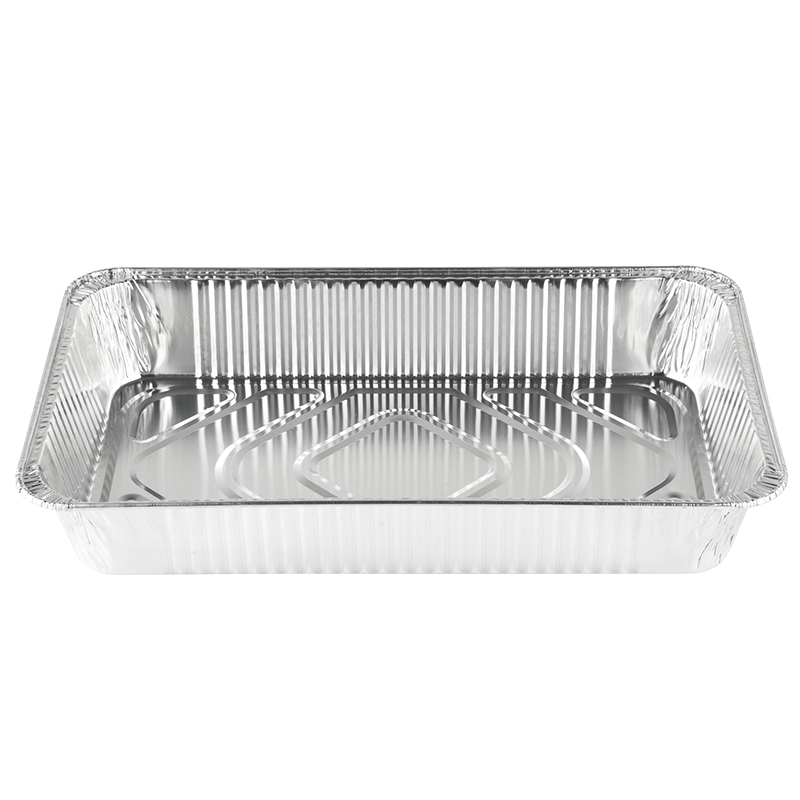 Full-Size Deep Steam Table Pan IK528Professional-grade design Advantages of deep design: The deep design of the Full-Size Deep Steam Table Pan IK528 provides it with greater capacity and flexibility, all...View Product →
Presentation is the other half of the workflow. A large oval serving tray takes a carved bird, keeps the juices contained, and moves from the pass to the table without transferring to china. Oval geometry also fits more meat per shelf than a rectangular pan of similar footprint, because the corners of a rectangle are wasted space in a round display.
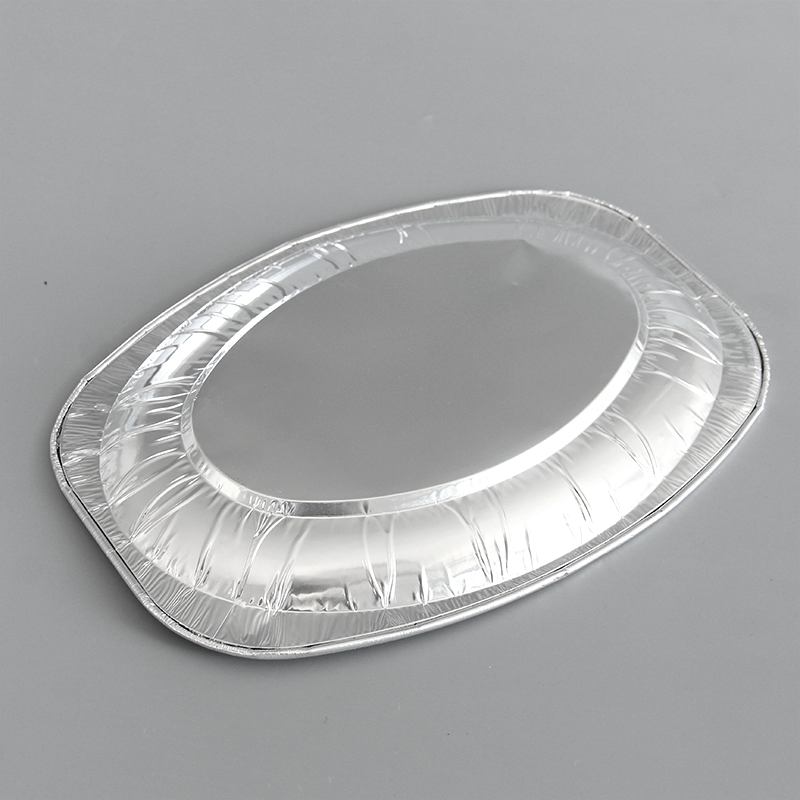 Large Oval Serving Tray IK550The Large Oval Serving Tray IK550 is a foil tray designed for serving large dishes, displaying banquet food, and providing elegant catering services. Unique oval desig...View Product →
For kitchens weighing foil against rigid plastic, the deciding factor is usually temperature range rather than price. Aluminum carries no softening point inside normal cooking or holding temperatures, so it moves from oven to hot cupboard to delivery without any change in performance.
What to Check Before Ordering Turkey Pans in Bulk
Buyers who order foil containers by the pallet tend to care about a short list of specifications. Ask for all of them before comparing quotations, because two pans that look identical in a photograph can differ in every one.
- Food-contact documentation. Ask for the food-grade declaration and the material certificate, and check the food-grade aluminum foil trays range for the formats already covered.
- Gauge and rim design. Specify both in writing. Gauge drives load capacity; the rim drives how the pan behaves when a full bird is lifted.
- Nominal versus usable capacity. Catalogue figures are nominal. Run a filled-weight test with your own product before signing off a specification.
- Nesting height. It decides carton size, pallet count and freight cost, and it matters more than the pan's footprint once you are shipping overseas.
- Shape discipline. If your line uses automated depanners or sealing equipment, ask for a dimensional drawing rather than a sample photograph.
Ningbo Aikang Aluminum Foil Technology Co., Ltd is located in Haishu District, Ningbo, one of the most important port cities in China. The company is committed to the design, development, and production of environmentally disposable aluminum foil products and providing practical and advanced packaging solutions to meet the dynamic change of the market. The main products consist of aviation aluminum foil containers, barbecue pans, Turkey pans, aluminum loaf pans, and other varied aluminum foil containers. Moreover, the company has developed several automatic production lines and molds to fully ensure the quality and diversity of the products. Equipped with professional design, advanced manufacturing facilities, and molds, qualified products, and a dedicated sales and service team, Aikang has ranked itself the top-notch enterprise in China.
The company has and will always hold the principle of "sincerity and integrity" to provide the best products and service to the customers at home and abroad and finally create a double-win situation. Looking forward to your visit and the cooperation with your esteemed company!
How Foil Compares with Plastic and Paperboard
The comparison below is a qualitative rating on a five-point scale, built from material properties rather than test data: aluminium melts at roughly 660°C, polypropylene softens well below normal oven temperatures, and coated board tolerates only short exposure to dry heat.
Ratings are indicative. Aluminum's recyclability advantage reflects that the metal can be recycled repeatedly without loss of properties, as noted by the International Aluminium Institute.
Frequently Asked Questions
Q1. Should I cover my turkey with foil while it roasts?
Cover the breast only for the first two-thirds of the cook, then uncover it. A sealed wrap held for the entire roast traps steam and produces soft, pale skin.
Q2. What size foil pan fits a 20-pound turkey?
Look at the 4500 to 5000 ml oblong sizes. The bird should sit flat with the rim clear, so drippings stay inside the pan instead of running over the edge.
Q3. Is a disposable aluminum pan safe for roasting?
Yes. Aluminum foil is oven safe far beyond any domestic roasting temperature, since the metal melts at roughly 660°C. Use a baking sheet underneath for very large birds.
Q4. Can a foil pan go from the freezer straight into the oven?
Yes, and that is one of its practical advantages over rigid plastic. Keep foil out of microwave ovens, though, where the metal will arc.
Q5. Do I need to grease an aluminum foil pan?
Not for a turkey, which releases plenty of fat during roasting. Grease lightly for lean meats or anything finished with a sticky glaze.
Q6. How do I keep the skin crisp under a foil tent?
Remove the tent for the final 20 to 30 minutes and raise the oven to 425°F. Stay nearby, because the skin colours quickly at that temperature.
Choose AiKang for Top-Quality
Aluminum Foil Products
Explore Our
Featured Products
Ningbo Aikang Aluminum Foil Technology Co., Ltd, based in Ningbo, produces eco-friendly disposable aluminum foil products. They prioritize quality and customer satisfaction, serving the global market with innovative packaging solutions.


Quick Links
Contact
-
 No. 5 Yongxing East Road, Fengshan Street, Yuyao City, Zhejiang Province, China
-
 Tel: +86-15867468784
-
 E-mail: [email protected]
Send Us A Message
