
 English
 日本語
日本語 عربى
عربى Español
-
 01
01
What Is Aluminum Foil Made Out Of? Raw Materials, Alloys & Production Process
Industry News-Take a sheet from a roll of aluminum foil and you are holding a material that starts as raw rock. Aluminum foil is made from aluminum — usually more than 98% pure — with small amounts of iron and silicon added for strength and formability. The journey from bauxite ore to a bright, flexible cooking sheet is surprisingly direct, and it explains why foil is so good at wrapping food, lining pans, and forming disposable containers.
Content
What Is Aluminum Foil Made Of?
At its core, aluminum foil is exactly what its name says: a thin sheet of aluminum metal. Commercial foil is produced from bauxite ore, which is refined into alumina (aluminum oxide), then smelted into pure aluminum. The resulting metal is cast into ingots and rolled down to a thickness below 0.2 mm. Most food-grade foils use small alloying additions rather than 100% pure aluminum, because pure metal is too soft for mechanical handling.
The table below shows the main components found in a typical roll of food-contact aluminum foil.
| Component | Role in the foil |
|---|---|
| Aluminum (Al) | Main body of the material; provides a complete barrier to light, moisture, air, and bacteria. |
| Iron (Fe) | Strengthens the soft aluminum base so the foil does not tear during rolling or handling. |
| Silicon (Si) | Improves formability, making it easier to fold, crimp, or press into container shapes. |
| Natural oxide layer (Al2O3) | An invisible protective film that forms on the surface and keeps the metal from further oxidation. |
Two widely used foil alloys are 1235 and 8011. Both contain between roughly 98% and 99.5% aluminum, with iron and silicon making up the balance. When the foil is produced under food-grade standards, this composition is considered safe for direct contact with most foods, including high-temperature baking and roasting.
Aluminum is the third-most common element in Earth’s crust
Approximate crustal abundance values based on common geochemical reference data.
The abundance of aluminum in the Earth’s crust is one reason foil remains an affordable, widely used packaging material.
How Is Aluminum Foil Made? From Bauxite to Foil
The manufacturing route from bauxite to aluminum foil involves several energy-intensive but well-established steps.
- Bauxite mining and refining: Bauxite ore is crushed and treated with caustic soda to produce alumina (aluminum oxide).
- Electrolytic smelting: Alumina is dissolved in molten cryolite and reduced to metallic aluminum using the Hall–Héroult process.
- Ingot casting: The molten aluminum is cast into large ingots, with iron and silicon added to create the required foil alloy.
- Hot rolling: Ingots are reheated and rolled into strips several millimeters thick.
- Cold rolling: The strip is rolled at room temperature to make a thin, flexible band.
- Foil rolling: The sheet is rolled in a tightly controlled finishing mill. Most household foil passes through the rolls in two layers, which is why it has one shiny and one matte side.
Final thickness depends on the application. Standard household foil is roughly 0.016 mm thick; heavy-duty foil can reach 0.02–0.03 mm. Ultra-thin foils used in packaging and industrial insulation can go down to about 0.006 mm — roughly one tenth the thickness of a human hair. The natural oxide layer on the surface remains only a few nanometers thick, which is why the foil is safe to use with food.
Structure of an aluminum foil tray
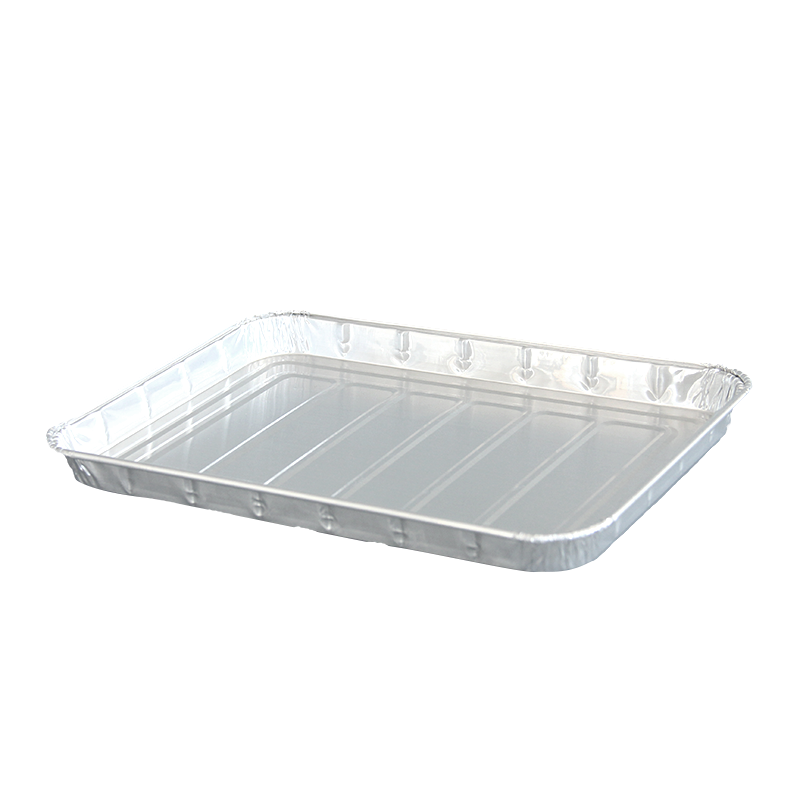
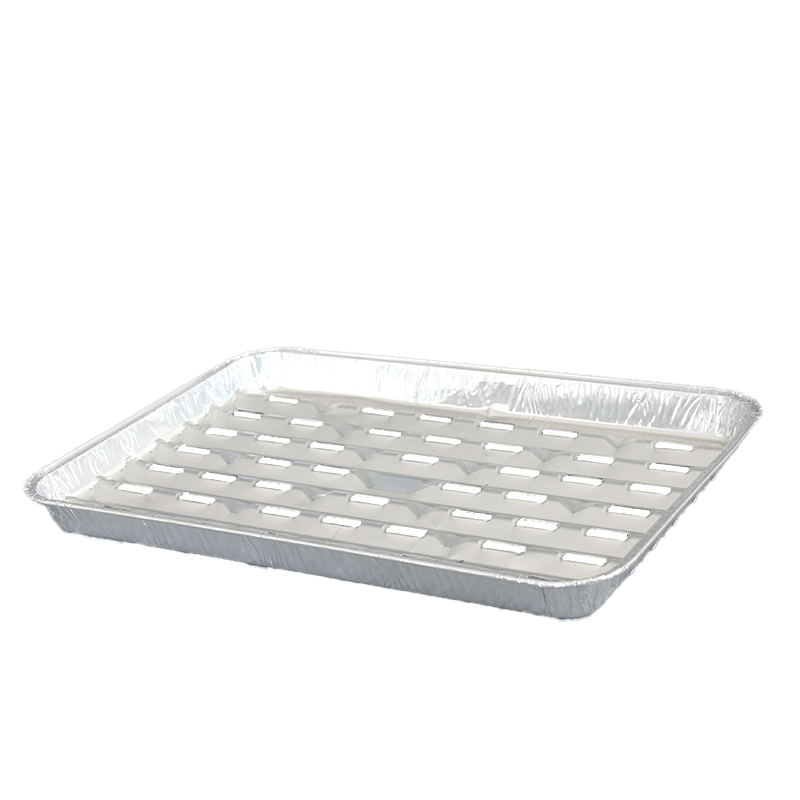
Once rolled into foil, the material is easily formed into food-grade aluminum foil trays with rolled rims for extra stiffness and a leak-resistant base. This structural design lets one thin sheet of aluminum support a full serving of hot food.
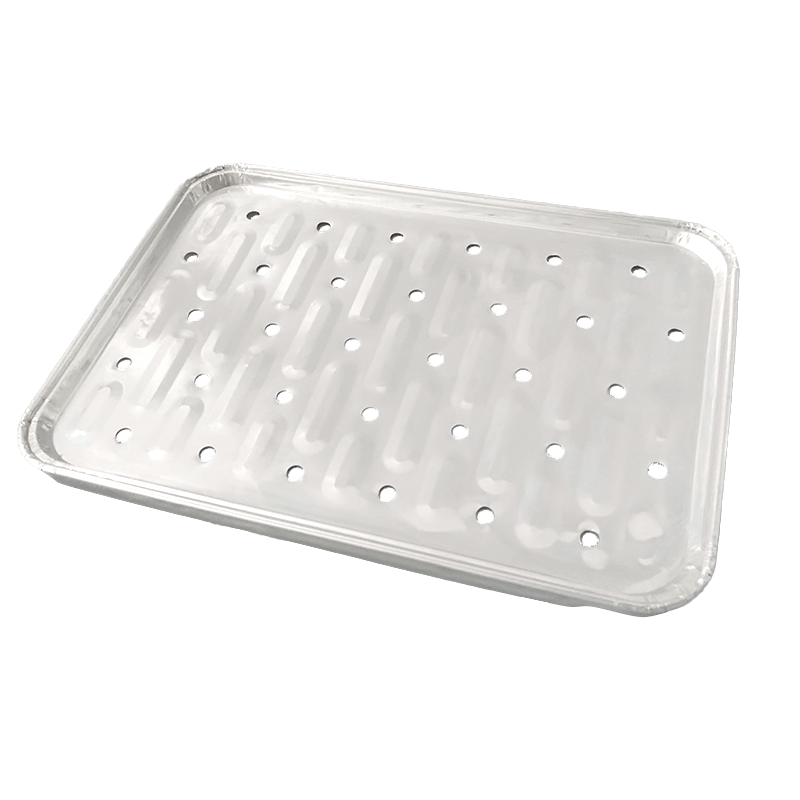
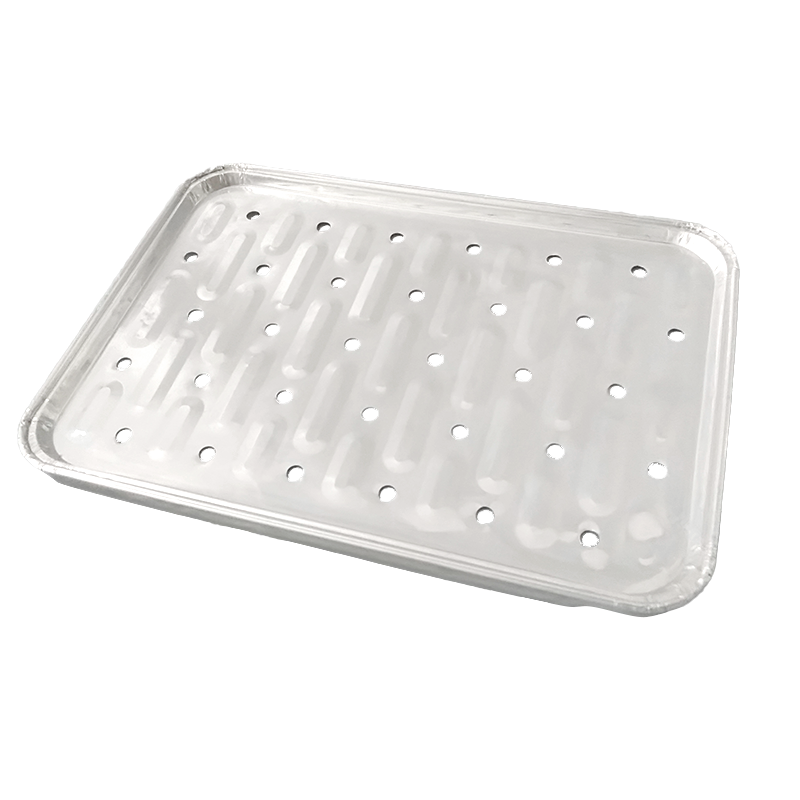 Oblong Aluminum Foil BBQ Tray with Ventilation HolesThis lightweight oblong tray features vent holes that improve airflow and heat circulation during grilling, helping to lock in juices and add smoky flavor while keeping cleanup simple for outdoor use.View Product →
Why Aluminum Foil Is So Practical
Aluminum foil owes its popularity to a combination of simple physical properties. It creates a complete barrier to light, oxygen, moisture, and odor. It can withstand oven temperatures far beyond typical home cooking, and it can be molded into shallow trays or deep pans without cracking.
- Heat tolerance: Food-grade aluminum foil remains stable over 400°C in most oven and grill settings.
- Formability: The alloy can be pressed into trays with tight corners while staying leak-resistant.
- Light weight: Foil adds almost no weight to packaging, reducing transport cost.
- Recyclability: Aluminum can be remelted repeatedly without losing its barrier properties.
According to European Aluminium Foil Association data, recycling aluminum requires about 95% less energy than producing primary aluminum from bauxite. That is why many manufacturers, including tray producers, now design disposable aluminum foil containers to be collected and recycled after use.
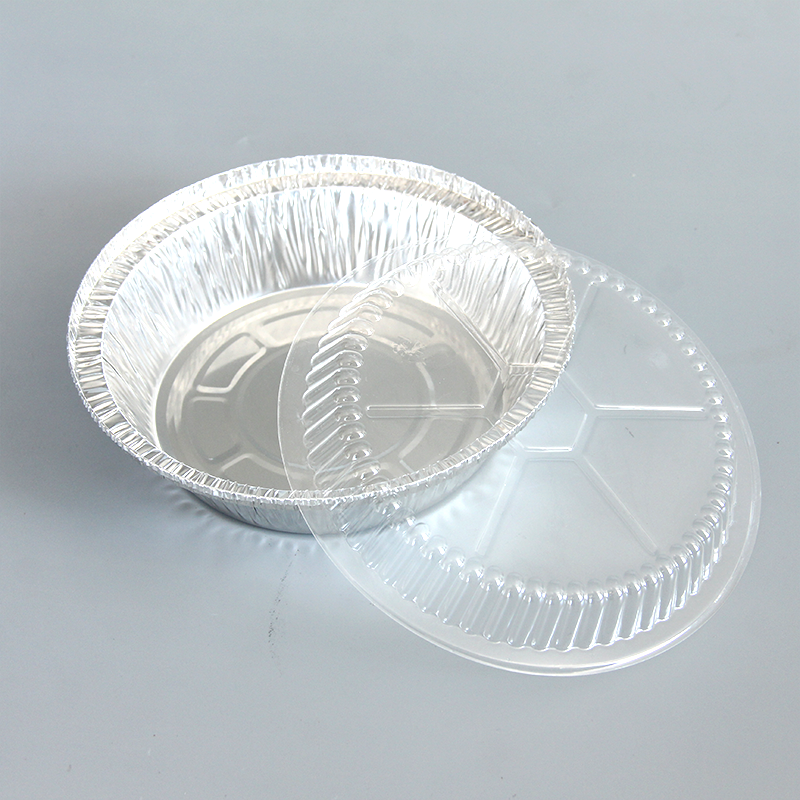 7-Inch Round Food-Grade Foil Take-Out ContainerMade from food-grade aluminum, this round container offers good heat conductivity and oil resistance, making it suitable for heating, storing, and transporting single-serve meals or leftovers.View Product →
Aluminum Foil in Catering, Takeout, and Baking
For restaurants, caterers, and bakers, the question “what is aluminum foil made out of” is often a purchasing question. Since the base material is aluminum, foil containers combine high heat resistance with the ability to go from freezer to oven to table. Full-size steam table pans are widely used by caterers to hold hot food, while smaller round containers fit single-serve takeout meals.
Turkey pans, baking trays, and BBQ trays all rely on the same raw material but use different alloy gauges and rim designs. Specifying the correct thickness and alloy is key to avoiding leaks or deformation under heavy food loads.
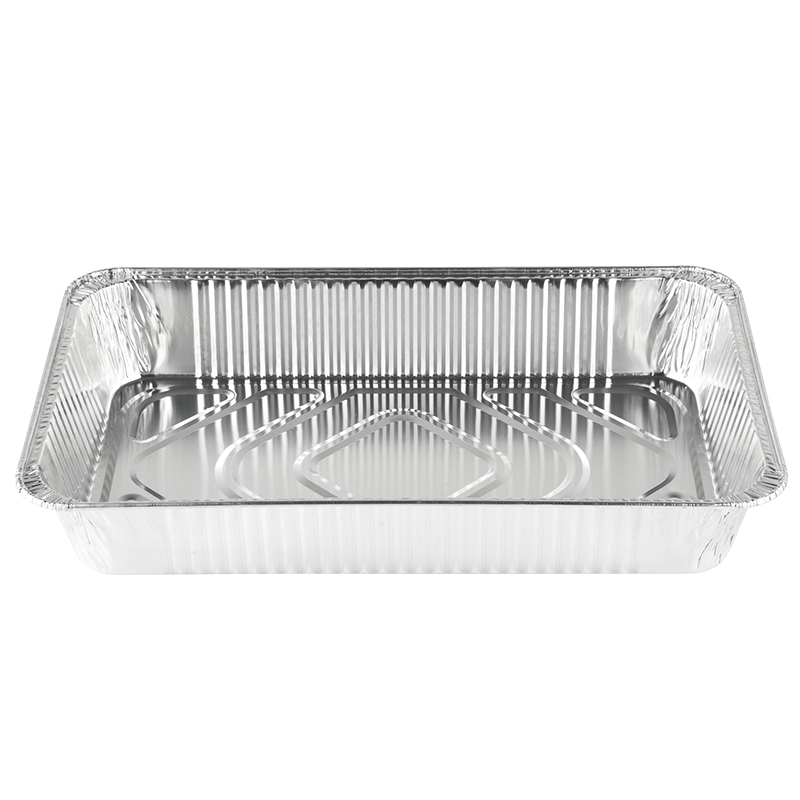 Full-Size Deep Steam Table Pan for CateringDesigned with reinforced edges and a deep profile, this food-grade aluminum pan holds large portions for steam tables and buffets, providing durable, spill-resistant service that is easy to recycle.View Product →
About Ningbo Aikang Aluminum Foil Technology Co., Ltd
Ningbo Aikang Aluminum Foil Technology Co., Ltd is located in Haishu District, Ningbo, one of the most important port cities in China. The company is committed to the design, development, and production of environmentally disposable aluminum foil products and providing practical and advanced packaging solutions to meet the dynamic change of the market.
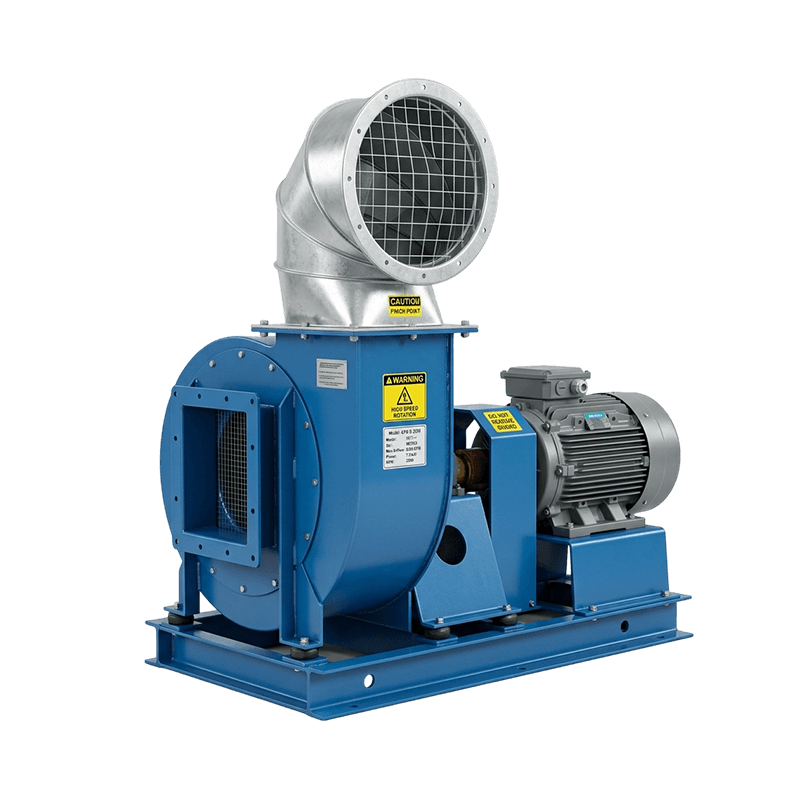
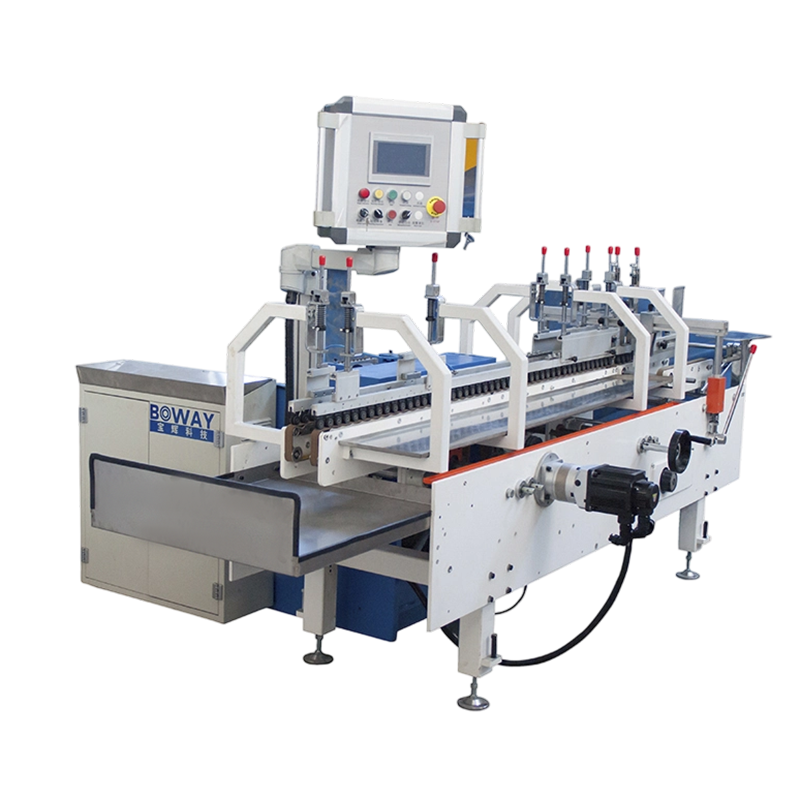
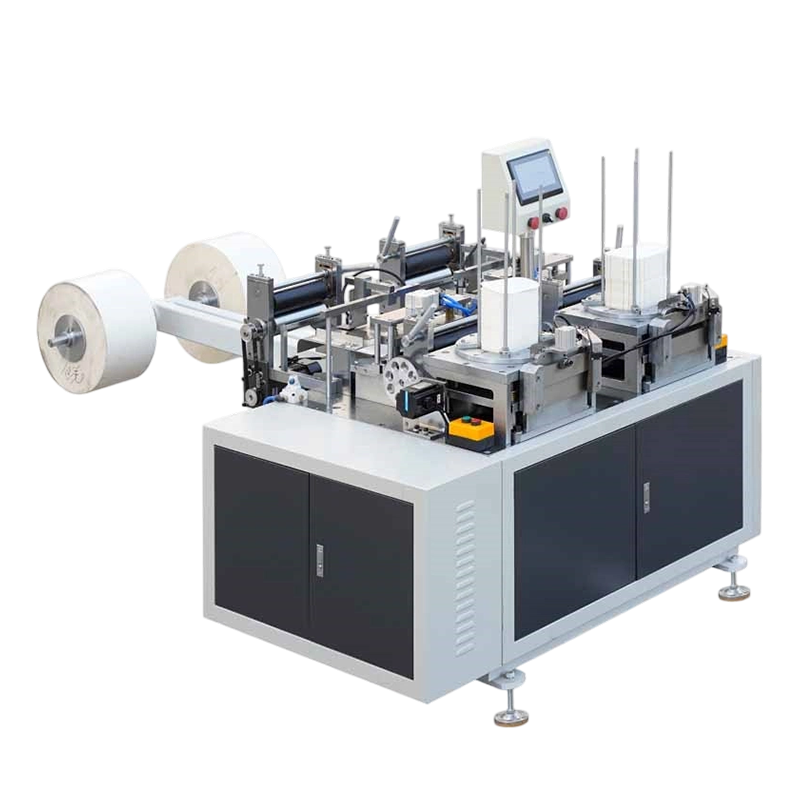
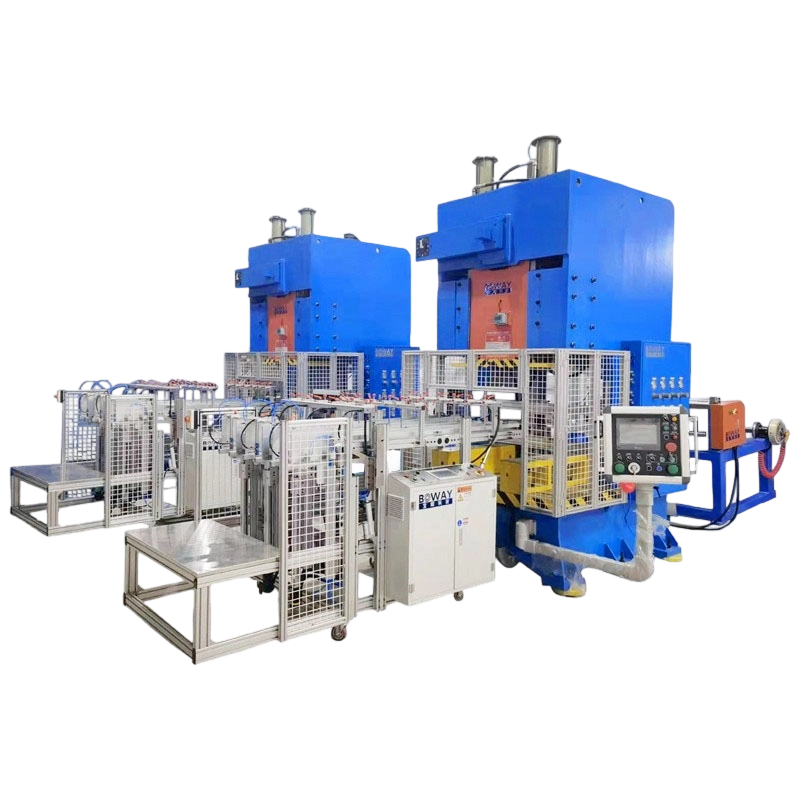
The main products consist of aviation aluminum foil containers, barbecue pans, Turkey pans, aluminum loaf pans, and other varied aluminum foil containers. Moreover, the company has developed several automatic production lines and molds to fully ensure the quality and diversity of the products. Equipped with professional design, advanced manufacturing facilities, and molds, qualified products, and a dedicated sales and service team, Aikang has ranked itself the top-notch enterprise in China.
The company has and will always hold the principle of “sincerity and integrity” to provide the best products and service to the customers at home and abroad and finally create a double-win situation. Looking forward to your visit and the cooperation with your esteemed company!
Frequently Asked Questions About Aluminum Foil
Here are answers to common questions buyers and home cooks search for when they look into what aluminum foil is made of.
Q1: Is aluminum foil safe for cooking?
Food-grade aluminum foil is safe for oven and grill use. Avoid long contact with strong acids or salty foods, which may cause small amounts of aluminum to migrate.
Q2: Why does aluminum foil have a shiny and a dull side?
The two sides come from the last rolling pass where two layers are rolled together. Both sides have the same cooking performance.
Q3: Can aluminum foil go in the microwave?
Small, smooth pieces of foil are generally accepted in most microwaves, but the safest practice is to use microwave-safe containers unless the manufacturer allows foil.
Q4: How thin is aluminum foil?
Household foil is typically about 0.016 mm thick, while heavy-duty foil reaches 0.02–0.03 mm. Industrial foil can be as thin as 0.006 mm.
Choose AiKang for Top-Quality
Aluminum Foil Products
Explore Our
Featured Products
Ningbo Aikang Aluminum Foil Technology Co., Ltd, based in Ningbo, produces eco-friendly disposable aluminum foil products. They prioritize quality and customer satisfaction, serving the global market with innovative packaging solutions.


Quick Links
Contact
-
 No. 5 Yongxing East Road, Fengshan Street, Yuyao City, Zhejiang Province, China
-
 Tel: +86-15867468784
-
 E-mail: [email protected]
Send Us A Message
