
 English
 日本語
 عربى
 Español

-
 01
Baking With Aluminum Foil: How Pan Gauge, Heat, and Timing Affect Results
Industry News-A tray of bar cookies comes out of the oven with a pale, sunken middle and edges that are already too dark. Most of the time the recipe is fine. The pan is doing the damage.
Baking with aluminum foil works best when foil is treated as a heat-management tool rather than a replacement for a rigid baking sheet. Match the gauge to the job, drop the oven setting by 10–15 °C, and set the foil pan on a flat tray before it goes in. Cover or tent only while the centre still needs protection, then open it up so the surface can colour.
What follows is what the foil is actually doing inside the oven, how thickness changes the result, and what to check before ordering pans by the case.
Content
- 1 What Foil Does Inside an Oven
- 2 Gauge Is the Variable That Decides the Result
- 3 Foil Pans Against Glass and Ceramic
- 4 Covered, Tented or Open: Timing the Bake
- 5 Safety Limits Worth Respecting
- 6 Inside a Foil Baking Pan: What the Geometry Tells You
- 7 Buying Foil Pans in Volume: Six Checks
- 8 About the Manufacturer
- 9 Frequently Asked Questions
- 9.1 Q1. Should I lower the oven temperature for a foil pan?
- 9.2 Q2. Is baking with aluminum foil safe at 220 °C?
- 9.3 Q3. Why did my foil pan buckle in the oven?
- 9.4 Q4. Can a foil pan go straight from the freezer into the oven?
- 9.5 Q5. Do I need to grease a foil baking pan?
- 9.6 Q6. Which side of the foil faces up?
What Foil Does Inside an Oven
Foil does two jobs at once, and they pull in opposite directions. Its surface reflects a large share of the radiant heat coming off the element, while the metal itself conducts heat quickly wherever it touches food. A foil pan therefore runs hot at the base and cooler along the exposed walls, which is why a sponge baked in foil browns from the bottom up.
Thermal conductivity by pan material, W/m·K. Aluminum moves heat more than 200 times faster than glass.
The gap is not subtle. Aluminum conducts heat at roughly 237 W/m·K, carbon steel sits near 50, and borosilicate glass is close to 1. Against glass that is a difference of more than two hundred times, which is why a custard in a foil cup sets at the rim far faster than the same mix in a glass ramekin.
The second job is a barrier. Crimped foil holds steam and aroma in, so a sealed parcel braises rather than roasts, and a loose tent slows surface browning without stopping the bake. That is the whole logic behind covering a lasagne for the first half of the bake and opening it at the end.
Melting is not the risk people imagine. Aluminum melts at about 660 °C, while domestic ovens rarely exceed 250–260 °C. What fails at high heat is the shape. Thin foil warps, a sagging base creates hot spots, and a pan that flexes under a heavy batter bakes unevenly.
Gauge Is the Variable That Decides the Result
Commercial foil containers usually run from 0.05 mm to 0.10 mm. Below 0.06 mm the pan behaves more like wrapping than bakeware; above 0.08 mm it starts to hold its own shape on the rack.
| Gauge | Typical baking use | Behaviour in the oven |
|---|---|---|
| 0.05–0.06 mm | Tartlets, single-serve portions, no-bake sets | Very fast base browning; flexes; needs a supporting tray |
| 0.07–0.08 mm | Brownies, small roasts, takeaway bakes | Stable on a sheet pan; predictable browning |
| 0.09–0.10 mm | Large roasts, turkey, high-volume catering | Resists warping; slower base browning; often reusable several times |
Gauge commonly specified per baking task, in microns (µm). Ranges are indicative, not a standard.
For large-format work — a roast, a whole turkey, a tray of lasagne for forty — the extra 0.02 mm is worth paying for, because a pan that twists under load drags the batter with it and leaves one corner overbaked.
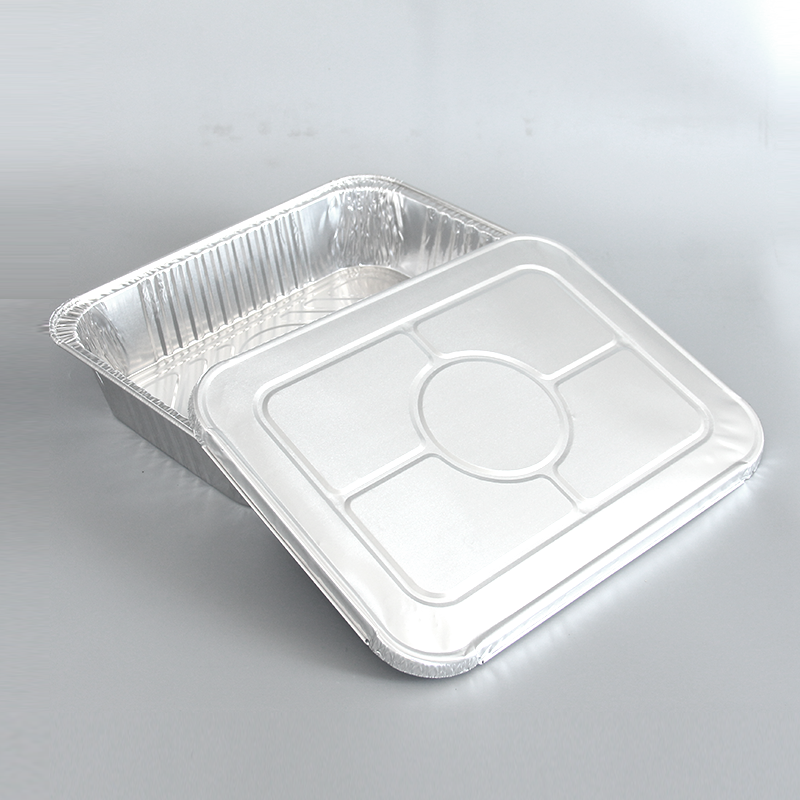 4500 ml Oblong Aluminum Foil Pan IK365Large 4500 ml foil pan for roasts and tray bakes, with full curl rim and 69 mm depth to handle catering-scale loads.View Product →
A quick field test: hold an empty pan by one corner. If the opposite corner drops more than a few millimetres, the gauge is too light for anything with liquid batter in it.
Foil Pans Against Glass and Ceramic
Foil is not the best pan for every bake, and pretending otherwise costs money. It wins on speed, weight and cold-chain handling; it loses on heat stability and on anything that needs a slow, even rise.
Qualitative comparison scored 0–10 from material properties and typical kitchen handling, not from a lab trial.
- Choose foil for par-baked shells, portioned desserts, freezer-to-oven service and anything that has to travel.
- Choose glass or ceramic for deep custards, cheesecake and long, slow sets where wall heat would toughen the edge.
- Never choose foil as an oven liner. Foil on the oven floor blocks vents and traps heat where the appliance was not designed to hold it.
Covered, Tented or Open: Timing the Bake
Most foil baking failures come from leaving the cover on too long, not from the foil itself. A workable sequence for a 45-minute bake:
- Preheat 10–15 °C below the recipe's temperature to offset the fast base.
- Set the foil pan on a flat sheet pan so the base cannot sag between rack bars.
- Cover for roughly the first 60–70 % of the bake if the surface would otherwise set before the centre.
- Uncover for the last 25–30 % so steam escapes and the top takes on colour.
- Rest in the pan for 5–10 minutes; foil holds heat well and the carryover finish is real.
Two exceptions are worth knowing. Cheesecakes and custards should stay tented for the whole bake and cool in the pan, because a sudden drop in humidity cracks the surface. Meringue-topped pies go the other way: no cover at all after the base is blind baked.
Safety Limits Worth Respecting
Aluminum migration into food is real but small, and it rises with acidity, salt content, contact time and temperature. Published food-safety reviews consistently conclude that ordinary home use stays well inside accepted intake levels; the practical advice is simply not to store tomato sauce or salted marinade in bare foil overnight, and not to cook highly acidic dishes in foil for hours at a time.
Three habits prevent most problems:
- Keep foil away from exposed heating elements and never line the oven floor with it.
- In a microwave, use shallow smooth foil containers only, and never crumpled foil, which arcs.
- In an air fryer, weight the foil down and leave the air path clear.
For commercial kitchens, specify food-grade aluminum foil trays with a declared alloy and a documented food-contact certificate rather than accepting an unlabelled carton.
Inside a Foil Baking Pan: What the Geometry Tells You
Isometric view of a foil baking pan: the rim curl, wall draft and base radius control stiffness and nesting.
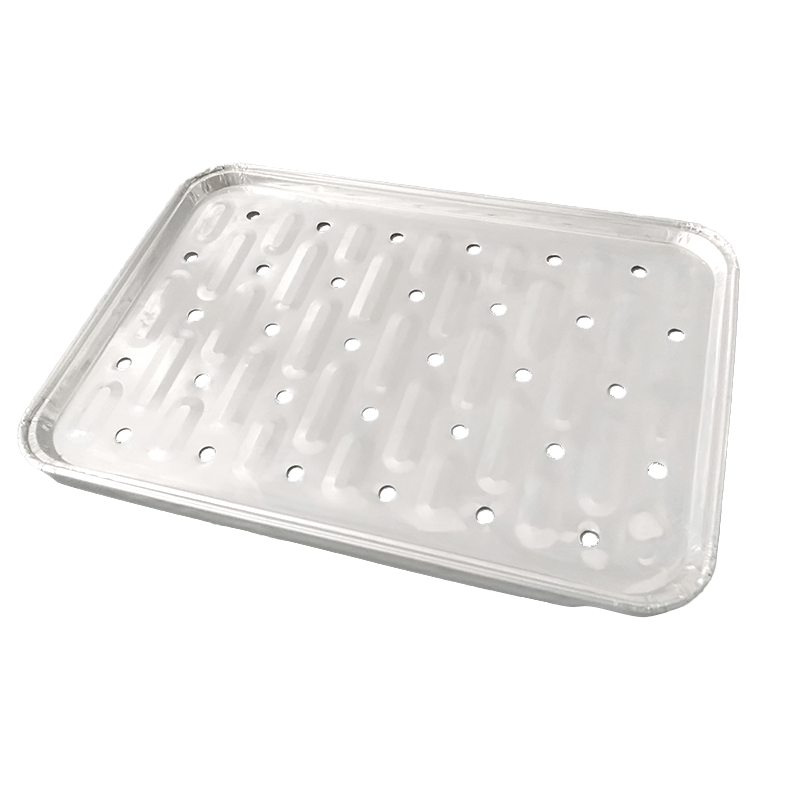
Four features decide whether a pan performs or fights you. A tight rim curl resists twisting when the pan is lifted loaded. A wall draft of roughly 20–30° allows clean de-moulding and stable stacking. A generous base radius spreads stress so corners do not split. Base embossing adds stiffness without adding metal.
 1500 ml Square Aluminum Foil Cake Pan IK204Square 1500 ml foil cake pan with full curl rim and straight sides for brownies, sponge cakes, and tray bakes that need clean edges.View Product →
For cakes and tray bakes, straight walls matter more than a pretty rim, because a sloped wall gives you a trapezoid slice and a slightly drier edge.
Buying Foil Pans in Volume: Six Checks
When the order runs to pallets rather than packs, the specification sheet matters more than the photograph. Six items to confirm before you sign:
- Declared gauge with a tolerance band, and the temper of the alloy, not just "food grade".
- Base flatness and rim curl consistency, both of which drive how the pan sits on a rack.
- Nesting ratio per sleeve — it decides carton size, freight cost and shelf space.
- Coating or lacquer, if the product is ungreased or the batter is high in sugar.
- Temperature rating in writing, especially for blast-chilled or re-thermalised service.
- Case pack and pallet pattern, matched to your own distribution centre rules.
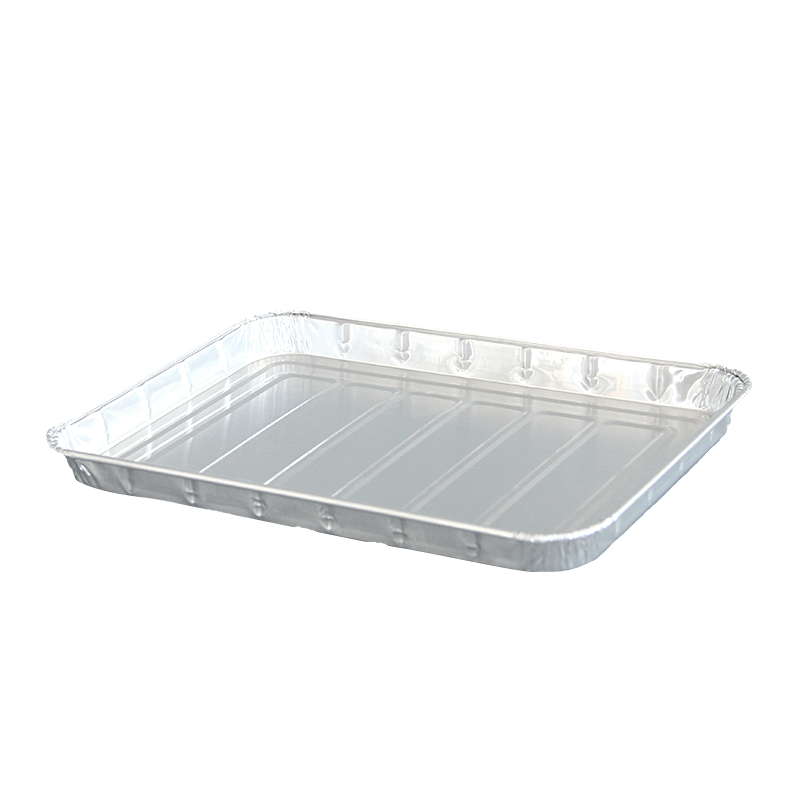
 600 ml Oblong Danish Pastry Tray IK242Shallow 600 ml foil tray for Danish pastries and dessert display, suited to small-batch bakery runs and buffet presentation without transfer.View Product →
Bakeries that run laminated pastry and loaf lines usually order two shapes at once, so it is worth comparing a shallow tray with deeper aluminum loaf bread pans on the same delivery to keep freight efficient.
About the Manufacturer
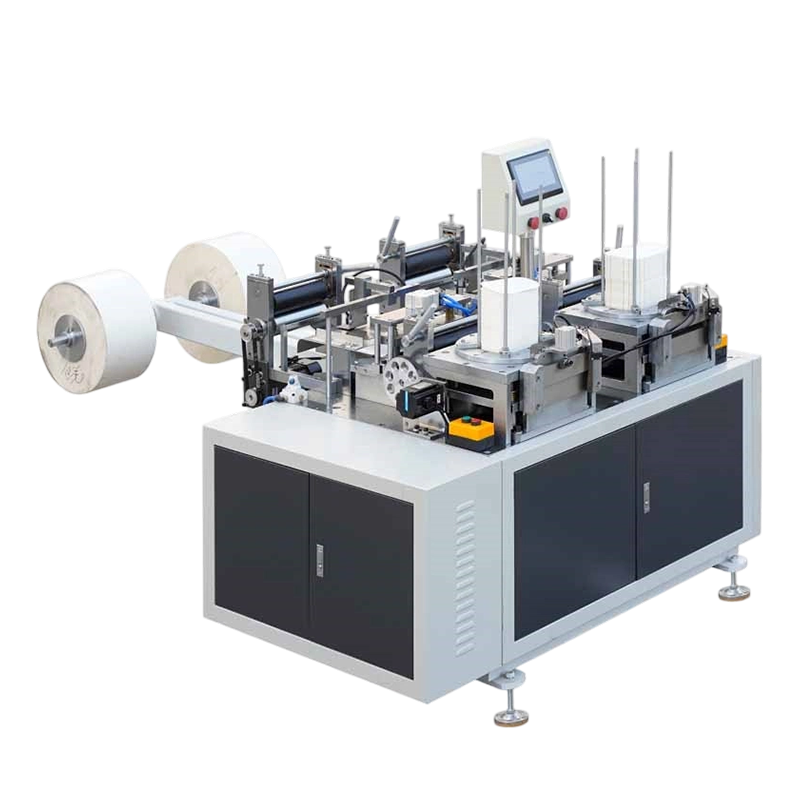
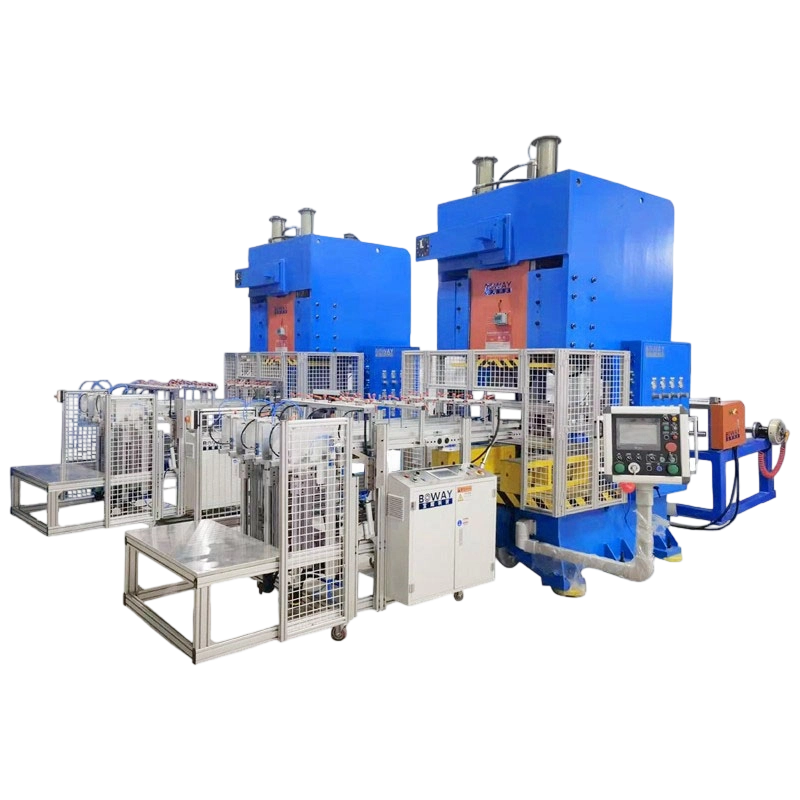
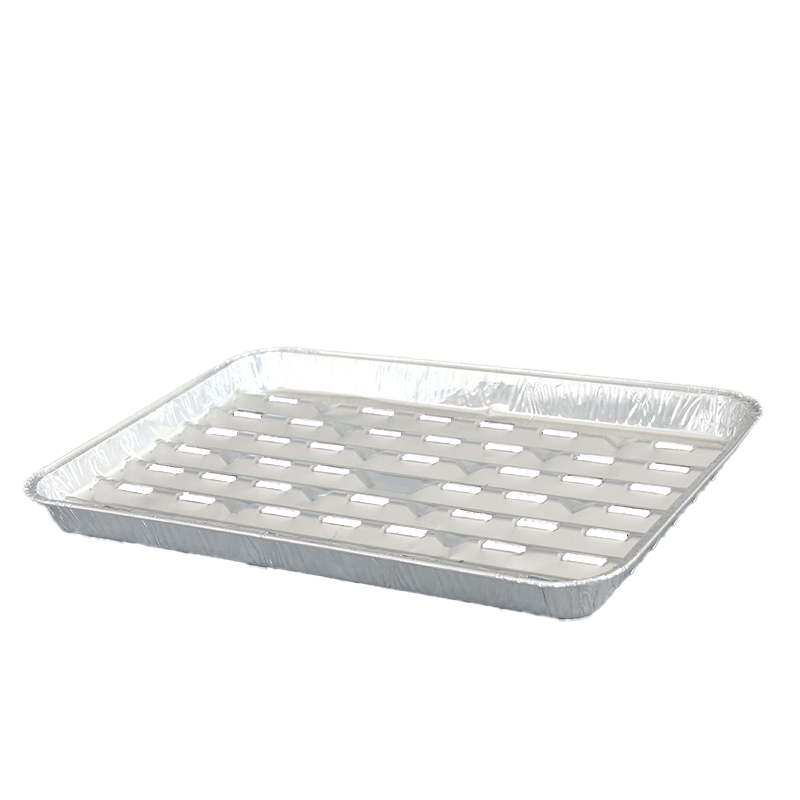
Ningbo Aikang Aluminum Foil Technology Co., Ltd is located in Haishu District, Ningbo, one of the most important port cities in China. The company is committed to the design, development, and production of environmentally disposable aluminum foil products and providing practical and advanced packaging solutions to meet the dynamic change of the market. The main products consist of aviation aluminum foil containers, barbecue pans, Turkey pans, aluminum loaf pans, and other varied aluminum foil containers. Moreover, the company has developed several automatic production lines and molds to fully ensure the quality and diversity of the products. Equipped with professional design, advanced manufacturing facilities, and molds, qualified products, and a dedicated sales and service team, Aikang has ranked itself the top-notch enterprise in China.
The company has and will always hold the principle of "sincerity and integrity" to provide the best products and service to the customers at home and abroad and finally create a double-win situation. Looking forward to your visit and the cooperation with your esteemed company.
Frequently Asked Questions
Q1. Should I lower the oven temperature for a foil pan?
Yes. Lower it by 10–15 °C and start checking five minutes early, because the base browns faster than in glass or dark metal.
Q2. Is baking with aluminum foil safe at 220 °C?
Yes. Household foil and foil pans are rated well above normal baking temperatures; aluminum only melts near 660 °C.
Q3. Why did my foil pan buckle in the oven?
Almost always a thin gauge with no support. Set the pan on a flat sheet tray and choose 0.08 mm or heavier for wet batters.
Q4. Can a foil pan go straight from the freezer into the oven?
Yes, foil handles that swing well. But do not put a frozen foil pan into a preheated oven with a heavy liquid filling that may boil over.
Q5. Do I need to grease a foil baking pan?
For uncoated foil, yes — butter or spray the base and lower walls. Lacquered pans release more cleanly but still benefit from a light coat.
Q6. Which side of the foil faces up?
Either. The shiny and dull faces are the same metal; the difference comes from how the sheet was rolled, not from a coating.
Get the gauge and the support right, and baking with aluminum foil becomes predictable rather than lucky. The pan is cheap, the tray underneath is the part that saves the bake.
Choose AiKang for Top-Quality
Aluminum Foil Products
Explore Our
Featured Products

Ningbo Aikang Aluminum Foil Technology Co., Ltd, based in Ningbo, produces eco-friendly disposable aluminum foil products. They prioritize quality and customer satisfaction, serving the global market with innovative packaging solutions.


Quick Links
Contact
-
 No. 5 Yongxing East Road, Fengshan Street, Yuyao City, Zhejiang Province, China
-
 Tel: +86-15867468784
-
 E-mail: [email protected]
Send Us A Message
