
 English
 日本語
 عربى
 Español

-
 01
Food Grade Aluminum Foil Containers: Alloy, Gauge and Compliance Guide
Industry News-A buyer sends a specification sheet that says "food grade aluminum foil containers, 1400 ml, 0.07 mm" and gets back three quotations. The prices differ by nearly a fifth, and only one supplier attaches a migration test report together with the samples. The quote is not the interesting part; the missing paperwork is.
Here is the conclusion first: "food grade" describes a verified chain, not a metal. It runs from alloy designation and temper, through the finished gauge at base and rim, through a food-contact document pack, and ends with how the tray actually behaves at the temperature and load your kitchen applies. The sections below take each link in that chain and show what to check before you sign.
Content
- 1 What "Food Grade" Actually Covers
- 2 Gauge, Rim and Wall: Where a Tray Earns Its Price
- 3 Matching Format and Capacity to Service Conditions
- 4 Heat, Cold and Acidity: Realistic Use Limits
- 5 Ordering: Tolerances and the Checks That Prevent Rejects
- 6 Where Aikang Sits in the Container Supply Chain
- 7 Frequently Asked Questions
What "Food Grade" Actually Covers
Container foil is normally rolled from 8011, 3003 or 3004 alloy. Food-contact law does not simply permit "aluminium"; it limits how much aluminium and how much of each alloying element may transfer into food. In the EU those limits sit under Regulation (EC) 1935/2004 and its GMP regulation 2023/2006, with alloy composition guided by EN 601. In the United States the framework is FDA 21 CFR Parts 174–178; in China it is GB 4806.9. A supplier who cannot name the alloy is asking you to accept an unknown.
Three physical details follow. Temper first: O-temper strip forms easily but dents, while H22 gives a stiffer tray that must be formed carefully or it tears at the corner radius. Gauge second: container foil typically sits between 0.05 mm and 0.12 mm, and the number that matters is the gauge after forming, not the gauge printed on the coil label. Surface third: rolling lubricant has to be removed, and a plain tray needs no lacquer because aluminium builds its own passive oxide layer — but a coated or printed tray needs its own declaration.
| Document | What it confirms | What to check |
|---|---|---|
| Alloy certificate | Grade and temper of the strip | 8011, 3003 or 3004 stated; temper O or H22; gauge with tolerance |
| Declaration of Compliance | Compliance with EU 1935/2004 or FDA 21 CFR | Framework regulation cited, migration limits listed, signed and dated |
| Migration test report | Actual transfer from the finished tray | Third-party laboratory, overall and specific migration, test conditions matching fatty or aqueous food |
| Certificate of Analysis per lot | Consistency from shipment to shipment | Gauge, tensile strength, dimensions and visual defects recorded |
| Packaging statement | Food-safe packing and storage | Polybag grade, carton lining, pallet wrap and storage advice |
Gauge, Rim and Wall: Where a Tray Earns Its Price
A formed tray is not uniform. The base keeps most of its thickness, the wall thins as the metal is drawn, and the rim is rolled back on itself into a stiff ring. That rim is the part your hand grips, and it is the first place a cheap tray fails: an under-rolled rim bends when a full tray is lifted one-handed, and the corner where wall meets base is where a thin gauge splits.
Isometric section of a tapered foil tray
The rim curl carries bending load, the wall taper sets de-nesting behaviour, and the base holds the meal — three different thicknesses in one tray.
Two practical consequences follow. A taper of roughly 8–12° lets trays de-nest cleanly on an automated filling line; too little and they jam, too much and the stack wobbles. Gauge should also follow the load: a 700 g hot entrée and a 200 g cold salad do not need the same strip, and paying for 0.10 mm everywhere is as wasteful as using 0.05 mm under a sauce.
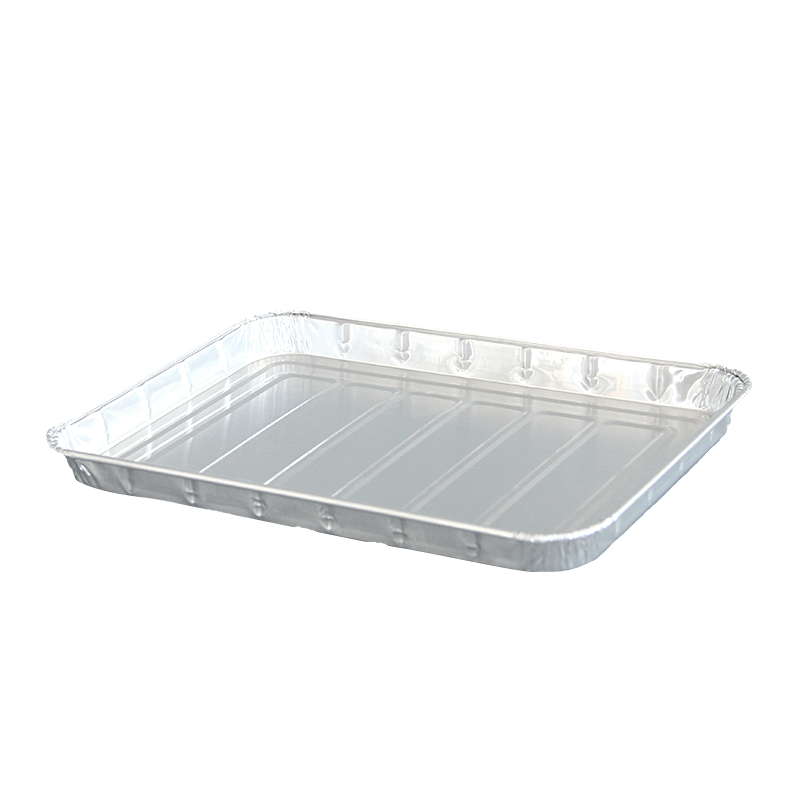
 1400 ml Oblong Aluminum Foil Container IK350A 350×133 mm, 1400 ml oblong tray weighing 16.5 g with stackable design; compare usable volume and wall depth with similar-capacity formats.View Product →
Formats built on this geometry, such as food grade aluminum foil trays, deserve a side-by-side comparison at the same nominal capacity, because a deeper wall and a flatter base can shift usable volume by a noticeable margin.
Matching Format and Capacity to Service Conditions
Capacity on a product name is a nominal figure, usually measured to the brim. A kitchen that fills to the brim gets a tray that leaks in transit. Plan on filling to roughly 80–85% of nominal volume, which turns a 1400 ml oblong into a working load near 1150–1200 ml — about one generous hot main with sauce.
Selected stock capacities in the tray range (ml)
Nominal capacities as listed in the current product catalogue; usable volume is lower once you allow headspace for lids or film.
Shape matters as much as volume. Oblong trays stack efficiently in delivery bags and suit entrées with separate components; round containers handle soups and rice better because there is no long flat wall to flex; compartment trays keep protein, starch and vegetables apart without extra packaging. For high-volume roasting, deep steam-table pans and large oval serving trays take over, and the gauge rises with the load.
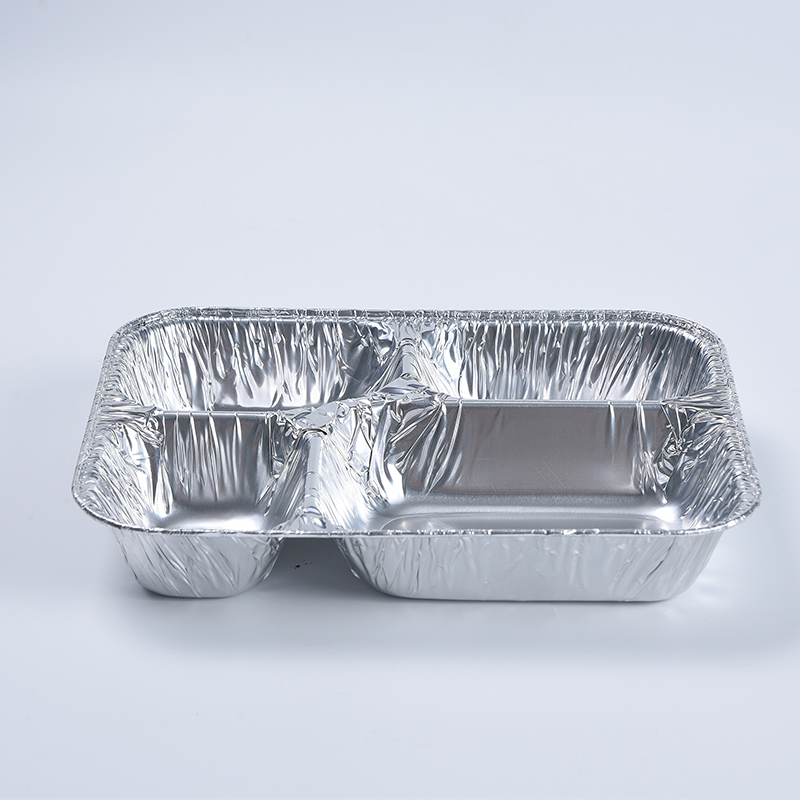 Oblong 4-Compartment Aluminum Foil Tray 227-4An 880 ml, 227×179 mm four-compartment foil tray that keeps foods separate for buffet or delivery; recyclable and suited to oven reheating.View Product →
Heat, Cold and Acidity: Realistic Use Limits
Aluminium conducts heat quickly, which is why a foil tray heats food faster than a plastic one and why it feels at home in a convection oven. Ovens running at 200–250 °C sit comfortably inside the metal's working range — the melting point of aluminium is around 660 °C — but no foil container belongs over an open flame, on an induction hob, or in a contact grill where it can be crushed against a heating element.
Freezing is straightforward: foil stays ductile at −20 °C and blocks light, moisture and oxygen. Microwaves need more care. A shallow tray in a domestic microwave usually behaves, but thin rims, sharp corners and any foil touching the cavity wall can arc. For microwave-heavy menus, decant the food or specify a container that has been tested for that use rather than assuming every tray qualifies.
Acidity is the other limit. Tomato, citrus, vinegar dressings and brine are aggressive toward bare aluminium during long contact, and pitting shows up as dark spots and a metallic taste. Short holding — one service period, one delivery window — is generally fine; multi-day storage in an uncoated tray is not the right application.
Ordering: Tolerances and the Checks That Prevent Rejects
Most container complaints trace back to a specification that was never written down. Put these six points on the purchase order and approve samples against them:
- Alloy, temper and gauge, with the tolerance band stated for base and rim separately.
- Dimensions measured at the rim, plus stacking height and de-nesting force.
- Rim integrity: visual check for cracks and a water leak test on samples from each lot.
- Temperature performance claimed in writing and matched to oven, freezer or microwave use.
- Food-contact documents per batch, not a single certificate dated three years ago.
- Carton count, compression strength and pallet pattern, especially for sea freight.
Run first-article approval on production tooling rather than a hand-made sample, then keep a retained sample per shipment. When a later batch feels thinner in the hand, you will want the reference. Buyers comparing suppliers on disposable aluminum foil containers usually find the deciding difference in that file of documents rather than in the unit price.
Where Aikang Sits in the Container Supply Chain
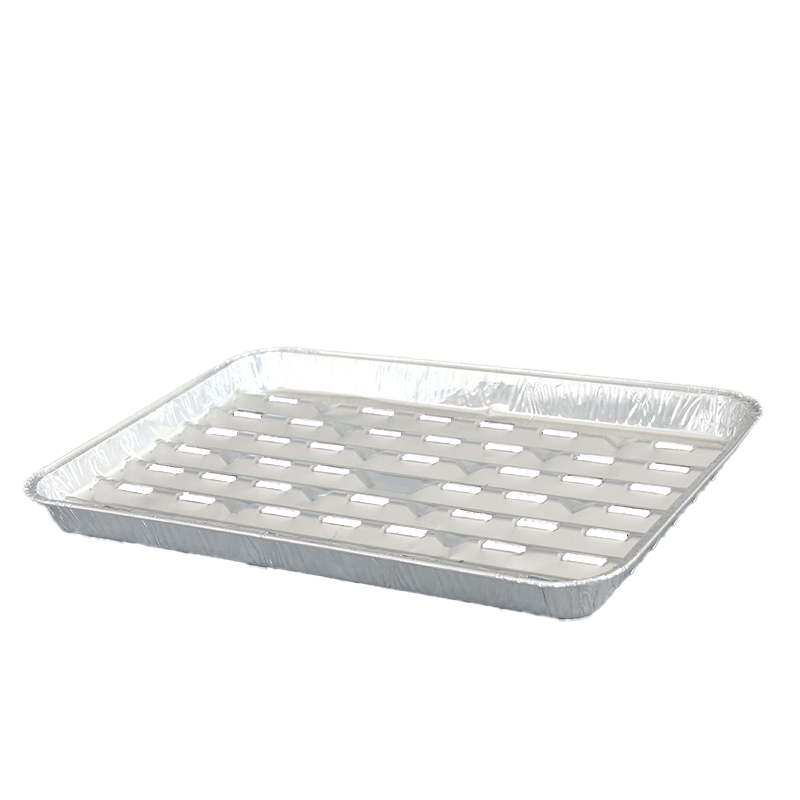
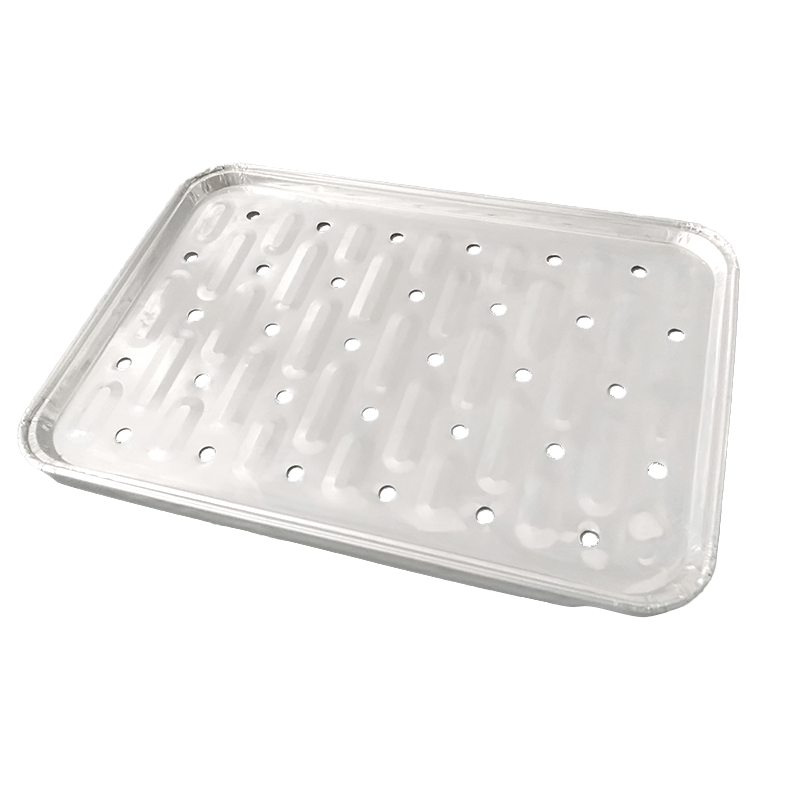
Ningbo Aikang Aluminum Foil Technology Co., Ltd is located in Haishu District, Ningbo, one of the most important port cities in China. The company is committed to the design, development, and production of environmentally disposable aluminum foil products and providing practical and advanced packaging solutions to meet the dynamic change of the market. The main products consist of aviation aluminum foil containers, barbecue pans, Turkey pans, aluminum loaf pans, and other varied aluminum foil containers. Moreover, the company has developed several automatic production lines and molds to fully ensure the quality and diversity of the products. Equipped with professional design, advanced manufacturing facilities, and molds, qualified products, and a dedicated sales and service team, Aikang has ranked itself the top-notch enterprise in China.
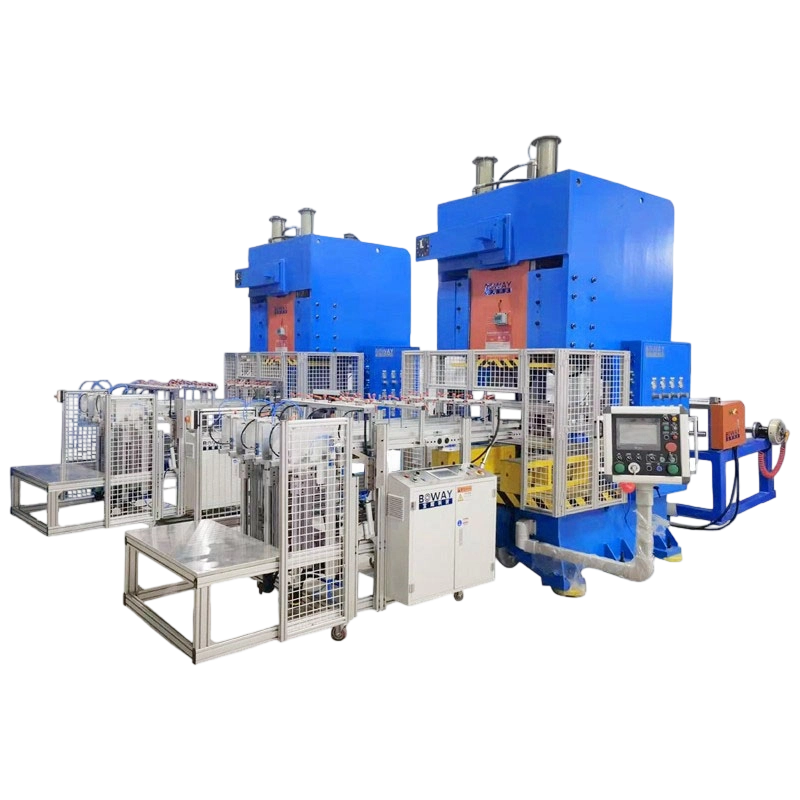
That combination of finished containers and the machines that make them is unusual, and it is useful for two different buyers. A distributor or catering group orders trays by format, gauge and documentation; a converter building capacity orders the forming, feeding, stacking and scrap-handling equipment behind those trays, which keeps tooling knowledge and process control in one place.
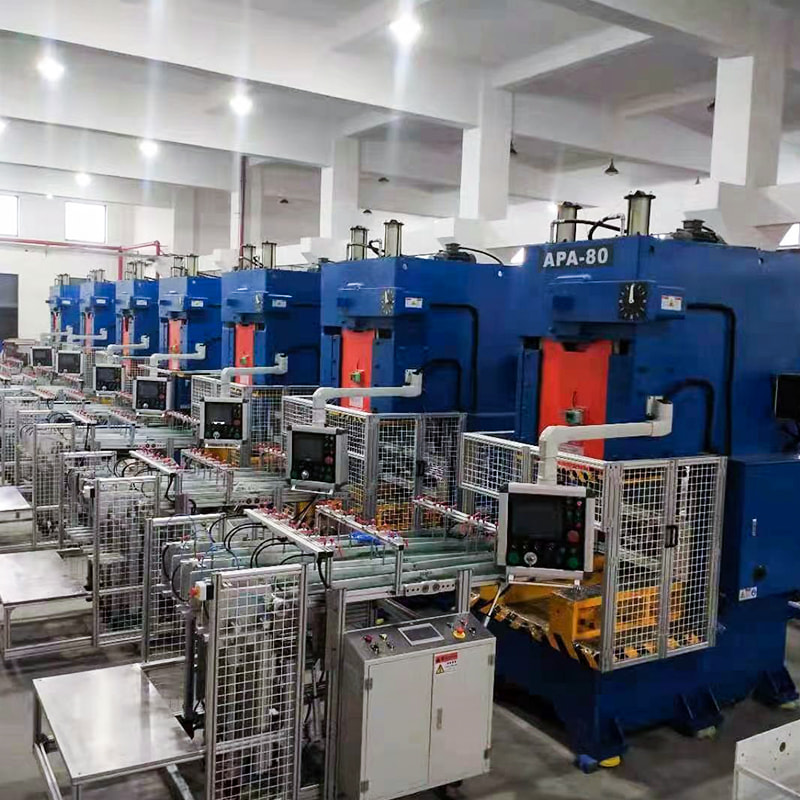 Complete Aluminum Foil Container Production LineTurnkey line for converters seeking in-house forming capacity, integrating feeding, forming, stacking, scrap handling and packaging with 80- or 200-ton press options.View Product →
The company has and will always hold the principle of "sincerity and integrity" to provide the best products and service to the customers at home and abroad and finally create a double-win situation. Looking forward to your visit and the cooperation with your esteemed company.
Frequently Asked Questions
Q1. What does food grade mean on a foil container?
It means the alloy, gauge and surface meet food-contact rules, and that documents prove it: a declaration of compliance, a migration test report and an alloy certificate for the batch.
Q2. Can these trays go straight into the oven?
Yes, in conventional and convection ovens at normal baking temperatures around 200–250 °C. Not over an open flame, not on induction, and not in a microwave unless that use is specified.
Q3. How do I check the real thickness?
Ask for the post-forming gauge at base and rim, then measure a sample with a micrometer at five points on the base and four on the rim. Coil gauge alone tells you little.
Q4. Are foil containers recyclable?
Yes. Aluminium is recycled without loss of quality, and industry bodies such as the International Aluminium Institute put the energy saving from recycled aluminium at up to 95% versus primary production, provided the tray is clean and collected.
Q5. Do acidic foods react with aluminium?
Strongly acidic or salty foods held for long periods can pit bare foil and affect taste. Short service and delivery windows are fine; multi-day storage suits glass or lacquered packaging better.
Q6. Can I get printing, lids or film sealing?
Yes. Printed rims and bases, board or foil lids and lidding film are standard options — confirm that lid and tray share the same rim diameter and that both carry food-contact approval.
Choose AiKang for Top-Quality
Aluminum Foil Products
Explore Our
Featured Products

Ningbo Aikang Aluminum Foil Technology Co., Ltd, based in Ningbo, produces eco-friendly disposable aluminum foil products. They prioritize quality and customer satisfaction, serving the global market with innovative packaging solutions.


Quick Links
Contact
-
 No. 5 Yongxing East Road, Fengshan Street, Yuyao City, Zhejiang Province, China
-
 Tel: +86-15867468784
-
 E-mail: [email protected]
Send Us A Message
