
 English
 日本語
日本語 عربى
عربى Español
-
 01
01
Are Disposable Aluminum Foil Containers Worth It in 2026?
Industry News-Yes — disposable aluminum foil containers are worth it in 2026, and for most foodservice, catering, and retail packaging applications, they remain one of the most practical, cost-efficient, and environmentally defensible single-use options available. Unlike plastic alternatives that face increasing regulatory restrictions, aluminum foil tableware is infinitely recyclable, food-safe across extreme temperatures, and proven across decades of industrial and commercial use. This article examines the evidence, applications, and selection criteria that make disposable aluminum food containers a sound choice for caterers, food producers, airlines, retailers, and households alike.
Content
- 1 Why Aluminum Foil Containers Still Lead the Market in 2026
- 2 Key Performance Advantages of Disposable Aluminum Food Containers
- 3 Aluminum Foil Tableware by Application: Matching Product to Use Case
- 4 Heavy Duty Aluminum Foil Trays for Catering: What Operators Need to Know
- 5 Environmental Profile: Aluminum Foil vs. Plastic Disposables in 2026
- 6 How to Select the Right Disposable Aluminum Food Container for Your Operation
- 7 About Ningbo Aikang Aluminum Foil Technology Co., Ltd.
- 8 Frequently Asked Questions
Why Aluminum Foil Containers Still Lead the Market in 2026
The global aluminum foil container market continues to grow, driven by the foodservice industry's demand for packaging that can move from freezer to oven to table without transfer. Several structural factors reinforce this trend in 2026:
- Plastic bans accelerating adoption — More than 60 countries have enacted restrictions on single-use plastics. Foodservice operators are actively replacing plastic trays with disposable aluminum food containers as a compliant, practical alternative.
- Recycling infrastructure alignment — Aluminum is one of the most recycled materials globally, with recycling rates exceeding 75% in Europe and recovery programs expanding across North America and Asia-Pacific.
- Growth in ready-meal and meal-kit markets — The global ready-to-eat food market, valued at over $180 billion in 2025, relies heavily on aluminum foil trays for packaging, cooking, and reheating convenience.
- Aviation and institutional catering demand — Airline catering alone accounts for billions of aluminum foil container units annually, a segment recovering strongly post-pandemic.
Key Performance Advantages of Disposable Aluminum Food Containers
Disposable aluminum food containers offer a combination of performance properties that no single alternative material replicates across all conditions:
Temperature Range
Aluminum foil containers withstand temperatures from -40°C to 600°C (-40°F to 1,112°F), making them suitable for blast freezing, conventional oven baking, convection cooking, and even some grill applications. No pre-heating or transfer to a separate dish is required — the container itself serves as the cooking vessel.
Barrier Properties
Aluminum provides a complete barrier against light, moisture, oxygen, and micro-organisms — all four of the primary agents of food spoilage. This is why aluminum foil tableware is standard in airline catering, military ration packs, and long-shelf-life retail food products where contamination control is non-negotiable.
Structural Rigidity
Heavy duty aluminum foil trays maintain their structural integrity when filled with dense, liquid-rich foods — roasts, stews, lasagnas — that would deform or leak in thinner gauge alternatives. Gauge thickness in commercial-grade trays typically ranges from 80 to 120 microns, with catering-grade trays reaching 150+ microns for large-format applications.
Food Safety
Aluminum foil containers that meet food-grade standards are certified for direct food contact. They do not absorb odors, flavors, or bacteria, and do not release harmful substances at cooking temperatures when used within their designed temperature range. They comply with FDA, EU Regulation 10/2011, and equivalent international food contact material standards.
Figure 1: Suitability comparison of aluminum foil, plastic, and paper containers across four key performance factors
Aluminum Foil Tableware by Application: Matching Product to Use Case
Not all aluminum foil tableware is built the same. Product selection should align with the specific thermal, structural, and volume demands of each application. The table below summarizes the primary product types and their recommended uses:
| Product Type | Gauge / Depth | Primary Application | Key Advantage |
|---|---|---|---|
| Standard Foil Tray | 80–100 microns / shallow | Retail ready meals, takeout | Lightweight, stackable, cost-efficient |
| Heavy Duty Aluminum Foil Trays | 120–150+ microns / deep | Catering, roasting, institutional cooking | High structural strength under heat and weight |
| Aviation Foil Containers | 90–110 microns / compartmented | Airline meal service | Precise portioning, hermetic sealing compatibility |
| Aluminum Catering Foil Pans | 130–180 microns / full-size | Event catering, buffet, large-batch cooking | Full hotel pan compatibility, dishwasher-safe lids |
| Aluminum Loaf Pans | 100–120 microns / loaf shape | Baking, pâté, terrines, individual portions | Even heat distribution for baking applications |
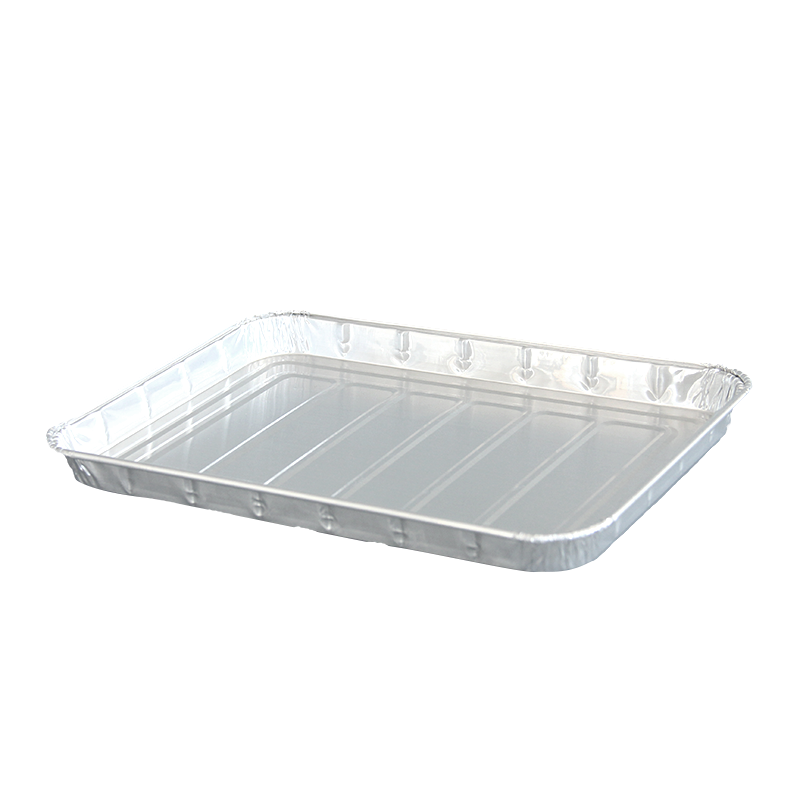
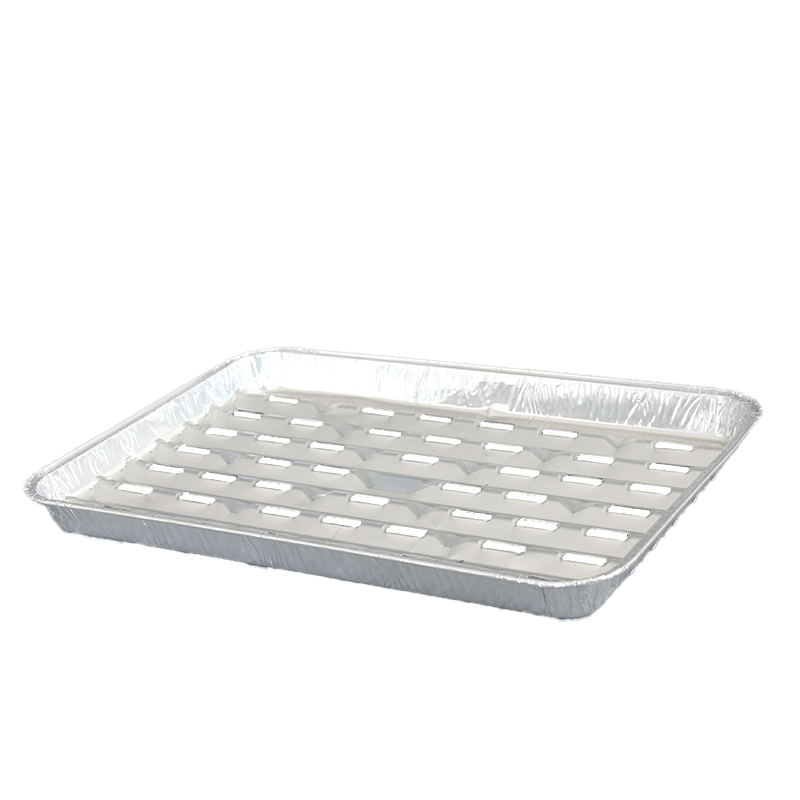
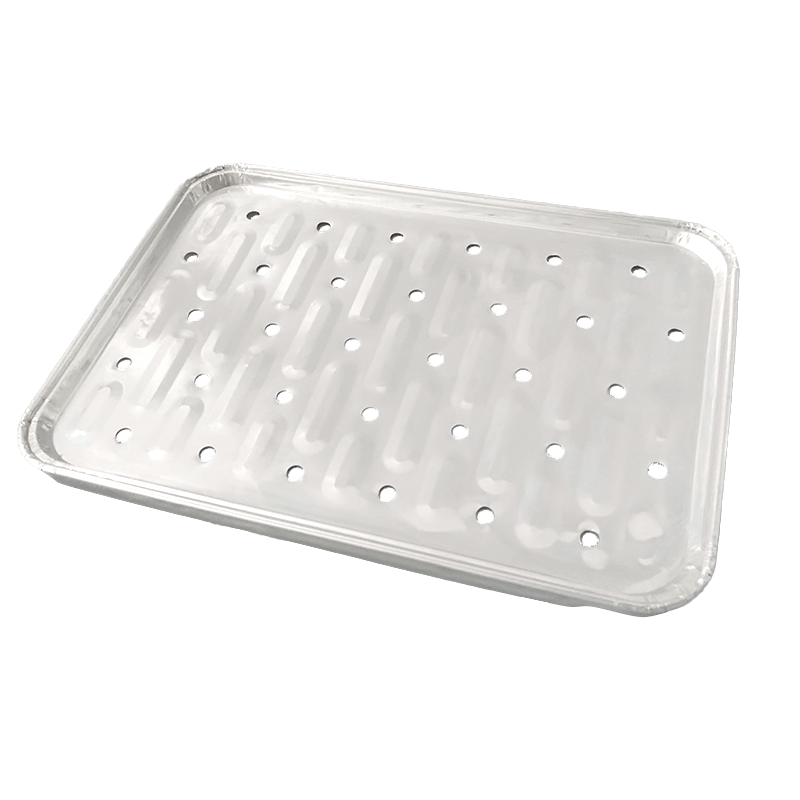
| Barbecue / Grill Pans | 120–150 microns / vented or solid | Outdoor grilling, BBQ events | Heat resistance, drip containment, easy cleanup |
| Turkey / Large Roasting Pans | 150–200 microns / extra deep | Holiday roasting, large poultry, institutional | Supports weights exceeding 10 kg without deformation |
Heavy Duty Aluminum Foil Trays for Catering: What Operators Need to Know
For catering companies, event operators, and institutional food providers, heavy duty aluminum foil trays and aluminum catering foil pans are the workhorse of the operation. Selecting the right specification prevents costly failures — split trays, leaking joints, or containers that cannot be safely carried when full.
Gauge Selection by Food Type
The gauge (thickness) of the aluminum determines structural performance under load and heat:
- 80–100 microns — Suitable for dry goods, pastries, and light sandwiches. Not recommended for liquid-rich dishes or oven use above 180°C.
- 100–130 microns — Standard catering grade. Handles most cooked dishes, sauces, and casseroles safely in conventional ovens up to 220°C.
- 130–180 microns — Heavy duty catering specification. Required for full hotel pans carrying stews, curries, or large protein portions that are transported and reheated off-site.
- 180+ microns — Extra heavy duty, used for turkey roasting pans and large-scale institutional cooking trays. Supports loads exceeding 8–10 kg.
Lid Compatibility and Sealing
For catering and transport applications, aluminum catering foil pans should be paired with compatible foil lids or cardboard lids that provide a tight seal. A properly sealed container prevents moisture loss during oven cooking, maintains food temperature during transport, and ensures contamination protection. Look for containers with a rolled or reinforced rim that allows lids to seat securely under mechanical stress.
Environmental Profile: Aluminum Foil vs. Plastic Disposables in 2026
The environmental argument for disposable aluminum food containers has strengthened considerably in recent years. Key facts that inform the sustainability comparison:
- Infinite recyclability — Aluminum can be recycled repeatedly without any loss of material quality. Recycled aluminum requires only 5% of the energy needed to produce primary aluminum from bauxite ore.
- High recovery rates — Used aluminum foil containers are accepted by most municipal recycling programs, unlike many multi-layer plastic food trays that are non-recyclable.
- No microplastic risk — Unlike plastic containers, aluminum does not shed microplastics into food or the environment over time.
- Regulatory compliance — As single-use plastic regulations tighten across the EU, UK, and increasingly in Asia-Pacific, aluminum containers are already compliant as a non-plastic alternative in most jurisdictions.
The primary environmental caveat is that aluminum production from raw ore is energy-intensive. However, when containers are properly recycled — which they are at consistently higher rates than plastic — the lifecycle carbon footprint compares favorably over multiple use cycles.
Figure 2: Estimated recycling rate trends for aluminum foil vs. plastic food containers, 2018–2024 (European average)
How to Select the Right Disposable Aluminum Food Container for Your Operation
Procurement teams and foodservice operators should evaluate aluminum foil containers against the following criteria before committing to a supplier or specification:
- Alloy grade and purity — Food-contact aluminum should meet alloy 1xxx or 8xxx series standards. Confirm the supplier's material certification to ensure compliance with food safety regulations in your target market.
- Gauge and load capacity — Match the gauge to the food weight and temperature. A standard 100-micron tray is unsuitable for a 3 kg lasagna at 200°C; a 150-micron heavy duty tray is the appropriate specification.
- Rim type — Smooth rims suit standard lid sealing; rolled rims add grip strength for transport. Confirm compatibility with your lid or heat-sealing equipment.
- Surface treatment — Standard bright aluminum, anodized, or lacquered finishes are available. Lacquered or coated interiors improve release properties for certain foods (baked goods, dairy-based dishes).
- Dimensional standardization — For commercial kitchens and institutional use, containers that fit standard gastronorm or hotel pan systems reduce handling complexity and allow containers to be used directly in existing oven racks and warming equipment.
- Stacking efficiency — In high-volume operations, stackable trays with consistent tolerances reduce storage footprint and improve dispensing speed during peak service periods.
About Ningbo Aikang Aluminum Foil Technology Co., Ltd.
Ningbo Aikang Aluminum Foil Technology Co., Ltd. is a China aluminum foil container manufacturer and aluminum foil tableware factory located in Haishu District, Ningbo — one of China's most strategically important port cities for export logistics. The company is dedicated to the design, development, and production of environmentally responsible disposable aluminum foil products and advanced packaging solutions that respond to the evolving needs of global markets.
The core product range includes aviation aluminum foil containers, barbecue pans, Turkey pans, aluminum loaf pans, and a broad variety of specialized aluminum foil containers. Aikang has developed multiple automatic production lines and proprietary molds that underpin consistent quality and product diversity across the full range.
Supported by professional design capabilities, advanced manufacturing facilities, and a dedicated international sales and service team, Aikang has established itself as a leading enterprise in China's aluminum foil container industry. The company operates under the principle of "sincerity and integrity" — providing reliable products and responsive service to customers across domestic and international markets, and committed to creating lasting mutual value for all partners.
Frequently Asked Questions
Choose AiKang for Top-Quality
Aluminum Foil Products
Explore Our
Featured Products

Ningbo Aikang Aluminum Foil Technology Co., Ltd, based in Ningbo, produces eco-friendly disposable aluminum foil products. They prioritize quality and customer satisfaction, serving the global market with innovative packaging solutions.


Quick Links
Contact
-
 No. 5 Yongxing East Road, Fengshan Street, Yuyao City, Zhejiang Province, China
-
 Tel: +86-15867468784
-
 E-mail: [email protected]
Send Us A Message
