
 English
 日本語
日本語 عربى
عربى Español
-
 01
01
How Aluminum Foil Tableware Can Reduce Your Packaging Waste by 40% in 2026?
Industry News-Switching to aluminum foil tableware can reduce a food business's packaging waste by up to 40% compared to mixed-material disposables — and that figure is increasingly achievable in 2026 as recycling infrastructure matures globally. Aluminum is infinitely recyclable without quality loss, and modern eco-friendly aluminum plates are manufactured with significantly lower virgin material input than a decade ago. This article explains the data behind that claim and gives operators a practical framework for making the switch.
Content
- 1 Why Aluminum Outperforms Other Disposable Packaging in 2026
- 2 The Main Product Categories and Where Each Excels
- 3 How Aluminum Foil Tableware Reduces Waste in Practice
- 4 Industries Driving Adoption of Aluminum Foil Catering Supplies
- 5 What to Look for When Sourcing Aluminum Foil Tableware
- 6 Practical Steps to Reduce Packaging Waste by 40% This Year
- 7 About Ningbo Aikang Aluminum Foil Technology Co., Ltd.
- 8 Frequently Asked Questions
Why Aluminum Outperforms Other Disposable Packaging in 2026
The packaging landscape has shifted considerably. Single-use plastics face regulatory restrictions across the EU, UK, parts of the US, and much of Southeast Asia. Paper-based alternatives absorb grease and moisture, limiting their use in hot or wet food applications. Aluminum solves both problems: it is fully recyclable, heat-stable up to 600°C, moisture-proof, and grease-resistant.
In global recycling terms, aluminum already has a significant edge. The recycling rate for aluminum packaging in Europe exceeds 76%, compared to approximately 30% for plastic film and 58% for paper-based food containers. Recycled aluminum requires only 5% of the energy needed to produce primary aluminum — a compelling sustainability argument for caterers and event operators managing large volumes of disposable packaging.
Recycling Rate by Disposable Packaging Material (%)
Plastic Film
30%
Paper Food Containers
58%
Aluminum Foil Tableware
76%+
European packaging recycling benchmarks, 2024 data
The Main Product Categories and Where Each Excels
Aluminum foil catering supplies cover a wide range of formats. Choosing the right format for your specific food service application prevents product failure and reduces unnecessary material use.
Disposable Aluminum Serving Trays
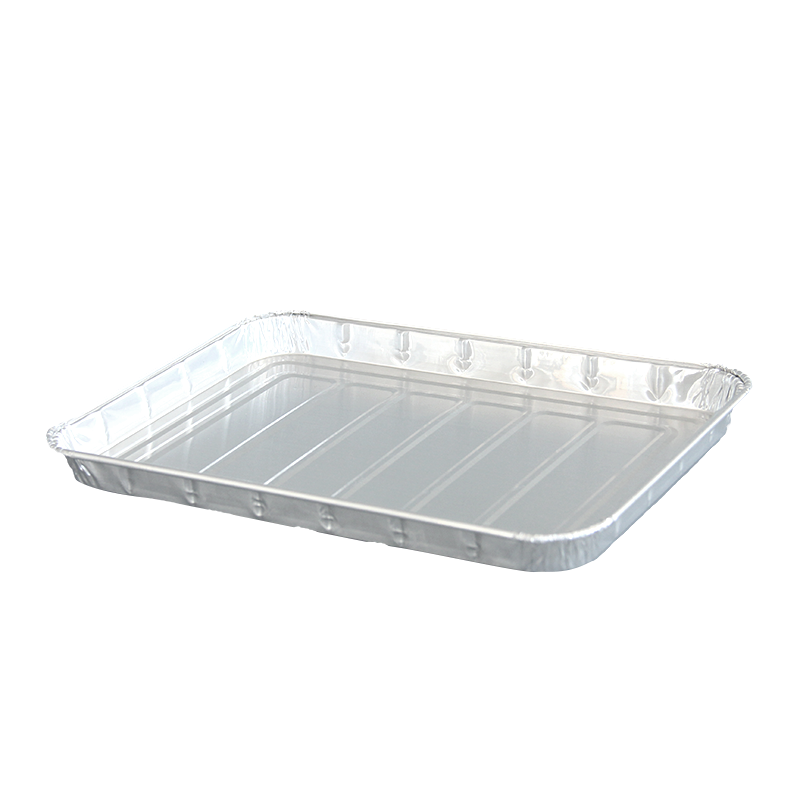
Disposable aluminum serving trays are the workhorse of catering operations. Available in full-size (530 x 325 mm), half-size, and third-size gastronorm-compatible formats, they handle everything from buffet service to airline meal delivery. Their ability to go directly from oven to table to recycling bin without secondary packaging makes them a genuine single-step solution for high-volume events.
Eco-Friendly Aluminum Plates
Eco-friendly aluminum plates have replaced plastic plates in many outdoor dining and festival environments. Modern embossed designs add rigidity, allowing the plate to support heavier portions without flexing — a common complaint with earlier flat-gauge models. Plates produced with post-consumer recycled aluminum content (typically 70–95% recycled content) carry a substantially lower carbon footprint than virgin alternatives.
Aviation and Portion-Control Containers
Aviation-grade aluminum foil containers are engineered to tighter dimensional tolerances for stacking, sealing, and tray-loading compatibility. The same format is widely used in hospital catering, ready-meal production, and institutional food service where portion accuracy and tamper-evidence are required.
Barbecue and Roasting Pans
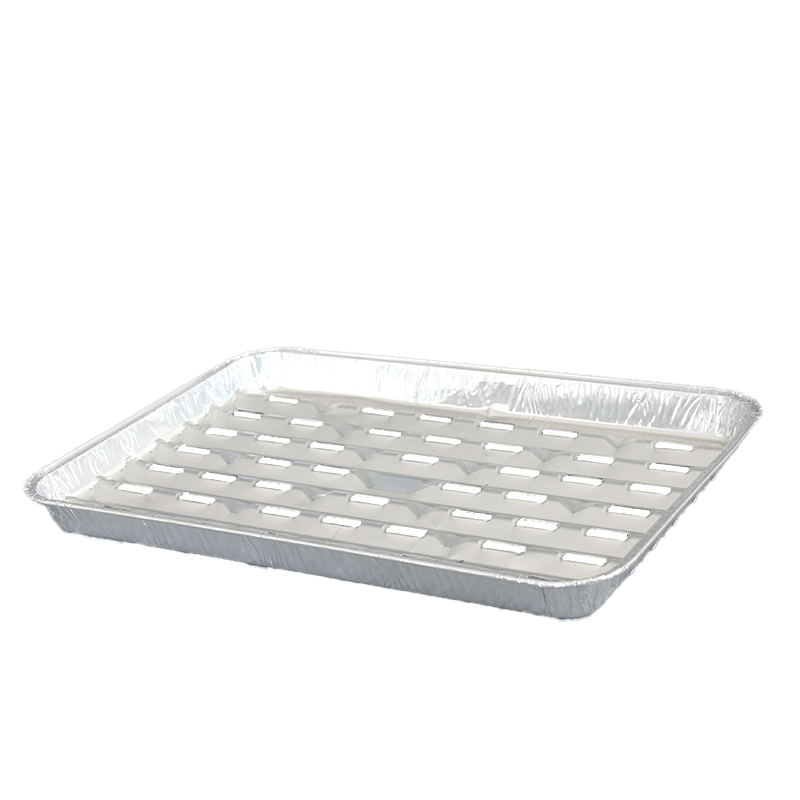
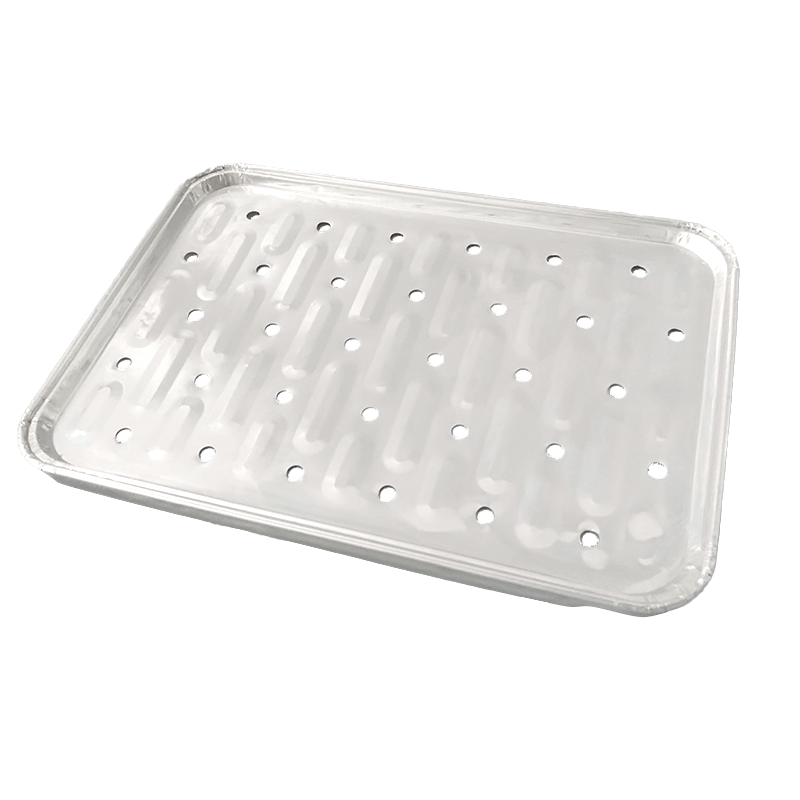
Heavy-gauge barbecue pans and roasting trays — including large-format turkey pans — are designed to withstand direct heat on grills and in conventional ovens. Their disposable nature eliminates post-cooking cleanup, which is particularly valuable in outdoor catering and holiday meal preparation contexts where washing facilities are limited.
| Product Format | Typical Gauge | Primary Use Case | Oven Safe |
|---|---|---|---|
| Serving Trays (full/half size) | 60–80 micron | Buffet, catering events | Yes |
| Aluminum Plates | 40–60 micron | Outdoor dining, festivals | Yes |
| Aviation Containers | 50–70 micron | Airline meals, hospitals | Yes |
| BBQ / Turkey Pans | 100–130 micron | Grilling, roasting | Yes |
| Loaf Pans | 80–100 micron | Baking, portion control | Yes |
How Aluminum Foil Tableware Reduces Waste in Practice
The 40% waste reduction figure is not a single-factor outcome. It results from a combination of material efficiency, end-of-life recyclability, and operational simplification. Here is how each factor contributes:
- Material consolidation: Replacing multi-layer packaging (plastic tray + cling film + cardboard sleeve) with a single aluminum container and matching foil lid eliminates 2–3 materials per serving unit, cutting packaging weight by 35–45% per unit.
- Closed-loop recycling: Aluminum collected post-use re-enters the production cycle within 60 days on average. This circularity means less virgin material is required per production cycle as recovery rates increase.
- No food contamination barrier: Unlike paper or cardboard, aluminum does not absorb food residues. Lightly rinsed aluminum containers are accepted by most municipal recycling systems without contamination rejection.
- Elimination of washing waste: In contexts where reusable tableware was previously used, switching to aluminum disposables eliminates the water, detergent, and energy costs of dishwashing — relevant for remote catering sites or single-use event setups.
Industries Driving Adoption of Aluminum Foil Catering Supplies
Demand for aluminum foil catering supplies is growing across several distinct sectors, each with its own operational driver.
Projected Growth in Aluminum Food Container Demand by Sector (2023–2026, Index)
Ready Meal Production
+31%
Event & Festival Catering
+26%
Airline / Institutional
+19%
Retail / Consumer BBQ
+14%
Projected compound growth index based on market research estimates, 2023–2026
Ready-meal producers are the fastest-growing segment, driven by supermarket sustainability commitments to reduce mixed-plastic packaging by 2025–2027. Event catering follows closely, particularly in markets where local authorities have banned single-use plastic plates and cutlery at public gatherings.
What to Look for When Sourcing Aluminum Foil Tableware
Quality varies across manufacturers. The following criteria help buyers identify reliable, food-safe products that will perform consistently in demanding service environments.
- Food-grade alloy specification. Containers should be manufactured from alloys such as 3003 or 8011, which meet international food contact safety standards. Confirm compliance with FDA (US), EU Regulation 10/2011 (Europe), or GB/T standards (China) depending on your target market.
- Gauge consistency. Request gauge tolerance specifications from the supplier. Inconsistent thickness leads to tearing during handling and reduces structural integrity in oven applications.
- Lid compatibility. For sealed delivery or storage applications, confirm that matching foil lids or board lids are available in the correct size. Mismatched lids are a common operational failure point in catering setups.
- Recycled content declaration. Many sustainability-focused buyers now require a declared recycled aluminum content percentage. Suppliers with certified recycled content (typically 70–95%) provide a documented sustainability credential.
- Dimensional accuracy for stacking and transport. Especially relevant for aviation and institutional formats — tight tolerances ensure that containers nest and stack correctly, reducing storage volume and breakage during transport.
- Minimum order flexibility. For smaller catering operations or seasonal buyers, suppliers offering flexible minimum order quantities allow more efficient inventory management without excess stock.
Practical Steps to Reduce Packaging Waste by 40% This Year
For operators ready to act, the following framework provides a structured transition path:
- Audit your current packaging mix. Identify what percentage of your disposable packaging is single-material aluminum versus multi-material composites. The 40% reduction target is achievable when aluminum replaces mixed-plastic or laminated packaging across at least 60% of your product range.
- Map your products to aluminum formats. Match each menu item or product line to an appropriate disposable aluminum serving tray or container format based on portion size, heat requirements, and service method.
- Set up a collection stream. Work with your waste contractor to ensure aluminum containers are collected separately for recycling. Even in mixed recycling systems, aluminum is easily sorted magnetically at most materials recovery facilities.
- Communicate the change to customers. Labeling containers as recyclable aluminum increases consumer recycling rates by an estimated 18–25%, amplifying your operation's total waste diversion outcome.
- Measure and report annually. Track packaging weight per 1,000 service units as your baseline metric. A consistent shift to aluminum-only disposables should produce a measurable reduction in this figure within 6–12 months.
About Ningbo Aikang Aluminum Foil Technology Co., Ltd.
Ningbo Aikang Aluminum Foil Technology Co., Ltd. is a professional aluminum foil container manufacturer and aluminum foil tableware factory, located in Haishu District, Ningbo — one of China's most strategically important port cities for international trade. The company is dedicated to the design, development, and production of environmentally responsible disposable aluminum foil products, delivering practical and advanced packaging solutions that adapt to the evolving demands of global markets.
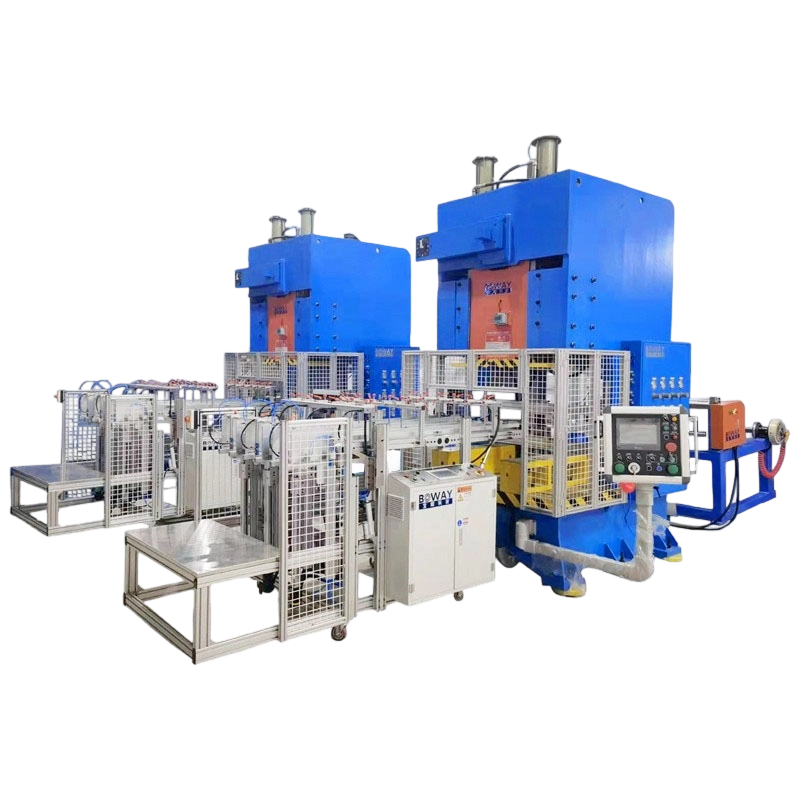
The core product range includes aviation aluminum foil containers, barbecue pans, turkey pans, aluminum loaf pans, and a broad range of other aluminum foil container formats. The company has developed multiple automatic production lines and precision molds to ensure consistent product quality and dimensional diversity across its entire catalog.
Equipped with professional design capabilities, advanced manufacturing facilities, qualified product certifications, and a dedicated sales and service team, Aikang has established itself among the leading enterprises in China's aluminum foil packaging sector. The company operates on the principle of "sincerity and integrity", committed to delivering the highest standard of products and service to customers both domestically and internationally — and to building lasting, mutually beneficial partnerships with clients worldwide.
Frequently Asked Questions
Choose AiKang for Top-Quality
Aluminum Foil Products
Explore Our
Featured Products

Ningbo Aikang Aluminum Foil Technology Co., Ltd, based in Ningbo, produces eco-friendly disposable aluminum foil products. They prioritize quality and customer satisfaction, serving the global market with innovative packaging solutions.


Quick Links
Contact
-
 No. 5 Yongxing East Road, Fengshan Street, Yuyao City, Zhejiang Province, China
-
 Tel: +86-15867468784
-
 E-mail: [email protected]
Send Us A Message
