
 English
 日本語
日本語 عربى
عربى Español
-
 01
01
Does Aluminum Foil Keep Food Warm? Why It Works and Best Practices for Use
Industry News-Picture a cold Sunday evening in March. The roast comes out of the oven at 17:40, your guests are running late, and the table still needs twenty minutes of finishing touches. You reach for the aluminum foil out of habit. But does aluminum foil keep food warm, or is this just a routine that nobody questions? The honest answer: foil works, but only if you treat it as a reflective blanket with a trapped air layer, not as a tight metal skin pressed against the food. Done well, it can hold a large roast above 60°C for 45 minutes or more. Done poorly, it buys barely ten minutes.
Content
- 1 Does Aluminum Foil Keep Food Warm? The Short Answer
- 2 The Physics Behind a Foil Blanket
- 3 How Long Does Aluminum Foil Keep Food Warm?
- 4 Wrapping Techniques That Actually Extend the Warmth
- 5 Rigid Foil Containers vs. Flat Foil Sheets
- 6 Common Mistakes That Make Foil Pointless
- 7 Food Safety: How Long Can Foil-Wrapped Food Stay Warm?
- 8 Frequently Asked Questions About Keeping Food Warm with Foil
Does Aluminum Foil Keep Food Warm? The Short Answer
Yes. Aluminum foil slows heat loss through the three routes that pull heat away from cooked food: radiation, convection, and evaporation. A loose sheet reflects radiant heat back toward the food, holds a thin layer of still air around it, and slows the escape of steam. Steam carries a very large amount of heat, so reducing evaporative loss does more for the food temperature than most people realize.
What foil cannot do is add heat. If the food has already dropped to 50°C, foil will keep it near 50°C; it will not bring it back up. That is why correct technique starts before the heat is gone — wrap early, wrap loosely, and add an outer insulating layer when you need a genuinely long hold.
The Physics Behind a Foil Blanket
Aluminum has a thermal conductivity close to 237 W/m·K, which makes it an excellent conductor — the property that confuses many people. If foil conducts heat so well, why does it keep food warm? Because three other mechanisms dominate at the same time.
Radiant Heat Reflection
The polished surface of aluminum has a low emissivity, roughly 0.04 to 0.05 in the infrared range, according to standard heat-transfer reference data. That means it radiates very little heat back out, and instead reflects radiated heat from the food back toward the food. This is the same principle used in reflective emergency blankets, although a household foil sheet achieves it with far less weight.
Trapped Still Air
Air is a poor conductor of heat. When foil is shaped into a loose envelope, the air inside cannot circulate freely, so it behaves like a layer of insulation. The larger and calmer that air pocket, the slower the heat loss. In everyday use, this trapped-air effect is the most important factor — more important than the thickness of the sheet.
Moisture Retention
Water molecules escaping from hot food carry heat with them. Foil keeps a moist microclimate at the food surface; once the trapped air is nearly saturated, evaporation slows noticeably. This keeps both heat and moisture in the dish, which is why a covered casserole also tastes less dried out.
Put these three mechanisms together, and the conducting metal becomes a minor detail: the foil touches the food only at small contact points, so most of its surface either reflects heat back or holds air. The moment you press foil tightly against the food, large contact patches begin conducting heat outward — and the foil starts to act more like a cooling fin than a blanket.
The pattern is clear: the air gap and the outer layer contribute more to holding temperature than the foil sheet itself. A loose sheet helps, but the combination of an air gap and a towel on top keeps the food noticeably hotter after half an hour.
How Long Does Aluminum Foil Keep Food Warm?
Three variables determine holding time: the mass of the food, because a 5 kg turkey stores far more heat than a single burger; the temperature of the food when it is wrapped; and the quality of the seal. According to food safety guidance from the U.S. FDA and the World Health Organization, hot-held food should stay at or above 60°C (140°F), so that is the practical threshold to plan around.
| Food and wrapping method | Typical time above 60°C |
|---|---|
| Whole roast chicken or turkey (4–6 kg), foil tent, towel on top, box closed | 45–60 minutes |
| Large pot of stew (3–4 L), foil under the lid | 30–45 minutes |
| Portioned rice, pasta, or meat (200–300 g), double-wrapped in foil inside an insulated bag | 20–30 minutes |
| Takeout container wrapped in foil on a counter | 15–25 minutes |
| Bread, breadsticks, or pancakes in a foil-lined basket | 15–20 minutes |
The dashed line marks the 60°C food-safety threshold. The tighter wrap keeps the roast above that line for a noticeably longer part of the holding window — in this typical scenario, roughly 50% longer than the loose cover.
Wrapping Techniques That Actually Extend the Warmth
Technique matters more than the brand or gauge of the foil. A light sheet used cleverly outperforms a heavy sheet used carelessly. The steps below reflect what caterers and large-volume kitchens do when a roast or a tray of lasagna has to survive a late service.
- Start as hot as possible. The wrap only slows heat loss; it cannot add stored heat. If the food has rested too long, warm it again in the oven at low heat before wrapping.
- Create a loose first layer. Drape the foil so an air pocket remains above the food. Do not press it onto the surface.
- Seal the edges. Fold the seams two or three times. A single open seam turns the pocket into a chimney, and convection drains the heat quickly.
- Add a second layer, perpendicular to the first, again with some slack. Two layers make it unlikely that a pinhole in one layer lines up with a hole in the other.
- Place something on top. A folded kitchen towel, a wool blanket, or the closed lid of a cooler makes the biggest difference of all. The outer layer stops the foil from radiating heat to the room and adds another air barrier.
- Use a rigid tray for anything that has to move. A shaped foil container keeps the air gap intact during transport, which a flat sheet cannot do.
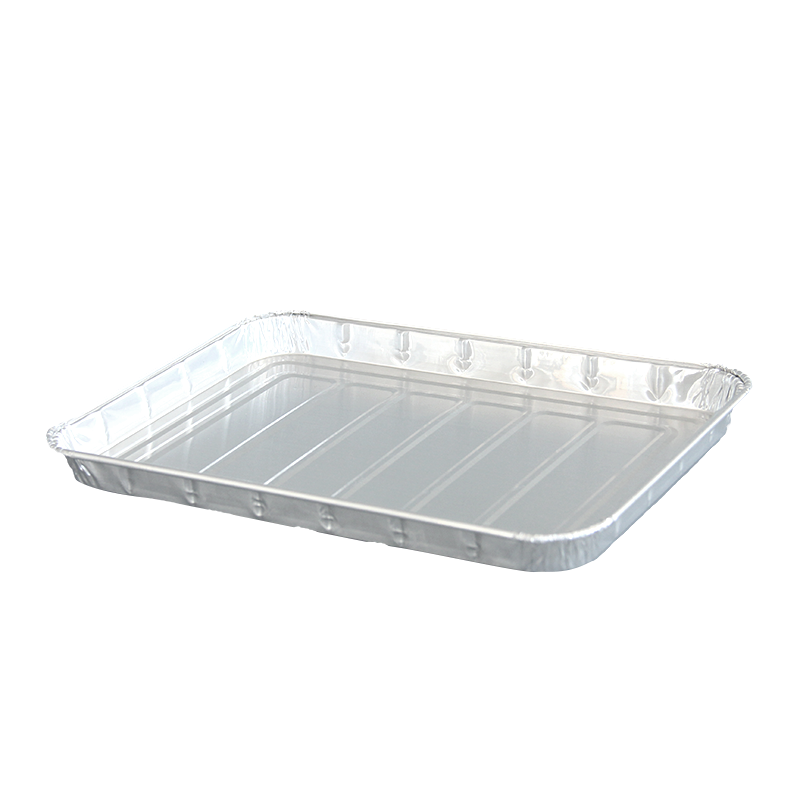
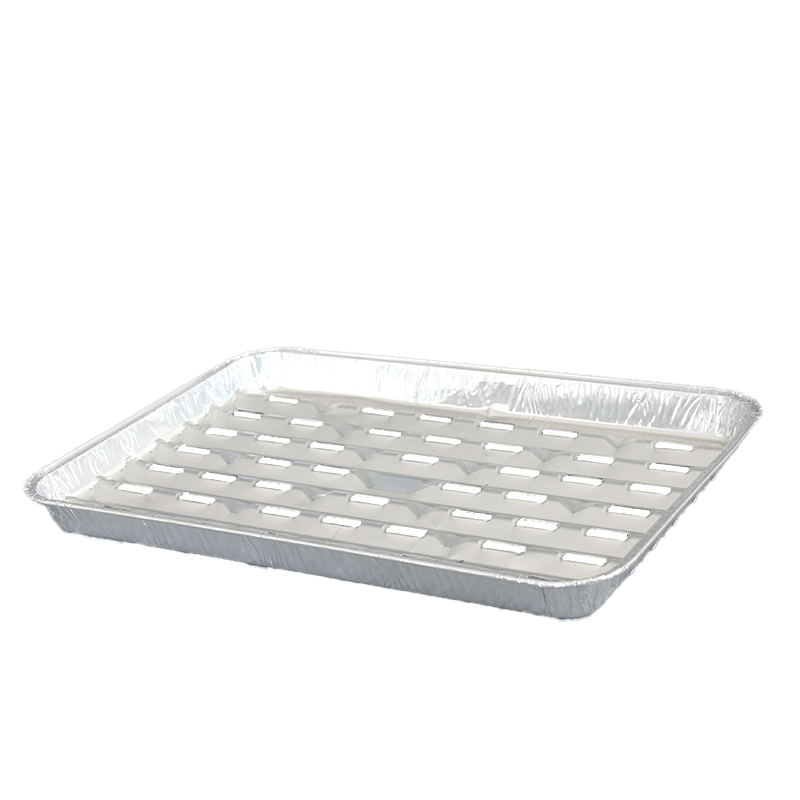
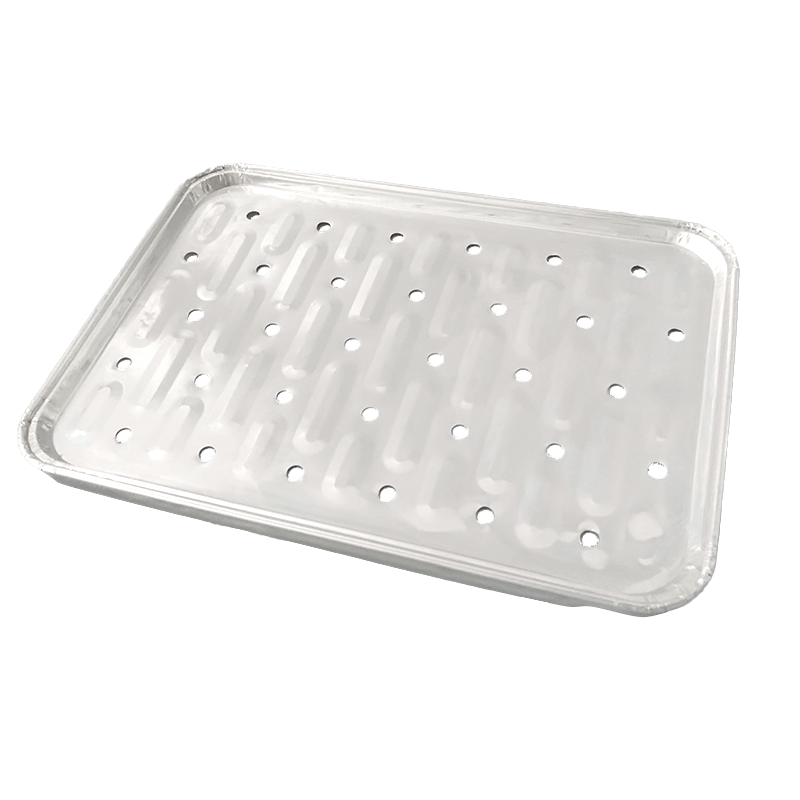
This is where a structured wrap earns its keep outdoors as well. On a grill or campsite, a covered tray holds the heat while you finish the side dishes; the rigid side walls stop the lid from collapsing onto the meat. An oblong barbecue tray is large enough for a rack of ribs or several fillets, and its rolled rim gives the foil cover something to grip.
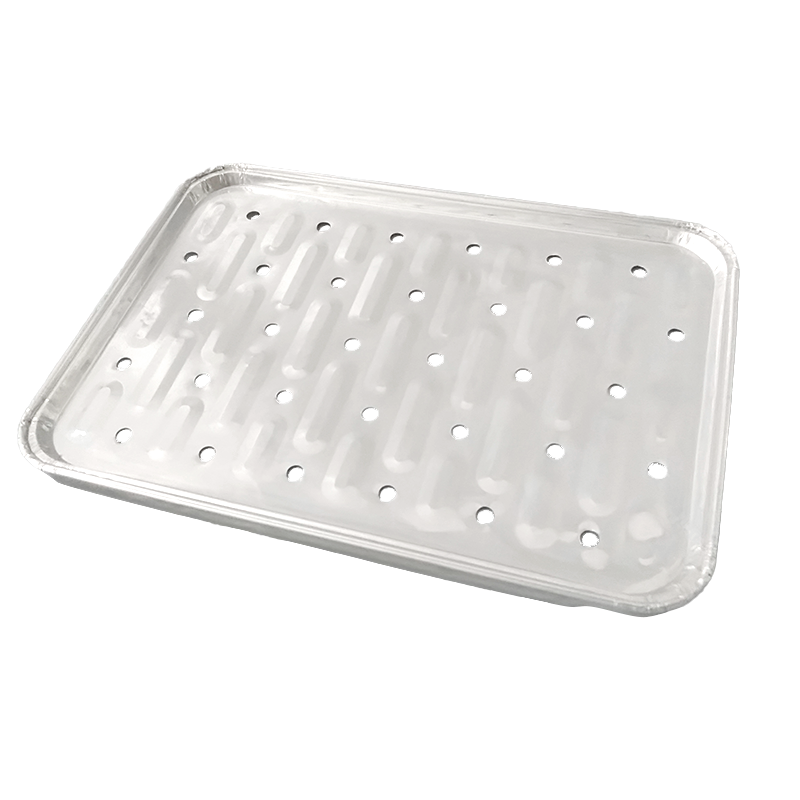 Oblong Barbeque Tray IK251Ventilation designed for grilling Unique hole design: The bottom of the Oblong Barbeque Tray IK251 is usually designed with ventilation holes to allow better air and h...View Product →
Rigid Foil Containers vs. Flat Foil Sheets
A flat sheet is a tool; a rigid foil container is a system. With a sheet, the quality of the wrap depends on the hands doing it, and the wrap often comes loose during transport. A shaped container with a formed lid — or with a sheet pressed over its rim — keeps a fixed air pocket above the food, survives stacking inside a delivery bag, and moves from oven to table without a second transfer. That is why many caterers and commissary kitchens standardize on disposable aluminum foil containers for banquet service, food trucks, and large-format delivery.
For large roasts and catering pans, the 2200 ml oblong aluminum foil pan is one of the most-used formats in banquet kitchens. Its depth holds a full turkey or a thick lasagna, and the rolled rim accepts a foil lid without tearing.
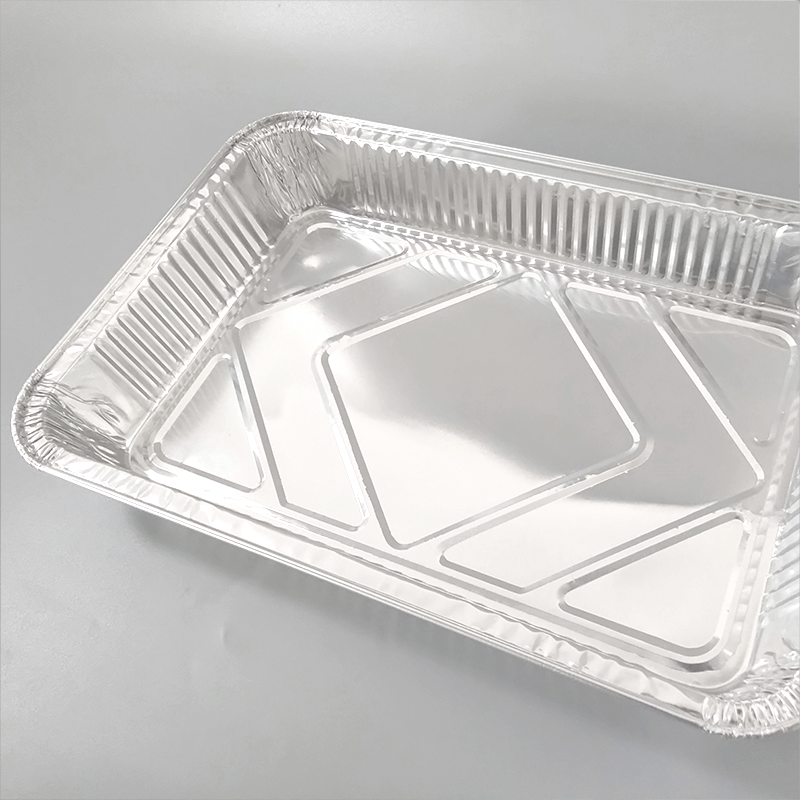 2200ml Oblong Aluminum Foil Pan IK315-2The perfect companion for professional baking The ideal baking container: The 2200ml Oblong Aluminum Foil Pan IK315-2 is particularly suitable for baking large cakes, ...View Product →
For commercial buyers, the supplier behind the product is part of the purchasing decision. Ningbo Aikang Aluminum Foil Technology Co., Ltd., located in Haishu District, Ningbo — one of China's most important port cities — designs, develops, and produces environmentally friendly disposable aluminum foil products. Its main range covers aviation catering trays, barbecue pans, turkey roasting pans, aluminum loaf pans, and other varied foil containers, formed on automated production lines with purpose-built molds. A manufacturer with in-house tooling and a dedicated sales and service team makes it easier to match gauge, rim style, and pricing to a specific kitchen or distribution operation; the company states its working principle as "sincerity and integrity," with a focus on long-term cooperation with buyers at home and abroad.
Delivery operations face a slightly different temperature problem: individual portions need to stay warm inside a courier bag, not on a banquet table. A 7-inch round takeout container with a sealed foil lid holds a single portion's heat well, stacks cleanly, and does not sweat like plastic. When building a packaging plan, operators typically start from portion size and holding time; takeout and delivery packaging decisions depend on whether that route is 10 minutes or 40.
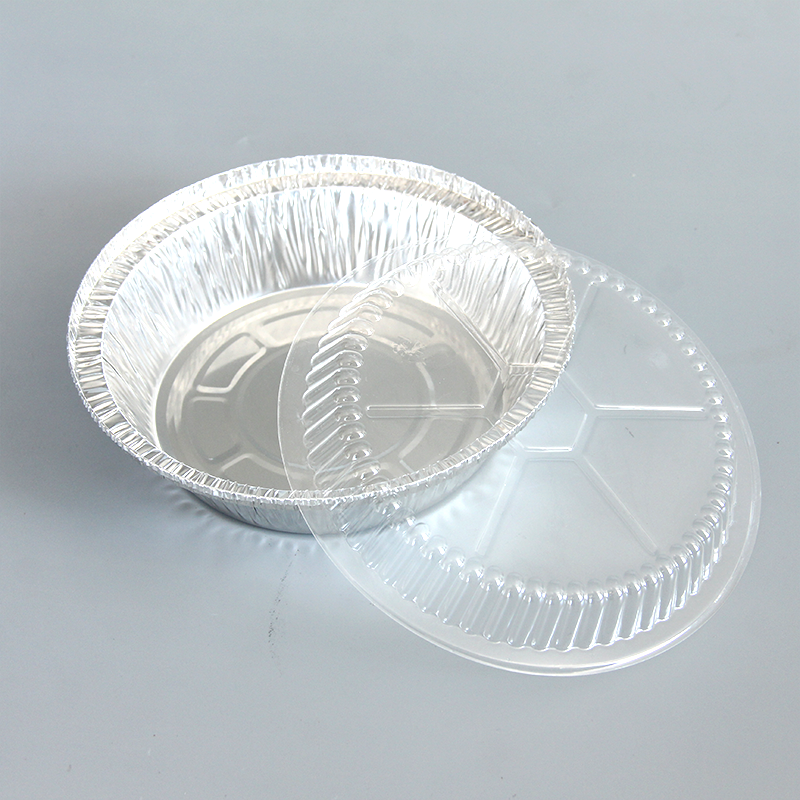 7 Inch Round Take-out Container IK182High-quality materials Made of food-grade aluminum foil, the 7 Inch Round Take-out Container IK182 is safe and durable, and can come into direct contact with food with...View Product →
Common Mistakes That Make Foil Pointless
- Wrapping food that has already cooled down. Foil does not reheat; it only slows further loss.
- Pressing foil tightly against the food surface. This creates metal-to-food conduction and turns the foil into a cooling fin.
- Leaving one end open. A chimney of rising hot air empties the warm pocket quickly.
- Checking every five minutes. Each lift of the corner replaces the warm pocket with room air.
- Reusing torn or hole-punched foil. Even a small hole measurably shortens the holding window.
- Relying on foil alone outdoors in cold or windy conditions. Without an outer insulating layer, the wind removes heat as fast as the foil reflects it.
Food Safety: How Long Can Foil-Wrapped Food Stay Warm?
According to food safety guidelines from the U.S. FDA and similar authorities adopted by many national food agencies, perishable food should not spend more than two hours total in the temperature danger zone between 4°C and 60°C. Foil extends the time food stays above 60°C; it does not remove the two-hour rule once food drops below that line.
- Measure, do not guess. A probe thermometer is the only reliable way to confirm that food is still above 60°C.
- Reheat fast if the food falls below 60°C — bring it to 74°C or higher before serving, rather than letting it sit longer under foil.
- Do not put foil or foil containers in the microwave unless the manufacturer explicitly approves it. Aluminum reflects microwaves and can cause arcing.
Frequently Asked Questions About Keeping Food Warm with Foil
Does aluminum foil keep food warm without an oven?
Yes. Foil reflects radiant heat and holds a still layer of air around the food, which slows cooling. It does not add heat, so the food should already be hot when wrapped; for longer holding, add a towel or place the wrapped food in a cooler.
Which side of foil should face the food, shiny or dull?
The practical difference is small, but the shiny side has lower emissivity, so it reflects slightly more radiant heat back when faced inward. Either way, the air gap matters more than the side.
Can I put foil-wrapped food in the oven to keep it warm?
Yes. Aluminum foil containers and foil-covered dishes are routinely used in conventional ovens at typical baking temperatures. Keep the cover loose so moisture can escape a little, and follow the manufacturer's temperature guidance for the specific container.
How long can food safely stay wrapped in foil?
If the food starts above 60°C, expect roughly 15 to 60 minutes of holding depending on mass and wrap quality. Once the temperature approaches 60°C, follow the two-hour rule and refrigerate or reheat rather than holding longer.
Choose AiKang for Top-Quality
Aluminum Foil Products
Explore Our
Featured Products

Ningbo Aikang Aluminum Foil Technology Co., Ltd, based in Ningbo, produces eco-friendly disposable aluminum foil products. They prioritize quality and customer satisfaction, serving the global market with innovative packaging solutions.


Quick Links
Contact
-
 No. 5 Yongxing East Road, Fengshan Street, Yuyao City, Zhejiang Province, China
-
 Tel: +86-15867468784
-
 E-mail: [email protected]
Send Us A Message
