
 English
 日本語
 عربى
 Español

-
 01
Disposable Pan Aluminium: How to Tell the Material and Choose the Right Gauge
Industry News-Yes — a disposable pan is almost always made of aluminium foil. A typical specification is alloy 8011 or 3003, tempered to H22 or H24, rolled to a gauge of roughly 0.05–0.15 mm, then press-formed into a tray and curled at the rim so the edge stays safe to handle.
The exception matters as much as the rule. Tinplate trays, foil-laminated paperboard and rigid plastic containers share the same supermarket shelf and the same "disposable" label, yet none of them behaves like aluminium in an oven. For a kitchen, the difference is a buckled pan of gravy. For a buyer, it is a container that loses its stack height, leaks at the corner, or fails a food-contact audit.
This guide covers how to confirm the material in seconds, which gauges hold up in real use, and what to write into a purchase specification so the quotation you receive matches the product you actually need.
Content
- 1 Is a Disposable Pan Always Made of Aluminium?
- 2 Five Quick Checks to Confirm the Material
- 3 Why Aluminium Foil Pans Heat So Evenly
- 4 Gauge Matters More Than the Word "Aluminium"
- 5 Food Safety: Acids, Salt and Aluminium Transfer
- 6 Oven, Air Fryer, Freezer and Microwave
- 7 What to Put in a Purchase Specification
- 8 Inside a Foil Pan Factory: Ningbo Aikang
- 9 Frequently Asked Questions
Is a Disposable Pan Always Made of Aluminium?
No. Aluminium dominates the category because it is light, cheap to form and conducts heat extremely well, but three other materials appear regularly:
- Tinplate (tin-coated steel): magnetic, heavier, and usually bright silver with a faint bluish tone. Common in low-cost pie and takeaway trays in some markets.
- Foil-laminated board: a paperboard tray with a very thin aluminium layer. Printable and rigid, but not a true foil pan and rarely rated above 200 °C.
- Rigid plastic (PP, CPET): microwave-friendly, oven-limited, and easy to spot because the walls are several times thicker than foil.
Genuine foil pans cover a wide spectrum, from small disposable aluminium foil containers for takeaway to large roasting trays for catering, and they share one physical trait: a wall thin enough to flex slightly under finger pressure.
Five Quick Checks to Confirm the Material
Incoming goods inspection does not need a laboratory. These checks take under a minute and catch most material mix-ups:
- Magnet test. Aluminium is non-magnetic. If a fridge magnet clings to the base or the rim, you are holding tinplate or steel.
- Weight. A 2200 ml aluminium roasting pan usually weighs well under 100 g. A steel tray of the same volume feels noticeably heavier in the hand.
- Flex. Aluminium foil pans flex and spring back at the rim. Steel resists, then stays bent.
- Sound. Tap the base with a fingernail. Aluminium gives a short, dull thud; tinplate rings slightly longer.
- Surface. Aluminium has a soft, slightly matte lustre and dulls quickly once handled. Steel stays mirror-bright unless coated.
The magnet is the fastest field test, but it cannot tell you the gauge. That requires a micrometer or the supplier's specification sheet — which is where most quality disputes begin.
Why Aluminium Foil Pans Heat So Evenly
Aluminium conducts heat about five times better than steel and several hundred times better than plastic. That is exactly why a thin foil pan can brown a pie crust or crisp a tray of vegetables without a heavy base: heat spreads sideways across the whole pan instead of concentrating above the burner.
The trade-off is that the same conductivity makes very thin pans sensitive to hot spots. A 0.05 mm pan on a top shelf at 250 °C will scorch a crust before the centre sets. Standing the pan on a flat baking sheet evens this out and also stops a full pan from folding when you lift it.
Gauge Matters More Than the Word "Aluminium"
Two pans can both be honestly described as aluminium and behave completely differently. Gauge — not material — decides whether a container keeps its shape under 2 kg of meat, whether the corners crack after a 40-minute roast, and how much a pallet weighs on export.
In practice, buyers work within four bands:
- 0.05–0.07 mm: light takeaway containers, warm holding, single-use service.
- 0.07–0.09 mm: bakery and loaf pans, medium-duty catering.
- 0.09–0.12 mm: roasting pans, steam table pans, large-volume food service.
- 0.12 mm and above: semi-reusable pans and high-stack export orders.
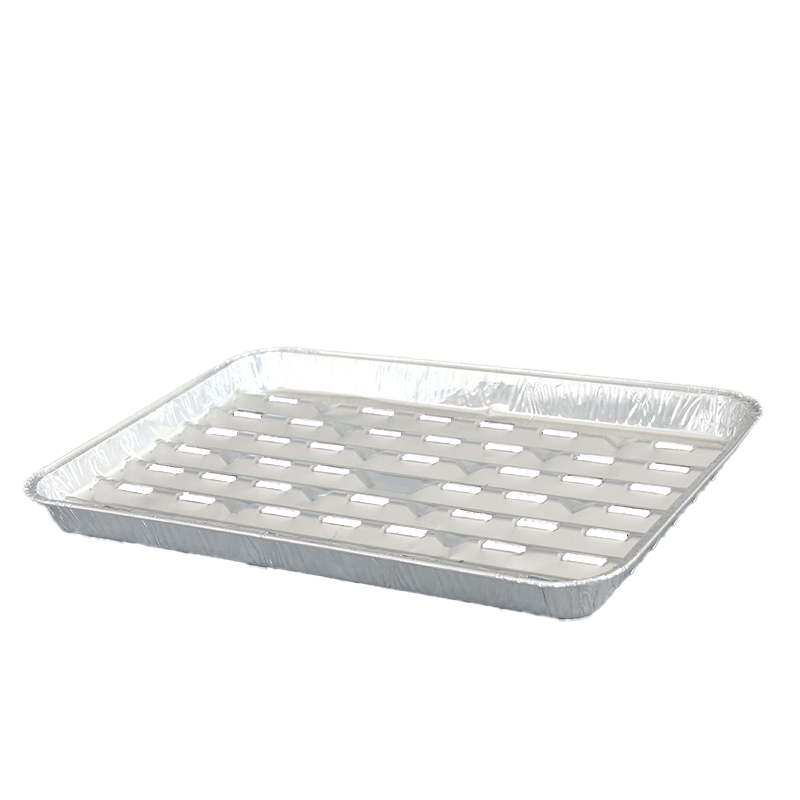
Isometric view: curled rim, formed wall and embossed base of a single foil pan.
Ask for the gauge in writing, not just "standard thickness". A quotation at 0.06 mm against a competitor's 0.08 mm is not cheaper — it is a different product with a different failure rate, freight weight and stack height.
 1400ml Oblong Aluminium Foil Container IK350A 1400ml stackable foil container for baking, freezing, takeaway and storage; check its listed gauge and dimensions when comparing quotations.View Product →
Food Safety: Acids, Salt and Aluminium Transfer
Aluminium reacts with acid and salt. Tomato sauce, lemon juice, vinegar-based marinades and heavily salted foods left sitting in an unlined foil pan for hours will pick up a faint metallic taste and slightly dull the pan surface. This is a quality issue more than an acute health one: EFSA set a tolerable weekly intake of 1 mg of aluminium per kilogram of body weight, and ordinary foil-pan use contributes a small fraction of that.
Food-service operators tend to follow three simple rules:
- Use unlined foil pans for baking, roasting, grilling and dry or neutral foods.
- For acidic dishes, choose food-grade aluminium foil trays with a lacquered interior, or transfer the food after cooking.
- Do not leave salty or acidic leftovers in the pan overnight, especially in the refrigerator where condensation adds moisture.
Oven, Air Fryer, Freezer and Microwave
Aluminium melts at about 660 °C, so a domestic oven is never the real limit — the pan's own stiffness is. Most foil pans are comfortable at 230–250 °C; above that, the rim softens and a loaded pan can fold in the middle of service.
| Use case | Suitable | Practical note |
|---|---|---|
| Conventional oven | Yes | Works to about 230–250 °C; stand the pan on a baking sheet for support. |
| Air fryer | Yes, if it fits | Leave space around the pan so air can still circulate. |
| Freezer | Yes | Fine at −18 °C; avoid piercing the base when separating frozen portions. |
| Microwave | No | Metal reflects microwaves; arcing can damage the appliance. |
| Grill or smoker | Yes | Use over indirect heat and keep the pan off direct coals. |
| Steam table | Yes | Gauges of 0.09 mm and above resist warping during hot holding. |
Freezer-to-oven handling is one reason airline caterers and ready-meal producers rely on aluminium: the same container goes from blast freezer to regeneration oven to the tray line without decanting, and without a plastic liner that would have to be separated before recycling.
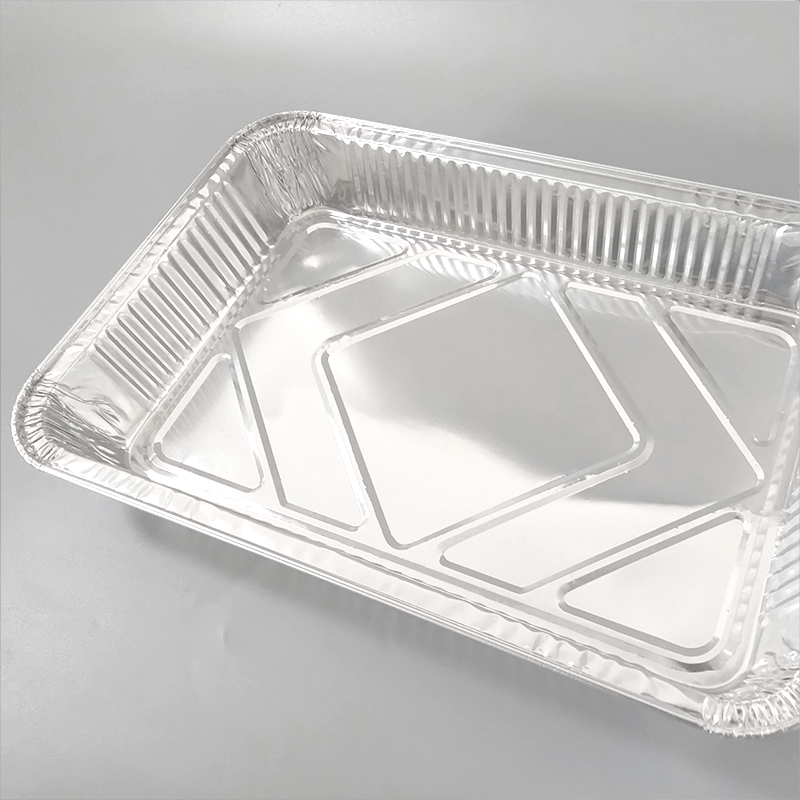 2200ml Oblong Aluminium Foil Pan IK315-2Large 2200ml foil pan for baking, roasting and catering; its freezer-to-oven suitability and stacking design suit batch production and transport.View Product →
What to Put in a Purchase Specification
Seven lines remove most of the arguments that surface after the first delivery:
- Alloy and temper — 8011-H22 and 3003-H24 are the common choices.
- Gauge with a tolerance, for example 0.08 mm ±0.005 mm.
- Top-out dimensions, base dimensions, depth and nominal capacity measured brim-full.
- Rim type — curled, folded or reinforced — and whether a lid is required.
- Coating or lacquer, if acidic or high-salt foods will be packed.
- Food-contact compliance documents and a migration test report.
- Packing: units per sleeve, sleeves per carton, cartons per pallet and stack height in a 40 ft container.
These details also make quotations comparable. A price per thousand units means very little without gauge, dimensions and packing density attached to it.
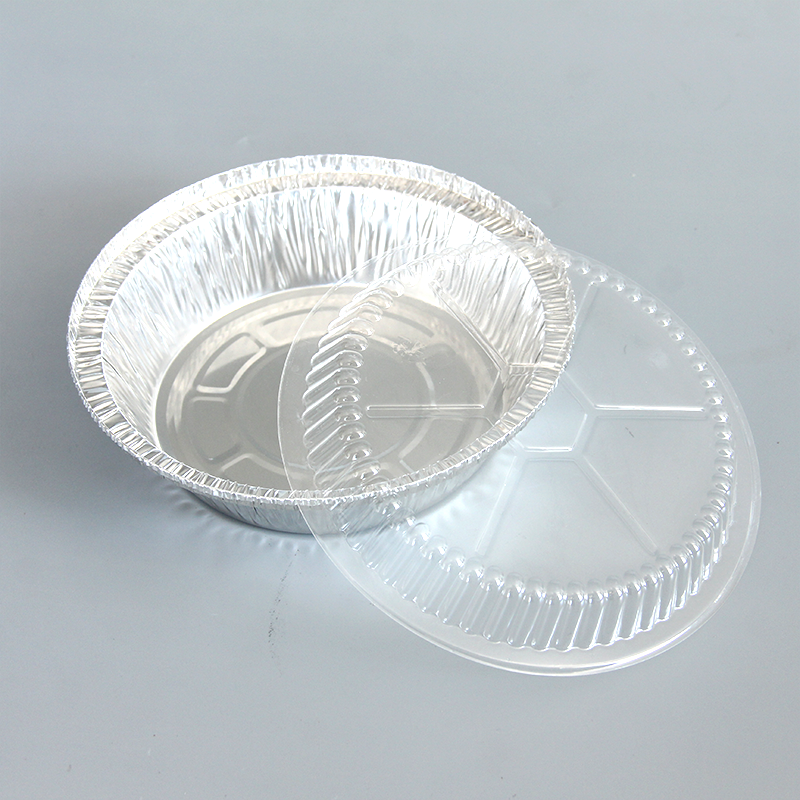 7 Inch Round Aluminium Take-out Container IK182700ml round foil container for takeout, oven heating and storage; listed dimensions and packing details help make quotations comparable.View Product →
Inside a Foil Pan Factory: Ningbo Aikang
Ningbo Aikang Aluminum Foil Technology Co., Ltd is located in Haishu District, Ningbo, one of the most important port cities in China. The company is committed to the design, development, and production of environmentally disposable aluminum foil products and providing practical and advanced packaging solutions to meet the dynamic change of the market.
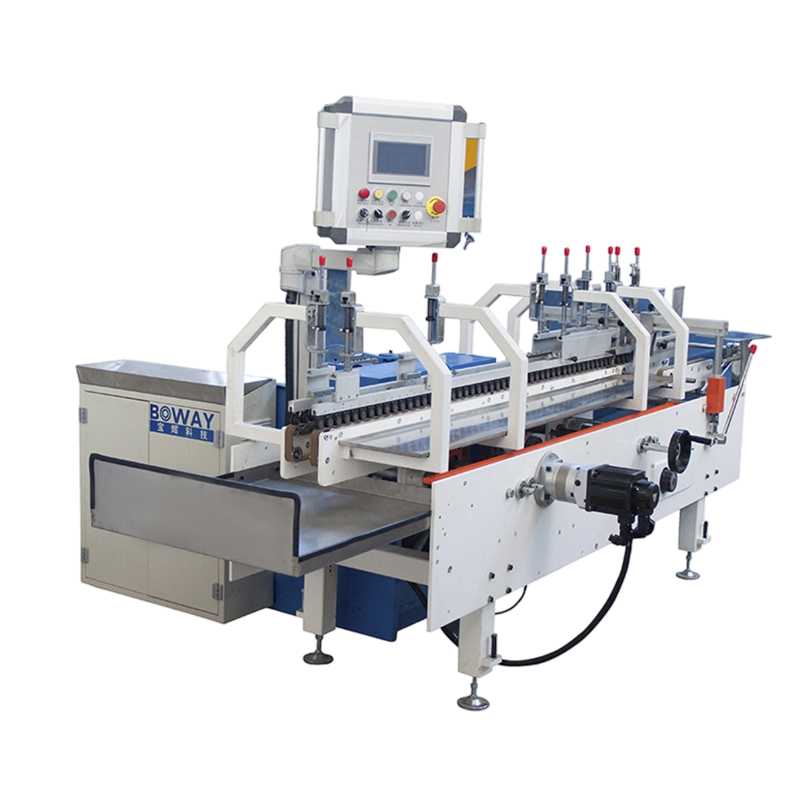
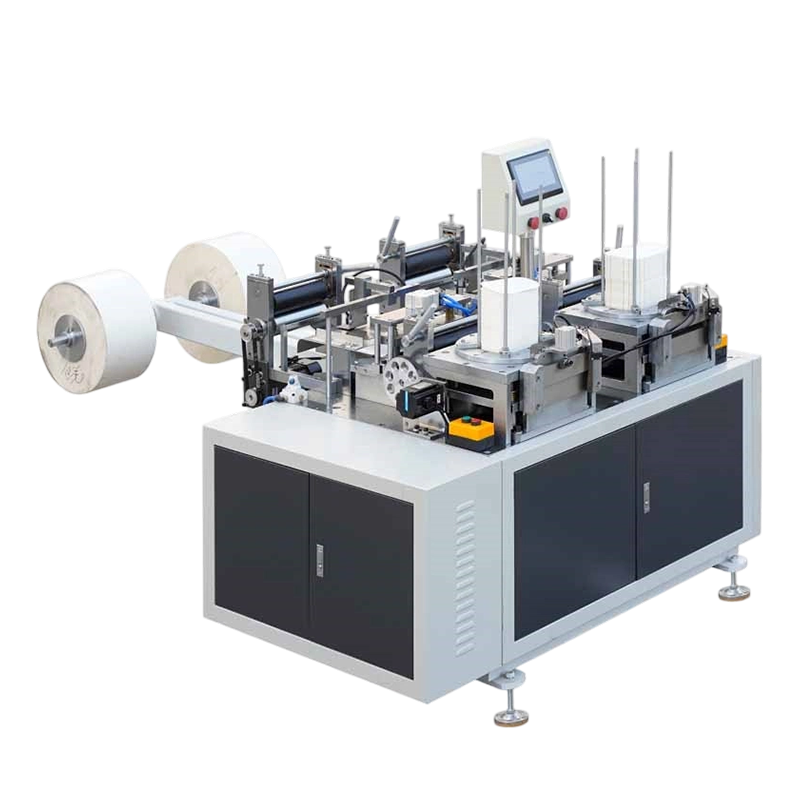
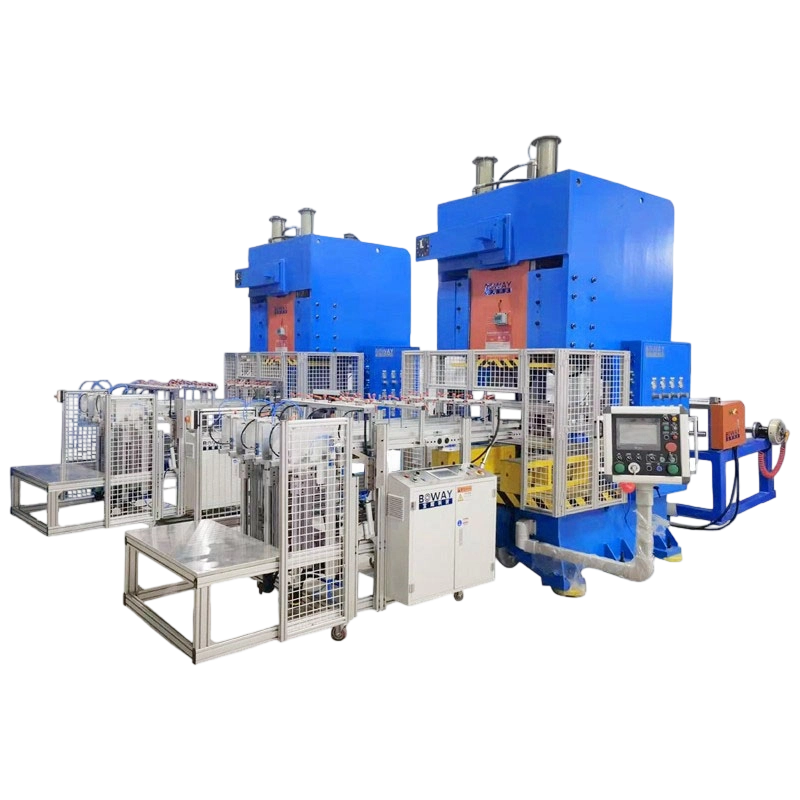
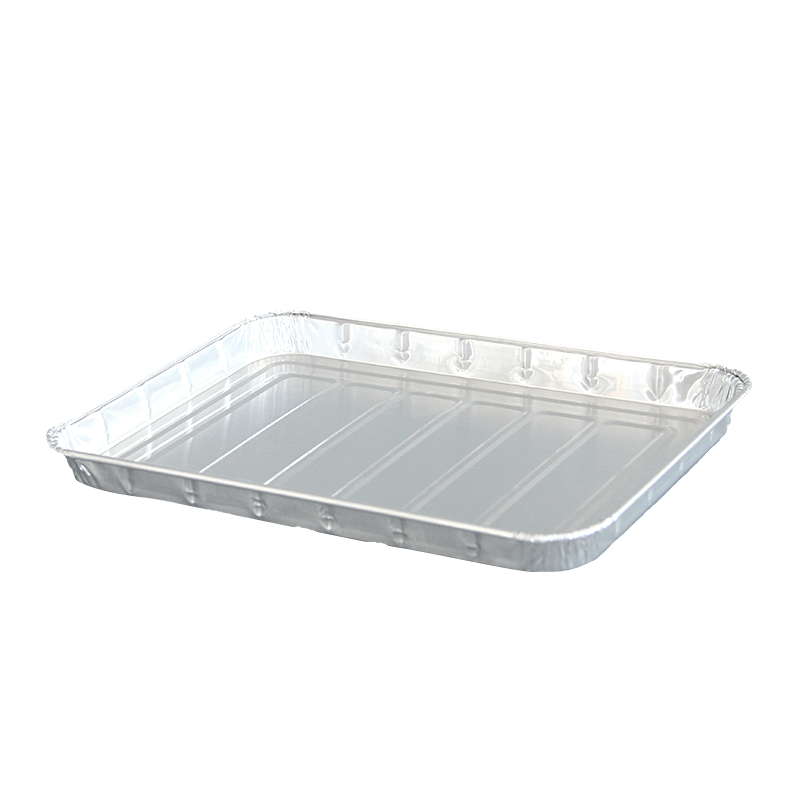
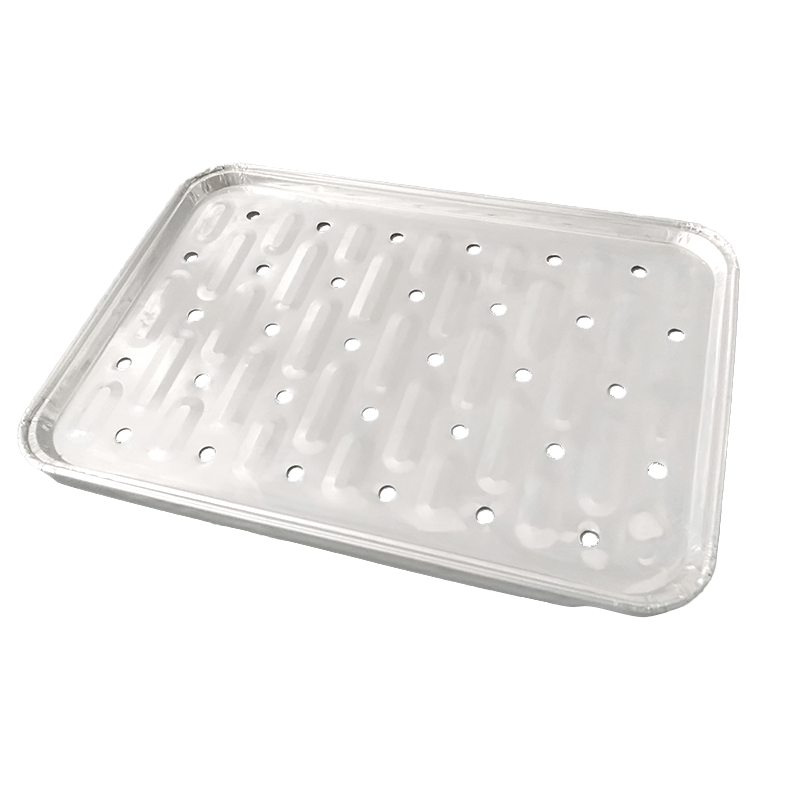
The main products consist of aviation aluminum foil containers, barbecue pans, turkey pans, aluminum loaf pans, and other varied aluminum foil containers. Moreover, the company has developed several automatic production lines and molds to fully ensure the quality and diversity of the products. Equipped with professional design, advanced manufacturing facilities, and molds, qualified products, and a dedicated sales and service team, Aikang has ranked itself the top-notch enterprise in China.
The company has and will always hold the principle of "sincerity and integrity" to provide the best products and service to the customers at home and abroad and finally create a double-win situation. Because the same factory builds both the containers and the forming equipment, gauge control and mold wear are monitored at the source rather than discovered in a customer complaint.
Frequently Asked Questions
Q1. Are disposable aluminium pans safe for cooking?
Yes, for baking, roasting and grilling. Avoid leaving acidic or heavily salted food in an unlined pan for long periods, and choose a lacquered pan for tomato-based dishes.
Q2. Can disposable aluminium pans go in the oven?
Yes, typically up to 230–250 °C. Place the pan on a baking sheet so a full pan does not buckle when you move it.
Q3. Can I put an aluminium foil pan in the microwave?
No. Metal reflects microwaves and can arc, which risks damaging the appliance. Use foil pans in the oven, grill or freezer instead.
Q4. How can I tell if a disposable pan is aluminium or steel?
Try a magnet. Aluminium is non-magnetic, lighter and flexes at the rim; tinplate sticks to the magnet and stays bent once deformed.
Q5. Are aluminium foil pans recyclable?
Yes. Aluminium is recyclable without loss of quality. Scrape off food residue first, and follow your local rules on accepting small foil items.
Q6. What gauge should I order for takeaway containers?
0.05–0.07 mm suits light takeaway and warm holding. Move to 0.08–0.10 mm if the pan must survive oven reheating or heavier fill weights.
Choose AiKang for Top-Quality
Aluminum Foil Products
Explore Our
Featured Products

Ningbo Aikang Aluminum Foil Technology Co., Ltd, based in Ningbo, produces eco-friendly disposable aluminum foil products. They prioritize quality and customer satisfaction, serving the global market with innovative packaging solutions.


Quick Links
Contact
-
 No. 5 Yongxing East Road, Fengshan Street, Yuyao City, Zhejiang Province, China
-
 Tel: +86-15867468784
-
 E-mail: [email protected]
Send Us A Message
