
 English
 日本語
日本語 عربى
عربى Español
-
 01
01
Can aluminum foil tableware really replace plastic tableware?
Industry News-With increasing environmental awareness, people are becoming more cautious about their choices of disposable tableware. Plastic tableware, as a common catering packaging material, has long been widely used in the catering industry, especially in takeout, fast food, and banquets. However, the environmental pollution caused by plastic tableware has become increasingly apparent, leading more and more people to seek environmentally friendly and sustainable alternatives. Aluminum foil tableware is one such option that has garnered significant attention.
So, can aluminum foil tableware effectively replace plastic tableware? What advantages does it have in terms of environmental friendliness, functionality, and economy?
1. Comparison of Aluminum Foil Tableware and Plastic Tableware
When choosing between aluminum foil tableware and plastic tableware, we must first consider the following important factors: environmental friendliness, durability, ease of use, cost, and impact on food.
| Comparison Criteria | Aluminum Foil Tableware | Plastic Tableware |
| Environmental Friendliness | Recyclable, biodegradable, reduces plastic pollution | Difficult to degrade, causes long-term environmental pollution |
| Heat Resistance | Good, suitable for high-temperature foods, effective at retaining heat | Not heat-resistant, may melt or release harmful substances |
| Convenience | Lightweight, easy to carry, suitable for single-use | Lightweight, suitable for single-use, some are fragile |
| Cost | Higher, but offers environmental advantages | Lower, but has high environmental costs |
| Food Safety | Does not release harmful substances, suitable for high-temperature heating | May contain harmful substances (e.g., BPA) |
| Oil & Water Resistance | Excellent, resistant to oil and water | Good, but less durable than aluminum foil |
The table above shows significant differences between aluminum foil tableware and plastic tableware in terms of environmental friendliness, high-temperature resistance, and food safety.
2. Environmental Advantages of Aluminum Foil Tableware
(1) Recyclability and Biodegradability
One of the most obvious advantages of aluminum foil tableware is its recyclability. Aluminum is a recyclable resource that can be melted and reprocessed into new aluminum products, reducing the burden on the environment. While some materials in plastic tableware can be recycled, the recycling rate is far lower than that of aluminum foil. Furthermore, due to the slow degradation of plastic, a large amount of plastic waste accumulates, seriously polluting soil and water sources.
(2) Reducing Plastic Pollution
With the increasing severity of global plastic pollution, many countries and regions have begun to ban or restrict the use of disposable plastic tableware. Compared to plastic, aluminum foil tableware has significant environmental advantages. Using aluminum foil tableware can effectively reduce plastic waste and pollution, aligning with modern environmental trends.
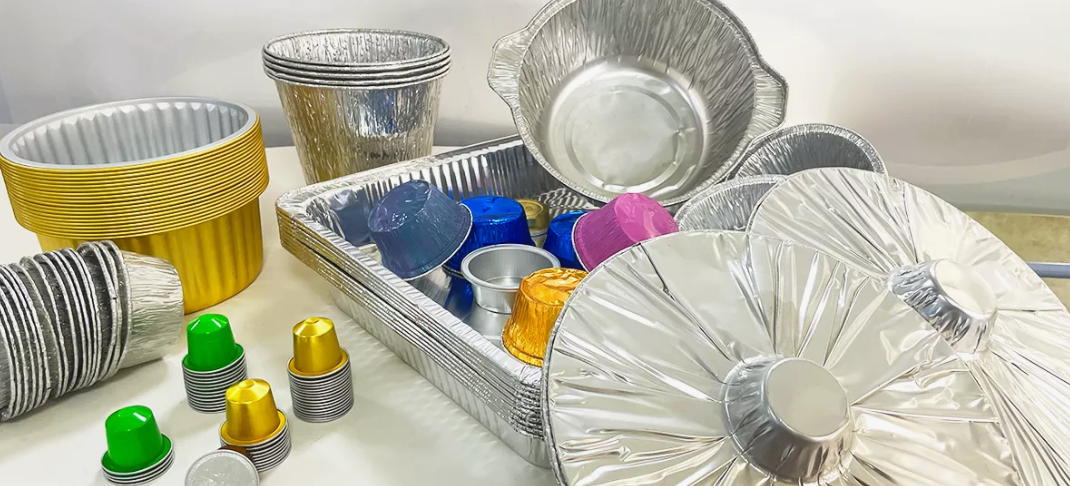
3. Durability and Functionality of Aluminum Foil Tableware
(1) High Temperature Resistance
Aluminum foil tableware has excellent high temperature resistance, capable of being used at temperatures above 200℃ without deformation or the release of harmful substances. Aluminum foil helps maintain the temperature of food, keeping it fresh for longer periods, which is especially important for many hot meals and takeout foods. In contrast, plastic tableware has poor heat resistance and is prone to deformation under high temperatures, and may even release toxic chemicals such as BPA (bisphenol A).
(2) Oil and Water Resistance
Aluminum foil tableware has excellent oil and water resistance, effectively preventing oil or liquid penetration and maintaining the cleanliness of the tableware and the quality of the food. This is especially important for oily or liquid foods. While plastic tableware has some oil resistance, it is often easily damaged after long-term use, especially under high temperatures or with high oil content.
4. Economic Advantages of Aluminum Foil Tableware
Although aluminum foil tableware performs well in terms of environmental protection and functionality, its price is usually higher than that of plastic tableware. This is because the production cost of aluminum is higher than that of plastic, and the production process of aluminum foil tableware requires higher technology and equipment support. However, against the backdrop of global environmental protection policies and the reduction of plastic use, the market demand for aluminum foil tableware is gradually increasing, and the price may decrease in the future.
For businesses, although the initial investment is higher, using aluminum foil tableware can not only enhance brand image but also gain the recognition of environmentally conscious consumers, bringing more economic benefits to enterprises in the long run.
5. Convenience of Aluminum Foil Tableware
Similar to plastic tableware, aluminum foil tableware is also very convenient. They are lightweight, easy to carry, and mostly disposable, making them ideal for takeout, fast food, and other short-term use occasions. However, aluminum foil tableware is more durable and can be reused several times under appropriate conditions, while plastic tableware is easily broken and has a shorter lifespan.
Furthermore, aluminum foil tableware generally does not affect the taste or appearance of food, maintaining its freshness and aesthetic appeal. This is a major reason why many catering businesses choose aluminum foil tableware.
6. Food Safety
Aluminum foil tableware also performs excellently in terms of food safety. Unlike some plastic tableware, it does not release harmful substances at high temperatures. Using aluminum foil tableware ensures food safety and prevents harmful substances (such as BPA) from leaching into food and affecting human health.

7. Disadvantages and Problems of Plastic Tableware
(1) Environmental Pollution
Plastic tableware takes hundreds of years to completely decompose in the environment and is difficult to recycle, resulting in a large amount of plastic waste polluting the environment. Many countries have begun to gradually ban disposable plastic tableware and promote the use of environmentally friendly alternatives.
(2) Potential Health Threats
Some plastic tableware contains harmful chemicals such as BPA, and long-term exposure may affect human health, especially under high-temperature conditions. In contrast, aluminum foil tableware does not pose these potential health threats and is safer to use.
Aluminum foil tableware has significant advantages over plastic tableware in terms of environmental friendliness, high-temperature resistance, and food safety. It not only aligns with modern environmental trends but also effectively avoids the negative environmental impacts of plastic tableware. Although aluminum foil tableware is more expensive, with increasing consumer awareness of environmental protection and growing market demand, it is expected to gradually replace plastic tableware and become the preferred choice for more catering businesses and consumers.

Choose AiKang for Top-Quality
Aluminum Foil Products
Explore Our
Featured Products

Ningbo Aikang Aluminum Foil Technology Co., Ltd, based in Ningbo, produces eco-friendly disposable aluminum foil products. They prioritize quality and customer satisfaction, serving the global market with innovative packaging solutions.


Quick Links
Contact
-
 No. 5 Yongxing East Road, Fengshan Street, Yuyao City, Zhejiang Province, China
-
 Tel: +86-15867468784
-
 E-mail: [email protected]
Send Us A Message
