
 English
 日本語
日本語 عربى
عربى Español
-
 01
01
Does aluminum foil tableware affect the taste of food?
Industry News-In the catering and takeaway industry, aluminum foil tableware is widely used due to its lightweight, high-temperature resistance, and ease of recycling. However, many consumers worry about whether aluminum foil tableware will affect the taste of food, or even pose potential health risks.
This article will provide a comprehensive analysis of aluminum foil tableware, covering its material characteristics, usage scenarios, factors that may affect food taste, and safety recommendations.
1. Material Characteristics of Aluminum Foil Tableware
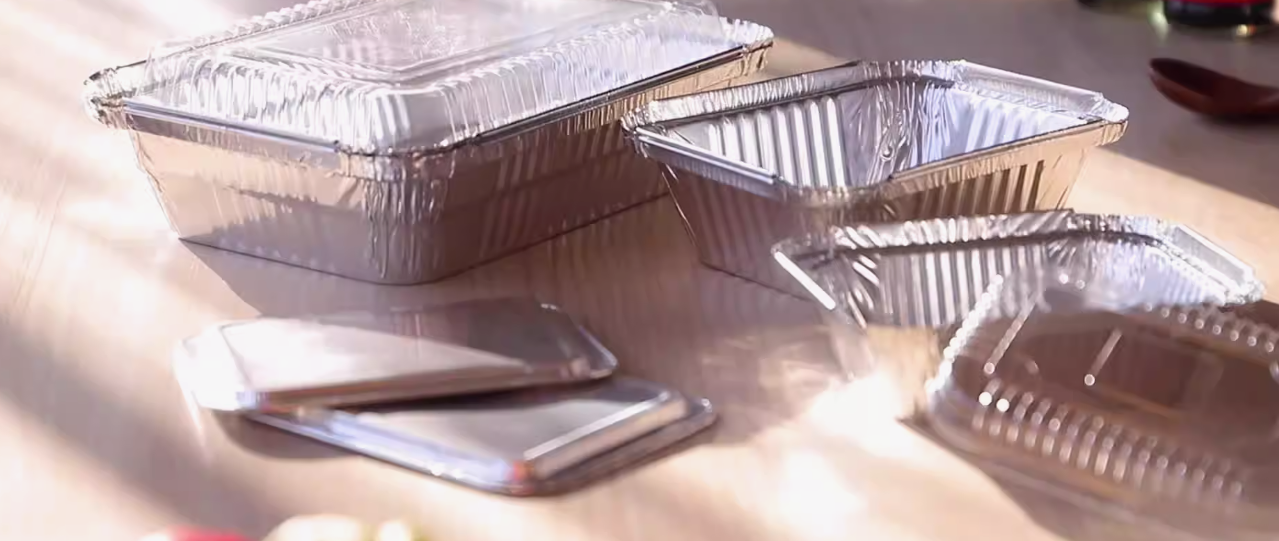
Aluminum foil tableware is mainly made of food-grade aluminum, and its characteristics include:
Good thermal conductivity: Aluminum has extremely high thermal conductivity, which can quickly and evenly heat food.
High-temperature resistance: It can withstand short-term high temperatures of 220–250°C, suitable for ovens and portable cooking.
Lightweight: Lightweight, suitable for takeaway, outdoor, and fast food scenarios.
Recyclable: Aluminum is recyclable, which helps reduce pollution from disposable tableware.
However, aluminum is a reactive metal and can easily react with acidic or alkaline foods, which may affect the taste and color of food.
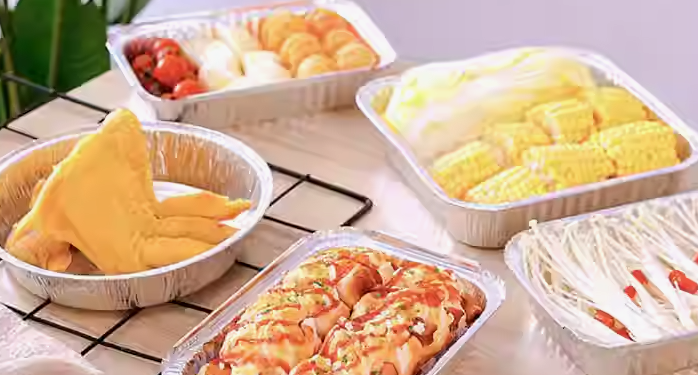
2. Reasons why Aluminum Foil Tableware May Affect Food Taste
Acid-Base Reaction
When aluminum foil comes into contact with acidic foods (such as tomatoes, lemon juice, vinegar) or strongly alkaline foods (such as pickles, certain sauces), a chemical reaction may occur, producing trace amounts of aluminum ions. Although the amount is usually very low, it may slightly alter the taste of the food or produce a metallic taste.
High Temperature and Prolonged Contact
If food is cooked in aluminum foil tableware at high temperatures for a long time, especially acidic or salty foods, it may accelerate the reaction between aluminum and food components, thus slightly affecting the taste.
Surface Processing Quality of Aluminum Foil
Low-quality aluminum foil may have tiny impurities or uneven coatings on its surface, increasing the possibility of producing off-flavors after contact with food.
Food Storage Time
Aluminum foil tableware is not suitable for long-term storage of acidic or moist foods, otherwise, the taste may change slightly.
3. Comparison of the Suitability of Aluminum Foil Utensils for Different Foods
The table below summarizes the suitability of different types of food in aluminum foil utensils and the potential risks of affecting food taste:
| Food Type | Acidity/Alkalinity | High-Temperature Cooking Suitability | Flavor Impact Risk | Usage Recommendation |
| Grilled Meats | Neutral | High | Low | Safe to use |
| Vegetables | Slightly acidic | Medium | Medium | Suitable for short-term heating; avoid long high-temperature cooking |
| Tomato Sauce, Spicy/Sour Sauces | Highly acidic | Medium | High | Recommended to use ceramic or glass containers |
| Seafood | Neutral | High | Low | Safe to use |
| Porridge, Soups | Neutral to slightly acidic | Medium-Low | Low to Medium | Safe for short-term storage; not recommended for long-term storage |
| Baked Goods | Neutral | High | Low | Safe to use |
As can be seen from the table, for neutral foods or foods that are not highly acidic or salty, aluminum foil utensils will hardly affect the taste; however, for highly acidic or strongly alkaline foods, especially under high-temperature and long-term cooking, a slight metallic taste may be produced.
4. Scientific Research and Safety Standards
Multiple studies have shown that the amount of aluminum ions released from food-grade aluminum foil under normal cooking and short-term storage conditions is extremely low, far below the allowable intake (TWI 2 mg/kg body weight/week) set by the World Health Organization (WHO) and various national food safety standards.
Short-term heating: Almost no effect on food taste or health.
Long-term high temperature: Acidic foods may have a slight metallic taste, but it will not exceed the safety limits.
Surface-coated aluminum foil: Some manufacturers add food-grade coatings to the surface of aluminum foil to improve acid and alkali resistance and taste stability.
Therefore, the reasonable use of aluminum foil utensils is safe and feasible, while avoiding prolonged high-temperature cooking with highly acidic or salty foods.
5. Suggestions for Improving the User Experience of Aluminum Foil Utensils
Avoid prolonged contact with highly acidic foods
Minimize the contact time of foods such as tomatoes, vinegar, and lemon juice with aluminum foil, or choose glass or ceramic tableware.
Control cooking time and temperature
High-temperature short-time cooking is safe and reliable; avoid long-term slow roasting of acidic foods at high temperatures.
Choose high-quality aluminum foil utensils
Choose food-grade aluminum foil utensils with moderate thickness and a smooth surface to reduce the risk of taste changes.
Short-term storage is best
Consume food as soon as possible after cooking, and avoid storing liquid or acidic foods in aluminum foil utensils for extended periods.
Regularly check the surface
Replace aluminum foil utensils immediately if scratches, damage, or coating peeling are found.
6. Summary of the Advantages and Disadvantages of Aluminum Foil Utensils
| Advantages | Disadvantages |
| Lightweight and portable | High-acid or high-salt foods may slightly alter the taste |
| High-temperature resistant, suitable for oven use | Not suitable for long-term storage of liquid or acidic foods |
| Fast heat conduction, cooks evenly | Low-quality aluminum foil may have a risk of off-flavors |
|
Recyclable and environmentally friendly |
Not suitable for direct microwave use (no metal shielding) |
Aluminum foil tableware offers far more advantages than any potential impact on taste, especially when used scientifically and with appropriate food pairings.
Choosing high-quality, food-grade aluminum foil tableware and properly controlling cooking methods and storage time can maximize the preservation of food's original flavor while ensuring safety and environmental protection. For hotels, restaurants offering takeout, and home users, mastering the correct usage methods is more important than worrying about any potential impact on taste.

Choose AiKang for Top-Quality
Aluminum Foil Products
Explore Our
Featured Products

Ningbo Aikang Aluminum Foil Technology Co., Ltd, based in Ningbo, produces eco-friendly disposable aluminum foil products. They prioritize quality and customer satisfaction, serving the global market with innovative packaging solutions.


Quick Links
Contact
-
 No. 5 Yongxing East Road, Fengshan Street, Yuyao City, Zhejiang Province, China
-
 Tel: +86-15867468784
-
 E-mail: [email protected]
Send Us A Message
