
 English
 日本語
日本語 عربى
عربى Español
-
 01
01
The Foil Baking Pans Sizes in AiKang factory
Company News-When it comes to baking, roasting, meal prep, or food storage, few kitchen tools offer the versatility and convenience of aluminum foil pans. Whether you’re a home cook preparing a weeknight dinner or a professional caterer serving a large event, choosing the right foil baking pans sizes and understanding the benefits of aluminum pans with lids can make all the difference.
At AiKang foil company, we specialize in high-quality disposable aluminum foil products designed for every kitchen need. In this comprehensive guide, we’ll break down standard foil pan dimensions, help you choose the perfect size for your cooking projects, and explore why aluminum pans with lids are a game-changer for storage and transportation.
Content
Why Choose Aluminum Foil Baking Pans?
Aluminum foil baking pans have become a staple in both home kitchens and commercial foodservice operations for good reason. They are lightweight, disposable, and require no washing or seasoning before use. These pans can withstand freezer, food warmer, and oven temperatures, making them incredibly versatile for a wide range of cooking applications.
Key benefits include:
-
Even heat distribution – Aluminum conducts heat efficiently, ensuring your food cooks evenly.
-
Time-saving cleanup – No scrubbing or washing; simply dispose after use.
-
Temperature resistance – Food-grade aluminum alloys like 8011 and 3003 series remain structurally stable at conventional oven temperatures up to 230°C (450°F).
-
Versatility – Suitable for baking, roasting, grilling, freezing, and reheating.
-
Understanding Foil Baking Pans Sizes
One of the most common questions we hear is about foil baking pans sizes. Aluminum foil pans come in a wide range of dimensions to accommodate everything from individual portions to large family feasts. Most commercial aluminum food pans follow standard Gastronorm (GN) sizes to fit steam tables and commercial ovens.
Standard Rectangular Pan Sizes
Rectangular pans are the most common shape and are available in several standard sizes:
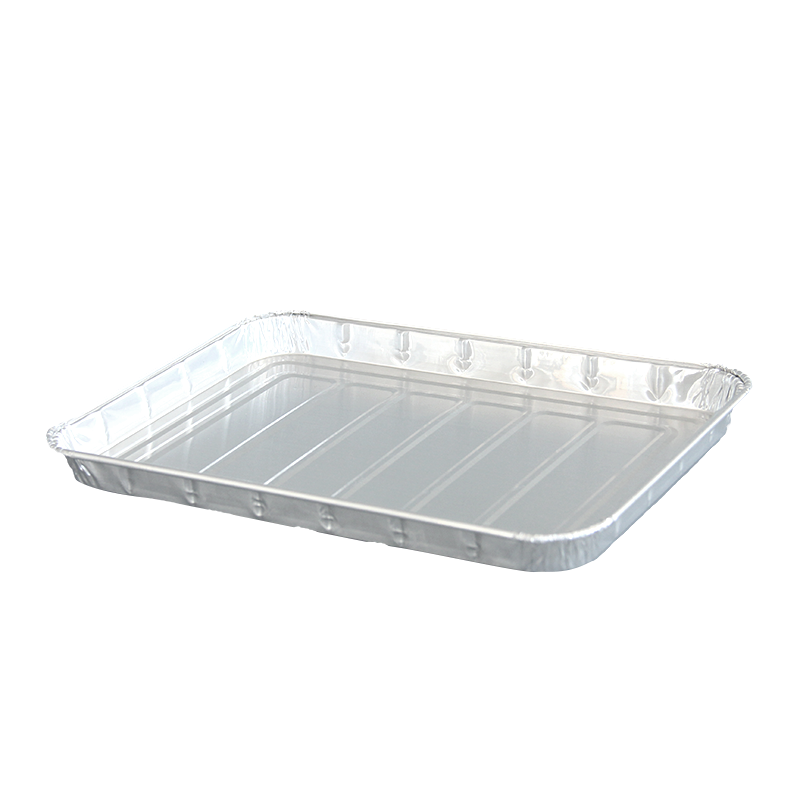
Full-size pans (535 × 325 mm) are designed to fit standard commercial ovens, while half-size pans are ideal for smaller quantities and home use. Depth can range from about 1.5 inches for shallow pans (great for baked goods) to 4 inches for deep pans (perfect for layered lasagna or roasting).
Round Pan Sizes
Round aluminum foil pans are popular for cakes, pies, quiches, and pizzas:
Diameter Depth Best For 8″ (200 mm) 40 mm Single-layer cakes 9″ (225 mm) 50 mm Standard cakes and pies 10″ (250 mm) 50 mm Large layer cakes 12″ (300 mm) 65 mm Sheet cakes, pizzas Square Pan Sizes
Square pans are excellent for brownies, bars, and layered dishes, and they are easier to portion than round or rectangular pans:
Loaf Pan Sizes
Foil loaf pans are ideal for baking bread, meatloaf, and pound cakes:
Size Dimensions Best For Mini 14 × 8 × 5 cm (approx. 5.5 × 3.1 × 2 in) 1 lb loaves Standard 8.5 × 4.5 × 2.75 in Breads, meatloaf Large 8⅝ × 4⅕ × 2½ in Pound cakes, fruit and nut breads
How to Choose the Right Foil Baking Pan Size
Selecting the correct foil baking pan size depends on several factors:
1. Consider Your Dish
-
Casseroles and lasagna – Half-size or 9×13 pans work well.
-
Sheet cakes and brownies – Full-size, half-size, or 9×13 utility pans.
-
Individual portions – Mini pans (4×4 inches) or quarter-size pans.
-
Roasts and turkeys – Deep full-size or half-size pans with 3–4 inch depth.
2. Match Depth to Food Type
Shallow pans (around 1.5 inches) cook faster and are ideal for cookies, roasted vegetables, and baked goods. Deep pans (3–4 inches) are necessary for soups, stews, deep-dish lasagna, and roasts.
3. Account for Portion Sizes
A half-size casserole pan typically provides about 8 portions, so plan accordingly for larger gatherings.
4. Check Your Oven Fit
Full-size pans (20¾ × 12¾ inches) fit standard commercial ovens, but always measure your home oven before purchasing large pans.
-
Choose AiKang for Top-Quality
Aluminum Foil Products
Explore Our
Featured Products

Ningbo Aikang Aluminum Foil Technology Co., Ltd, based in Ningbo, produces eco-friendly disposable aluminum foil products. They prioritize quality and customer satisfaction, serving the global market with innovative packaging solutions.


Quick Links
Contact
-
 No. 5 Yongxing East Road, Fengshan Street, Yuyao City, Zhejiang Province, China
-
 Tel: +86-15867468784
-
 E-mail: [email protected]
Send Us A Message
