
 English
 日本語
日本語 عربى
عربى Español
-
 01
01
Automatic Stacking Machine: The Complete Guide to Automated Packaging Efficiency
Company News-In today‘s fast-paced manufacturing environment, the automatic stacking machine has emerged as an indispensable piece of equipment for industrial automation. From aluminum foil container production lines to food packaging facilities, these intelligent systems are transforming how finished products are handled, organized, and prepared for storage and shipment.
Content
- 1 What Is an Automatic Stacking Machine?
- 2 How Does an Automatic Stacking Machine Work?
- 3 Key Advantages of Automatic Stacking Machines
- 4 Technical Specifications
- 5 Applications Across Industries
- 6 Market Trends and Growth
- 7 Technological Innovations
- 8 Safety and Hygiene Features
- 9 Choosing the Right Automatic Stacking Machine
- 10 Conclusion
What Is an Automatic Stacking Machine?
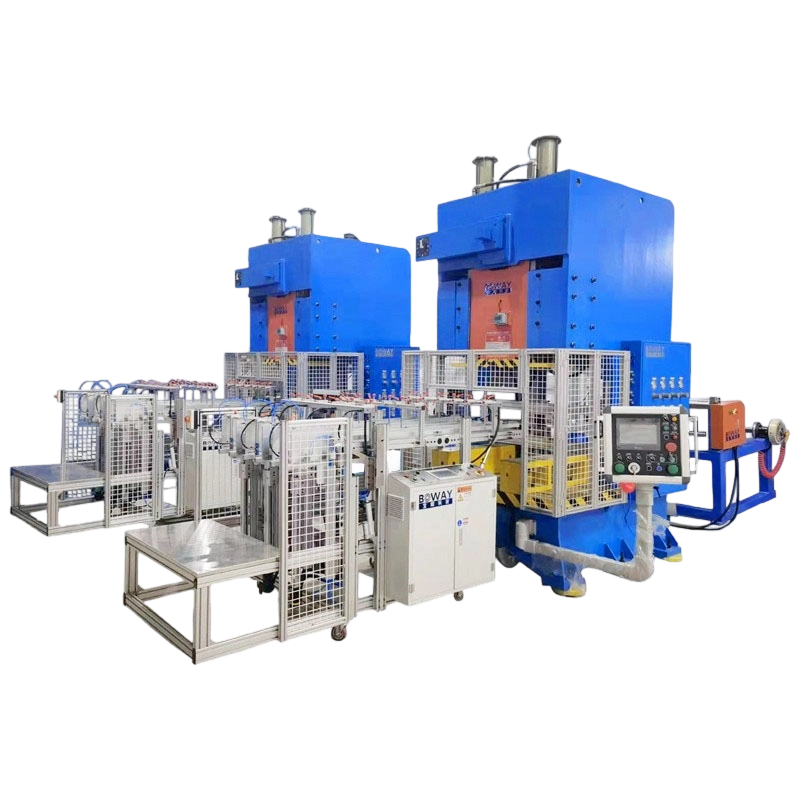
An automatic stacking machine is a fully automated industrial system designed to collect, arrange, and stack finished products after they have been formed or manufactured. As a critical downstream unit in production lines, it improves handling efficiency, reduces manual sorting work, and ensures that finished goods are neatly organized for subsequent packaging, storage, and transportation.
Modern automatic stacking machines typically feature a modular aluminum alloy frame structure combined with advanced PLC control systems and servo-driven positioning technology. The high-precision servo system enables accurate stacking control, ensuring consistent alignment and stable stacking performance even during continuous high-speed production.
How Does an Automatic Stacking Machine Work?
The automatic stacking machine operates through a sophisticated sequence of automated actions:
Product Detection and Counting: Optical fiber sensors detect each product as it arrives on the production line and count the quantity in real time.
Intelligent Positioning: Advanced sensors and control systems accurately identify the position, shape, and size of each item to ensure stability and neatness during the stacking process.
Automated Handling: The machine automatically grabs, transports, and stacks goods according to preset programs without manual intervention.
Precise Stacking Control: Servo-driven technology enables precise stacking, ensuring consistent alignment and stable stacking performance even during high-speed production.
Continuous Operation: The system can work continuously and stably without being restricted by time or manpower, ensuring efficient production line operation.
Key Advantages of Automatic Stacking Machines
1. High Degree of Automation
The automatic stacking machine achieves a high degree of automation, enabling unmanned operation. It automatically completes tasks such as grabbing, handling, and stacking goods according to preset programs, dramatically improving production efficiency while reducing labor costs and labor intensity.
2. Labor Cost Reduction
Manual stacking is labor-intensive and repetitive. An automatic stacking machine eliminates the need for manual handling, significantly reducing labor requirements and associated costs. For many manufacturers, the return on investment can be achieved within six months to one year.
3. Precise Positioning and Stacking Quality
Using advanced sensors and control systems, automatic stacking machines achieve accurate positioning and operation. They can precisely identify the position, shape, and size of goods, ensuring the stability and neatness of stacks. Through precise control, these machines can stack goods more tightly and firmly, reducing the risk of damage during transportation.
4. Increased Throughput
Automatic stacking machines maintain high speed without compromising stack quality. They can operate continuously, ensuring the efficient operation of the production line. In one documented case, a manufacturer saw a 140% increase in throughput within 12 months after implementing automated stacking solutions.
5. Enhanced Workplace Safety
By automating repetitive lifting and handling tasks, automatic stacking machines reduce manual handling and associated workplace risks. This eliminates injuries caused by repetitive motion and heavy lifting, while also reducing management costs and risks.
6. Consistent and Reliable Performance
Unlike human workers who may experience fatigue, automatic stacking machines deliver consistent, reliable performance around the clock. They maintain precise stacking accuracy even during extended production runs.
7. Flexibility and Adaptability
Modern automatic stacking machines are designed to handle various product sizes and configurations. For aluminum foil container applications, they can accommodate a wide range of products including rectangular containers, round containers, compartment trays, roasting pans, and customized foil packaging.
8. Compact Design
Many automatic stacking machines feature a compact footprint that requires minimal floor space compared to traditional palletizers. This makes them ideal for production facilities with space constraints.
Technical Specifications
For aluminum foil container manufacturing applications, typical automatic stacking machines offer the following specifications:
| Parameter | Specification |
|---|---|
| Power Supply | 380V 50HZ 3PH |
| Operating Temperature | 0°C to +50°C |
| Humidity | Up to 95% RH |
| Operation Mode | Continuous operation |
| Dimensions (L×W×H) | 3000×1300×1600 mm |
| Number of Lines | 4 lines |
| Min. Container Size | 120×100 mm |
| Max. Container Size | 350×220×72 mm |
| Max. Stacking Height | 400 mm |
| Detection Method | Optical fiber |
| Motor Power | 2000W |
| Weight | 0.5 TON |
Applications Across Industries
Automatic stacking machines serve a diverse range of industries:
Aluminum Foil Container Manufacturing
As a key component of aluminum foil container production lines, automatic stacking machines collect finished containers and stack them neatly, increasing production speed and efficiency. They integrate seamlessly with forming machines, conveying systems, and automated packaging equipment.
Food Packaging
In food packaging applications, stacking machines automate the process from suction supply to packaging machine to palletizing, achieving significant labor savings. Products that were previously arranged by hand are now detected by cameras and handled by robots.
End-of-Line Automation
Automatic stacking machines play a crucial role in end-of-line automation, where products are grouped, stacked, and prepared for dispatch. They handle everything from delicate food packaging to heavy cartons.
General Manufacturing
From electronics to consumer goods, automatic stacking machines are used across manufacturing sectors to streamline product handling and preparation for storage and shipping.
Market Trends and Growth
The automatic stacking machine market is experiencing significant growth. The global stacking machine market was valued at $2.88 billion in 2025** and is projected to reach **$4.91 billion by 2034, growing at a CAGR of 6.1%. The global automatic stackers market is projected to grow from $1.16 billion in 2025 to $1.95 billion in 2033, at a CAGR of 6.75%.
Asia Pacific leads the market with a 30% share in 2025, driven by rapid industrialization and the expansion of logistics and retail sectors in countries like China and India. Annual growth rates are expected to reach 8.6% in 2025 and 8.8% in 2026.
Technological Innovations
Intelligent Programmable Control
Modern automatic stacking machines feature intelligent programmable control, allowing operators to adjust stacking parameters according to different container sizes and production requirements.
AI and Vision Systems
Advanced stacking systems now incorporate AI visual recognition and adaptive algorithms to precisely identify boxes, bags, and irregular packaging, automatically adjusting gripping force and stacking paths.
IoT and Industry 4.0 Integration
Next-generation stacking machines feature IoT-enabled connectivity for real-time monitoring of performance, energy consumption, and production metrics, enabling predictive maintenance and continuous improvement.
Energy Efficiency
New stacking technologies have achieved energy consumption reductions of up to 30% through AI dynamic path planning. Modular designs also reduce maintenance costs by up to 40%.
Safety and Hygiene Features
For food packaging applications, automatic stacking machines are equipped with features that meet strict hygiene requirements:
-
Stainless steel working platforms that meet food packaging hygiene standards
-
Transparent steel mesh safety doors that allow operators to monitor machine operation while maintaining a secure working environment
-
Caster wheels for flexible movement and convenient production line layout adjustment
Choosing the Right Automatic Stacking Machine
When selecting an automatic stacking machine for your operation, consider:
-
Product types and sizes – Ensure compatibility with your range of products
-
Production speed – Match the machine‘s throughput to your line capacity
-
Stacking height requirements – Consider maximum stacking height for your storage needs
-
Integration capability – Ensure seamless connection with existing equipment
-
Hygiene requirements – For food applications, verify food-grade materials and design
-
Budget and ROI – Factor in labor savings and productivity gains
Conclusion
The automatic stacking machine represents a transformative investment for manufacturers seeking to improve production efficiency, reduce labor costs, and enhance product quality. With its high degree of automation, precise positioning capabilities, and ability to operate continuously without fatigue, this equipment delivers measurable returns across a wide range of industries.
From aluminum foil container production lines to food packaging facilities, the automatic stacking machine has become an essential component of modern industrial automation. As the global market continues to grow—projected to reach nearly $5 billion by 2034—early adopters stand to gain significant competitive advantages through improved efficiency, reduced costs, and enhanced product quality.
Whether you are a manufacturer of aluminum foil containers, a food packaging facility, or an automated production line integrator, the automatic stacking machine offers an efficient, reliable, and cost-effective solution for finished product handling. By automating the stacking process, you can create a smoother connection between forming and packaging processes, improve production consistency, and reduce labor requirements.
Invest in automation. Invest in efficiency. Choose the automatic stacking machine.
Choose AiKang for Top-Quality
Aluminum Foil Products
Explore Our
Featured Products
Ningbo Aikang Aluminum Foil Technology Co., Ltd, based in Ningbo, produces eco-friendly disposable aluminum foil products. They prioritize quality and customer satisfaction, serving the global market with innovative packaging solutions.


Quick Links
Contact
-
 No. 5 Yongxing East Road, Fengshan Street, Yuyao City, Zhejiang Province, China
-
 Tel: +86-15867468784
-
 E-mail: [email protected]
Send Us A Message
