
 English
 日本語
日本語 عربى
عربى Español
-
 01
01
Can Aluminum Foil Tableware Withstand High Temperatures?
Industry News-Aluminum foil tableware is widely used in the food packaging and takeout industry due to its lightweight, economical, and environmentally friendly properties. It is especially popular for barbecues, baking, and picnics because it is waterproof, heat-insulating, and easy to handle. However, many people have questions about the high-temperature resistance of aluminum foil tableware: How high can aluminum foil tableware withstand? Is it suitable for ovens or direct contact with fire? This article will help you understand the high-temperature resistance of aluminum foil tableware and guide you in its proper use and maintenance.
Content
- 1 1. Basic Composition and Characteristics of Aluminum Foil Tableware
- 2 2. High Temperature Resistance of Aluminum Foil Tableware
- 3 3. High-Temperature Usage Recommendations for Aluminum Foil Tableware
- 4 4. The Effects of Aluminum Foil Tableware at Different Temperatures
- 5 5. Maintenance and Care of Aluminum Foil Tableware
1. Basic Composition and Characteristics of Aluminum Foil Tableware
Aluminum foil tableware is typically made of high-quality aluminum. Aluminum itself is a lightweight, highly thermally conductive metal with good corrosion resistance. These characteristics make aluminum foil tableware ideal for food packaging and heating. However, the thickness and manufacturing process of the aluminum foil tableware affect its performance, especially its stability under high temperatures.
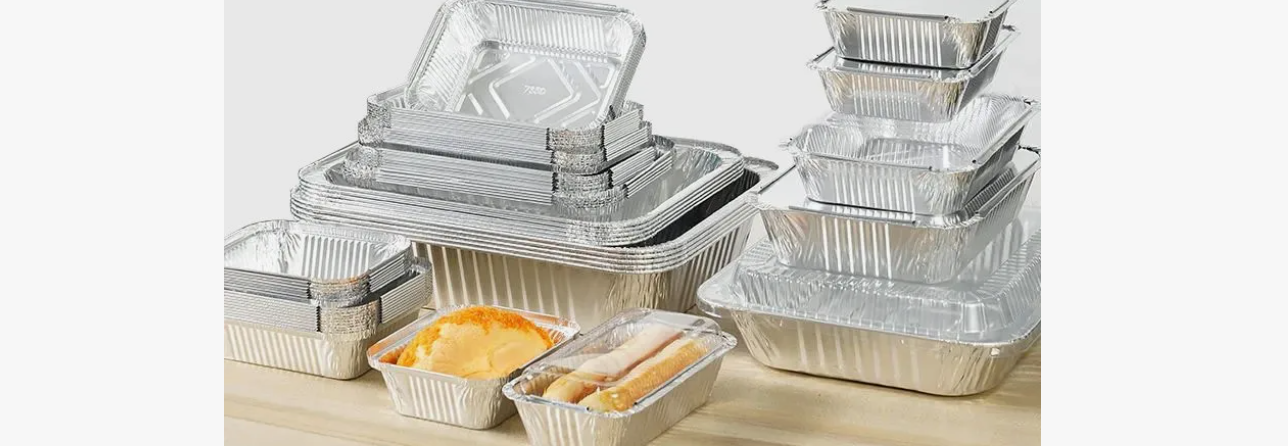
Common types of aluminum foil tableware include:
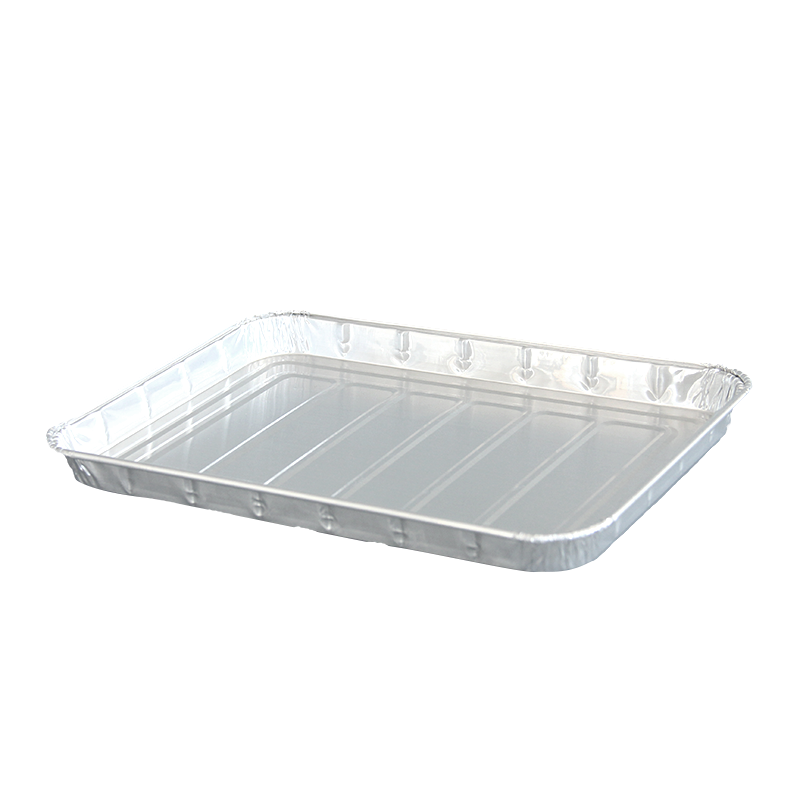
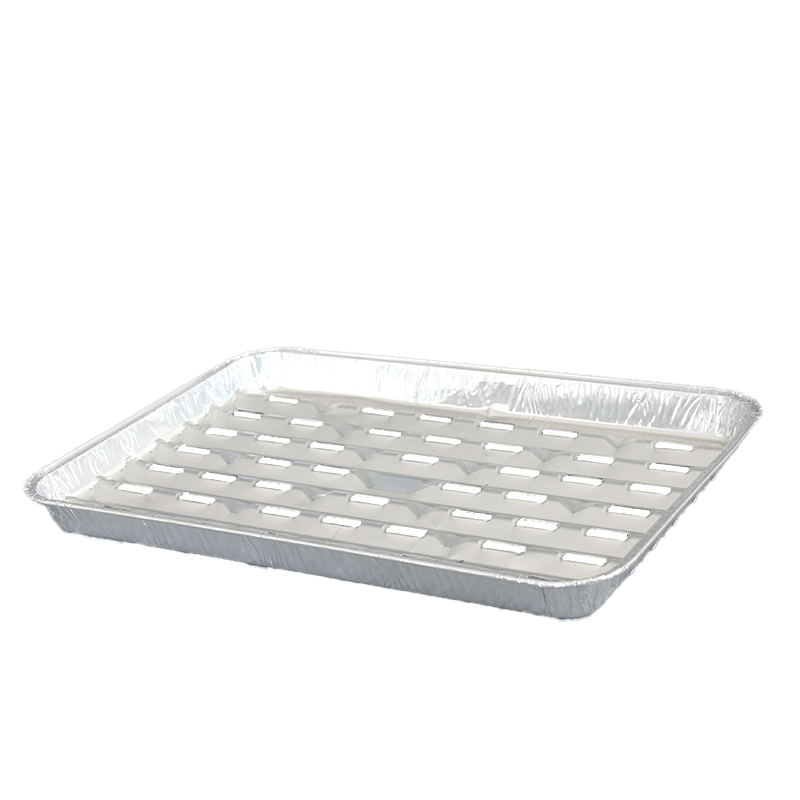
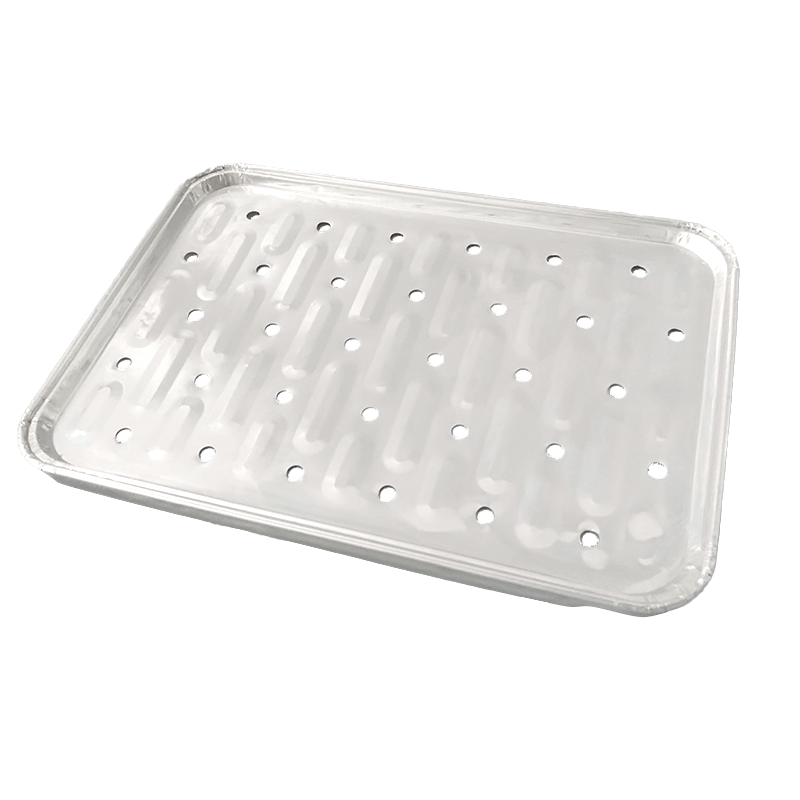
Aluminum foil baking trays: used for baking, grilling, etc.
Aluminum foil trays: suitable for cooking and serving food such as grilled and hot pot dishes.
Aluminum foil containers: commonly used for takeout and food packaging.
2. High Temperature Resistance of Aluminum Foil Tableware
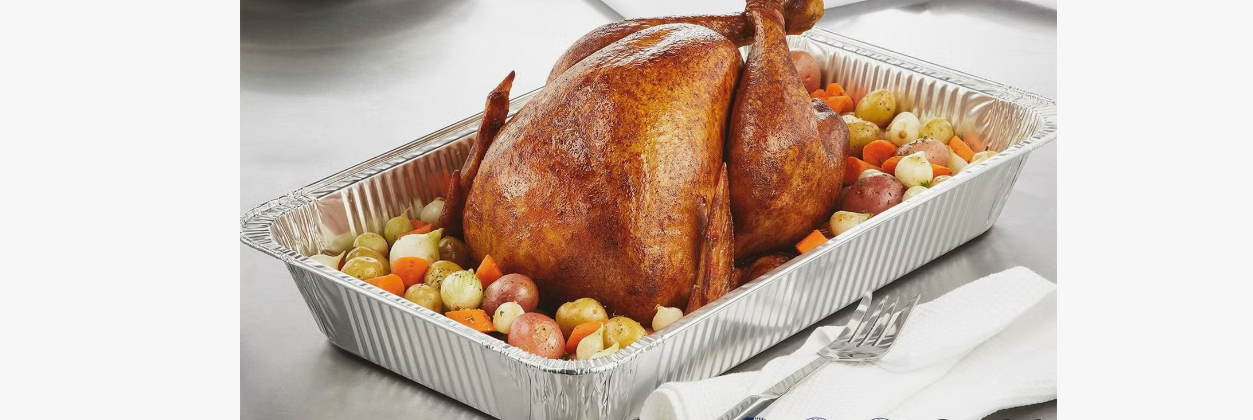
Aluminum foil has a melting point of 660°C (1220°F), indicating that it maintains its structural integrity even at extreme temperatures. However, the high temperature resistance of aluminum foil tableware depends not only on the material itself but also on several other factors:
(1) Aluminum Foil Thickness
The thickness of aluminum foil tableware directly affects its high temperature resistance. Thinner aluminum foil may deform or break at high temperatures, while thicker aluminum foil can withstand higher temperatures. For example, aluminum foil trays used for baking are typically much thicker than aluminum foil films used for food packaging, thus enabling them to be used at higher temperatures.
(2) Structural Design of Aluminum Foil
The design and structure of aluminum foil tableware also affect its performance at high temperatures. For example, the edge design of aluminum foil trays can increase their rigidity and reduce the possibility of deformation at high temperatures. For aluminum foil tableware that needs to be placed in an oven or microwave, manufacturers usually ensure its high temperature resistance through reinforced design.
(3) Usage Environment
The high temperature resistance of aluminum foil tableware is also closely related to its usage environment. For example, oven temperatures are generally quite uniform, and aluminum foil tableware adapts better to these environments. However, when in direct contact with heat sources or hot grease, aluminum foil tableware may be damaged due to localized overheating.
3. High-Temperature Usage Recommendations for Aluminum Foil Tableware
While aluminum foil tableware can withstand certain high temperatures, it does not exhibit excellent heat resistance in all situations. To ensure safety and extend the lifespan of aluminum foil tableware, the following usage recommendations are provided:
(1) Avoid Direct Contact with Fire Sources
Aluminum foil tableware should not be directly exposed to open flames or high-temperature heat sources. Although aluminum foil tableware can be heated at high temperatures in an oven, it is not suitable for direct exposure to flames. Direct exposure to fire may cause the aluminum foil to deform or melt.
(2) Avoid Contact with High-Temperature Greases
Although aluminum foil tableware can withstand certain temperatures, its heat resistance will be affected by contact with high-temperature greases. The temperature of high-temperature greases may exceed the tolerance range of aluminum foil tableware; therefore, avoid placing aluminum foil tableware directly into a deep fryer.
(3) Use Aluminum Foil Tableware Suitable for High Temperatures
When using aluminum foil tableware in high-temperature environments, choosing the appropriate type and thickness is crucial. For example, choose aluminum foil baking trays specifically designed for baking; they are typically thicker and reinforced to withstand high temperatures.
4. The Effects of Aluminum Foil Tableware at Different Temperatures
(1) Low-Temperature Use
Aluminum foil tableware can withstand both high and low temperatures. The thermal conductivity of aluminum allows it to quickly adapt to different temperature changes, making it widely used for refrigerated and frozen foods. Aluminum foil containers are ideal for refrigerating and freezing food, especially for preparing dishes or foods for baking.
(2) High-Temperature Use
One of the most common uses of aluminum foil tableware is heating or cooking food in high-temperature environments. For example, during baking, aluminum foil effectively prevents food from drying out and keeps it moist. In an oven, aluminum foil can withstand a certain range of high temperatures (usually not exceeding 250°C), but direct contact with a heat source should be avoided.
| Temperature Range | Applicable Scenarios | Usage Recommendations |
| Below 180°C | Refrigeration, freezing, light heating | Suitable for packaging, storage, and low-temperature heating |
| 180°C-250°C | Baking, roasting food | Suitable for oven heating, avoid direct contact with flames |
| Above 250°C | High-temperature frying, direct flame contact | Not recommended, may cause deformation or melting |
(3) Microwave Oven Use
Aluminum foil tableware requires special care when used in a microwave oven, as aluminum can cause sparks or arcs, posing a fire hazard. Therefore, most aluminum foil tableware is not suitable for microwave ovens. If you must use aluminum foil tableware to heat food, choose microwave-safe aluminum foil containers and strictly follow the manufacturer's instructions.
5. Maintenance and Care of Aluminum Foil Tableware
Although aluminum foil tableware has high heat resistance, improper use and maintenance can still shorten its lifespan. To ensure the durability and performance of aluminum foil tableware, here are some maintenance tips:
(1) Avoid Reuse
Aluminum foil tableware is generally for single use. Although it can withstand high temperatures, its strength and shape may be affected after one use. Therefore, try to avoid reusing aluminum foil tableware.
(2) Clean Aluminum Foil Tableware
After using aluminum foil tableware, clean up any remaining food promptly. Although aluminum foil can be recycled, excessive oil and food residue will affect its reuse. When cleaning aluminum foil tableware, avoid using strong detergents to prevent damage to its surface.
Aluminum foil has a high melting point and can withstand the temperatures required for regular baking and grilling, but direct contact with heat sources or hot grease can damage aluminum foil tableware. Therefore, proper use and maintenance of aluminum foil tableware are key to ensuring its longevity and good performance.
Choose AiKang for Top-Quality
Aluminum Foil Products
Explore Our
Featured Products

Ningbo Aikang Aluminum Foil Technology Co., Ltd, based in Ningbo, produces eco-friendly disposable aluminum foil products. They prioritize quality and customer satisfaction, serving the global market with innovative packaging solutions.


Quick Links
Contact
-
 No. 5 Yongxing East Road, Fengshan Street, Yuyao City, Zhejiang Province, China
-
 Tel: +86-15867468784
-
 E-mail: [email protected]
Send Us A Message
